Check out Morocco’s five major stadiums preparing to host 2030 FIFA World Cup

Morocco are stepping up preparations for the 2030 FIFA World Cup, with five major stadiums undergoing construction, renovation and modernisation as the North African country prepares to welcome the world’s biggest football tournament.
The planned venues include the Hassan II Grand Stadium in Benslimane, Prince Moulay Abdellah Stadium in Rabat, Grand Stade de Tanger, Grand Marrakech Stadium and Fez Stadium.
Among them, the Hassan II Grand Stadium is expected to become one of the world’s largest football venues, with a projected capacity of approximately 115,000 spectators.
The preparations reflect Morocco’s ambition to deliver world-class sporting infrastructure and strengthen its position as a major destination for international football.
Hassan II Stadium: The world’s largest stadium project
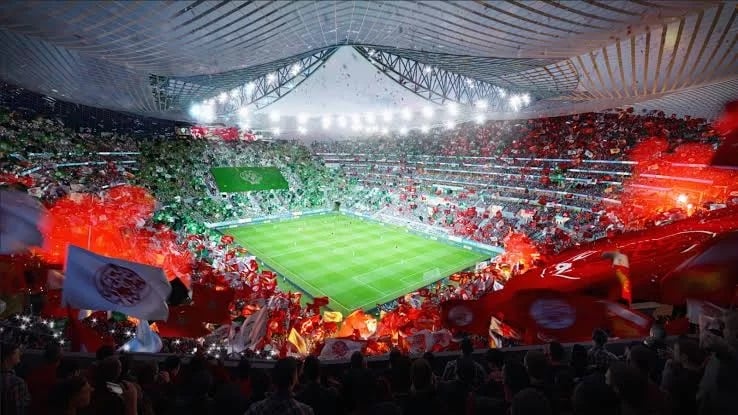
The Hassan II Grand Stadium project in Benslimane is one of the most ambitious developments in Morocco’s preparations for the 2030 World Cup.
Construction began with excavation work on August 16, 2024, on a site covering approximately 100 hectares.
The stadium is projected to accommodate around 115,000 spectators, with a total area of 226,828 square metres. It has also attracted international attention after being proposed as a potential venue for the 2030 World Cup final.
Recent construction progress includes the installation of stands across the first, second and third levels, alongside the development of supporting structures and other facilities.
The wider complex will feature training grounds covering 68,898 square metres, a hotel spanning 15,030 square metres and two shopping centres.
Four additional FIFA-approved grass pitches will also be constructed around the main stadium, alongside facilities for players, referees, organisers, spectators and media professionals.
Other planned facilities include an athletics stadium with a capacity of 25,000 spectators, an indoor gymnasium, a gymnastics hall, an Olympic-sized swimming pool and a conference and exhibition centre.
Prince Moulay Abdellah Stadium: Rabat’s sporting jewel

Prince Moulay Abdellah Stadium in Rabat has emerged as one of Morocco’s leading sporting venues following its redevelopment and inauguration by Crown Prince Moulay El Hassan.
The modern facility was rebuilt after the demolition of the previous stadium, with Moroccan engineers and experts overseeing its transformation to meet FIFA’s requirements for the 2030 tournament.
With a capacity of 68,700 spectators, the stadium features modern infrastructure, hospitality facilities and dedicated spaces for international media.
Its facilities include 110 hospitality boxes, five guest lounges with a combined capacity of 5,400 seats and extensive media accommodation for print, television and audiovisual coverage.
The venue has also hosted several Africa Cup of Nations matches, including the final, showcasing Morocco’s sporting infrastructure to an international audience.
Tangier Grand Stadium set for further expansion

The Grand Stade de Tanger is another major venue expected to play an important role in Morocco’s 2030 World Cup preparations.
Currently accommodating more than 75,500 spectators, the stadium features three levels of stands, hospitality areas and VIP and VVIP facilities.
Its main hospitality platform can accommodate 210 guests, while the stands reserved for important figures have a capacity of 1,300 spectators. The stadium also has 142 hospitality boxes, each accommodating between 10 and 20 people.
One of its notable features is a hybrid natural playing surface that combines natural grass with artificial fibres to improve drainage, durability and playing conditions.
The stadium also offers four changing rooms, recovery facilities, massage rooms, cryotherapy spaces and dedicated warm-up areas.
Further renovation work is expected as part of preparations for the 2030 tournament, with funding allocated within the 2027 budget.
The proposed improvements include upgrades to the stadium’s exterior, stands and natural grass surface, with the possibility of increasing its capacity to more than 90,000 spectators.
Marrakech Stadium undergoes 3.4bn-dirham renovation
The Grand Marrakech Stadium is also undergoing extensive renovation as Morocco continues to improve its sporting infrastructure ahead of the World Cup.
The project is estimated to cost 3.4 billion Moroccan dirhams, with work focusing on modernising the stadium and bringing its facilities in line with international standards.
The first phase of the project, valued at approximately 903 million dirhams, has entered the completion stage, with a projected implementation period of around 17 months.
Once the renovation is completed, the stadium is expected to have a capacity of more than 46,000 spectators and be ready to host international matches.
The planned improvements include the renovation of stands, spectator reception areas, media facilities, changing rooms and hospitality spaces.
Technological upgrades will also cover television broadcasting, audiovisual equipment, advertising systems and facilities for camera operations.
Fez Stadium receives major infrastructure investment
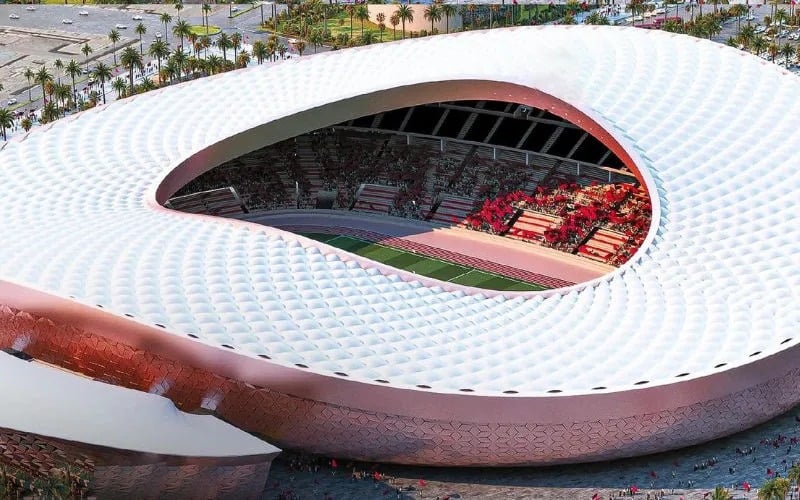
Fez Stadium completes the list of five major Moroccan venues being prepared for the 2030 World Cup.
The stadium is undergoing extensive internal and external rehabilitation, with particular attention being given to modern technical infrastructure.
The planned improvements include specialised lighting, fire detection and automatic extinguishing systems, telecommunications networks, access monitoring and LED perimeter screens.
Additional work will cover sound systems, conference facilities, broadcasting infrastructure, stadium clocks and central technical management systems.
The National Agency for Public Equipment has launched two international tenders worth a combined 1.52 billion dirhams for the modernisation project.
The first contract, valued at approximately 1.29 billion dirhams, covers electrical systems, while the second, worth more than 228 million dirhams, concerns fluid-related installations.
The investment represents another important stage in Morocco’s efforts to upgrade its sporting facilities before the 2030 tournament.
-
 Check out Morocco’s five major stadiums preparing to host 2030 FIFA World Cup Nov 15, 2026
-
Raja Casablanca held by RS Zamamra in Abdul Karim Al-Jinani’s first match as permanent coach Nov 15, 2026
-
AS FAR dominate individual awards after winning third Women’s Champions League title Nov 15, 2026
-
Ghana renew confidence as Black Stars prepare for Somalia return Nov 15, 2026



-
AFCON 2025: Fixtures, Results, Scores and Standings Jan 18, 2026
-
Match hero Taiwo Awoniyi reflects on team effort after Chelsea triumph May 5, 2026
-
Leadership and long-term vision key to rescuing Zamalek and inspiring Egyptian football – Hany Abou Rida Nov 5, 2025
-
South African giants Orlando Pirates set to lose influential forward Monnapule Saleng Mar 19, 2025




-
Ali Maher names first Egypt squad for 2027 Africa Cup of Nations qualifiers Nov 9, 2026
-
Morocco v Niger: Lions of the Atlas seek another win in CAN 2027 qualifying Nov 11, 2026
-
CAN 2027 qualifying: Cote d’Ivoire-Gambia and Mali-Rwanda headline third round Nov 9, 2026
-
FIFA U17 World Cup 2026: TV channels, streaming and full match schedule Nov 8, 2026