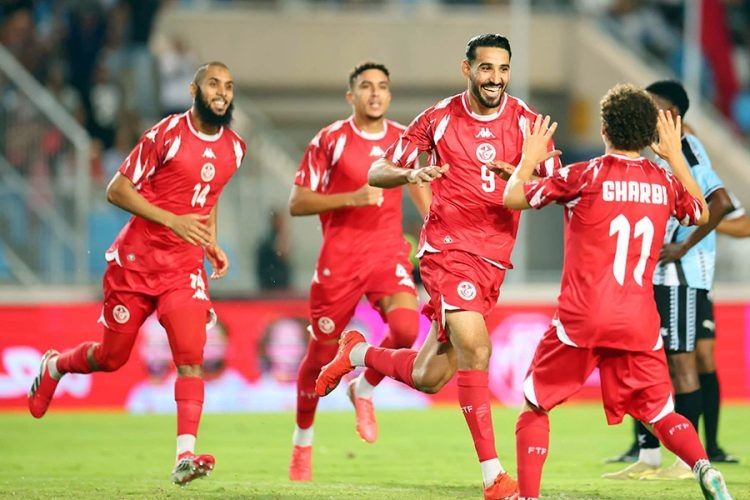
Tunisia’s 0-2 defeat by Libya in Sfax on Friday has highlighted deeper problems within the national game, with years of short-term decision-making, weak continuity and a lack of long-term planning now weighing on the Carthage Eagles.
The result came on the third matchday of the Africa Cup of Nations 2027 qualifiers and left Tunisia with only two points from three matches. Although the hosts controlled much of the territory and created a number of attempts, their possession produced little threat. They lacked both creativity and efficiency in the final third.
Libya, by contrast, were better organised and more clinical. Ali Youssef opened the scoring from the penalty spot before Hamdou Elhounine added a second goal in the second half. Those two moments exposed Tunisia’s shortcomings and increased the pressure surrounding the team.
Gouaida: ‘The problem goes much deeper than one defeat’
Former Tunisia international Mohamed Gouaida said the latest setback should not be treated as an isolated sporting failure.
“The problem is much deeper than a defeat,” Gouaida said, pointing to structural weaknesses that have developed over time in the absence of a genuine national development policy.
Those concerns include the lack of a long-term sporting project, shortcomings in youth development, difficulties in producing new talent, an unclear overall strategy and persistent instability within the coaching structure.
Youth development is among the most pressing issues. Tunisia appears to have a limited pool of emerging players, while young footballers do not always receive the technical and sporting support required to progress through each stage of their development.
Identifying talented players is only one part of the process. Effective development also requires modern coaching methods, qualified youth trainers, suitable facilities, individual monitoring and a clear route from youth football into the professional game. Without that foundation, successive generations cannot guarantee a qualitative improvement in the national team.
Four coaches in one year
The turnover in the national-team dugout has become another symbol of the lack of stability. Four coaches have been involved successively over the course of one year, according to the tally cited, reflecting an approach often driven by immediate results and the latest crisis.
Such frequent changes make it difficult to establish a playing identity, develop understanding between players and prepare a new generation. Each coach arrives with different tactical ideas, selection criteria and footballing principles, leaving players repeatedly adapting to new demands and risking the loss of previously established work.
That does not mean a coach should retain their position regardless of results. The need is for a coherent technical framework, clearly defined objectives and an assessment process based on a genuine sporting plan. Replacing the coach cannot be the principal response to every poor performance.
Talent must be developed
Tunisia still has players competing in European and African leagues, but their presence alone cannot produce a competitive team. Individual ability must be supported by tactical education, a performance culture, appropriate physical preparation and higher standards in domestic competitions.
Questions also remain over the quality of the Tunisian league, the opportunities given to young players, the methods used in academy systems and the ability of clubs to prepare footballers for the demands of the modern game.
The defeat by Libya should therefore serve as a warning. Tunisia needs a national strategy covering youth development, improved facilities, professional clubs, better-qualified coaches and a genuine national technical direction. That plan should include measurable targets, a development timetable and regular evaluation.
Tunisia has footballing history, popular support and human potential, but the past cannot substitute for a plan for the future. The national team needs more than a return to winning ways: it needs direction, identity and a lasting sporting project.
-
 Tunisia’s defeat by Libya exposes years without a clear football plan Nov 15, 2026
-
Khaled Adenon backs Benin to secure AFCON 2027 progress in Douala Nov 15, 2026
-
Morocco AFCON title controversy: Benatia questions referee over Senegal walk-off Nov 15, 2026
-
Timothy Nkosi backs Pitso Mosimane to guide Bafana Bafana to 2027 AFCON Nov 15, 2026


-
AFCON 2025: Fixtures, Results, Scores and Standings Jan 18, 2026
-
Match hero Taiwo Awoniyi reflects on team effort after Chelsea triumph May 5, 2026
-
Leadership and long-term vision key to rescuing Zamalek and inspiring Egyptian football – Hany Abou Rida Nov 5, 2025
-
South African giants Orlando Pirates set to lose influential forward Monnapule Saleng Mar 19, 2025




-
Ali Maher names first Egypt squad for 2027 Africa Cup of Nations qualifiers Nov 9, 2026
-
Morocco v Niger: Lions of the Atlas seek another win in CAN 2027 qualifying Nov 11, 2026
-
CAN 2027 qualifying: Cote d’Ivoire-Gambia and Mali-Rwanda headline third round Nov 9, 2026
-
FIFA U17 World Cup 2026: TV channels, streaming and full match schedule Nov 8, 2026