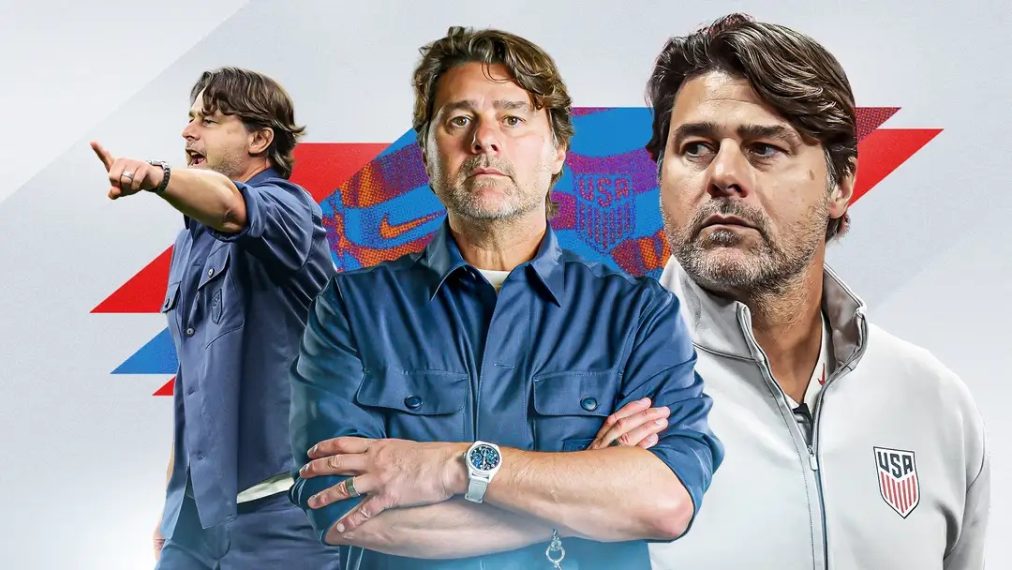
Mauricio Pochettino has the chance to revive Manchester United’s identity by combining the attacking values associated with Sir Alex Ferguson with the tactical influence of Marcelo Bielsa.
Asked to name three Premier League managers he would have liked to play under, Pochettino gave the same answer three times: “Sir Alex Ferguson, Sir Alex Ferguson, Sir Alex Ferguson.”
The admiration is longstanding. Speaking to Sky Sports in 2023 while he was Chelsea manager, Pochettino recalled meeting Ferguson during his time at Tottenham. Six years earlier, he had shared lunch with the former Manchester United manager, describing the occasion as one of the outstanding moments of his career.
“When I was young and at the beginning of my coaching career, Ferguson was always my inspiration and my first reference,” he said. “When you have the chance to spend two hours with someone who is considered the greatest coach in the history of football, you can only enjoy every moment.”
Since Ferguson retired in 2013, United have struggled to find a manager able to deliver both sustained success and a recognisable style. Pochettino now inherits a club still debating whether results should come first or whether the attacking, fast and proactive football associated with the Ferguson era must be restored.
Michael Carrick’s recent spell offered encouraging results and periods of impressive attacking football. United finished last season in a level of form no other Premier League side could match, but their progress exposed a tactical weakness: they were more effective when they did not have to control possession.
Across 13 matches under Carrick in which United had less than 50% of the ball, they lost only once and won 62% of the time. Their win rate fell to 36% when they dominated possession. The figures suggested a side more dangerous when it could draw opponents forward and attack the space behind them.
That approach suited several of United’s forwards and offered greater protection to the defence, while Casemiro’s set-piece ability provided an additional route to goal against deep defensive blocks. However, it was not enough to build a consistent challenger for major honours.
Carrick wanted more than counter-attacking football. He aimed to develop a possession-based team capable of building from the back with short, accurate passes, drawing opponents out before attacking the spaces they created. The same difficulty had affected earlier projects under Ole Gunnar Solskjaer and Erik ten Hag: moving from exploiting space to creating it against compact opponents.
Pochettino’s approach may provide a bridge between those demands. Influenced by Bielsa, under whom he played, he favours high pressing, intense physical work and constant movement. His philosophy does not reject possession; instead, the ball is used to reach dangerous areas quickly. It shares elements with Liverpool under Jurgen Klopp and, in the Premier League, Andoni Iraola’s vertical style.
His work with the United States showed how he balances attacking freedom with structure. Players were allowed to rotate and exchange positions, while a smaller number retained fixed responsibilities. Short passing and movement between the lines helped draw opponents towards the ball before passes behind the defence released the pace of Folarin Balogun.
“My philosophy is to give players more freedom while maintaining good organisation,” Pochettino said in 2014. He will need that balance at Old Trafford: improving fitness, making the high press sustainable and finding answers against deep defences.
Cole Palmer, who enjoyed one of his best Premier League seasons under Pochettino at Chelsea, said: “He gave me the confidence and freedom to move anywhere on the pitch, where I can use my strengths.”
Pochettino’s success will depend on turning those principles into a complete system rather than simply repeating familiar ideas.
-
 AFCON 2027 Qualifiers: McCarthy promises more attacking approach as Kenya prepare for Bafana return Nov 14, 2026
-
Morocco’s squad depth gives Mohamed Ouahbi a selection dilemma after Niger win Nov 14, 2026
-
Algeria face Togo aiming to strengthen CAN 2027 qualifying lead Nov 14, 2026
-
Achraf Hakimi strengthens African Ballon d’Or case with Morocco double Nov 14, 2026


-
AFCON 2025: Fixtures, Results, Scores and Standings Jan 18, 2026
-
Match hero Taiwo Awoniyi reflects on team effort after Chelsea triumph May 5, 2026
-
Leadership and long-term vision key to rescuing Zamalek and inspiring Egyptian football – Hany Abou Rida Nov 5, 2025
-
South African giants Orlando Pirates set to lose influential forward Monnapule Saleng Mar 19, 2025




-
Ali Maher names first Egypt squad for 2027 Africa Cup of Nations qualifiers Nov 9, 2026
-
Morocco v Niger: Lions of the Atlas seek another win in CAN 2027 qualifying Nov 11, 2026
-
CAN 2027 qualifying: Cote d’Ivoire-Gambia and Mali-Rwanda headline third round Nov 9, 2026
-
FIFA U17 World Cup 2026: TV channels, streaming and full match schedule Nov 8, 2026