Hussein Labib: Zamalek will retain control of football company as president rules out election bid
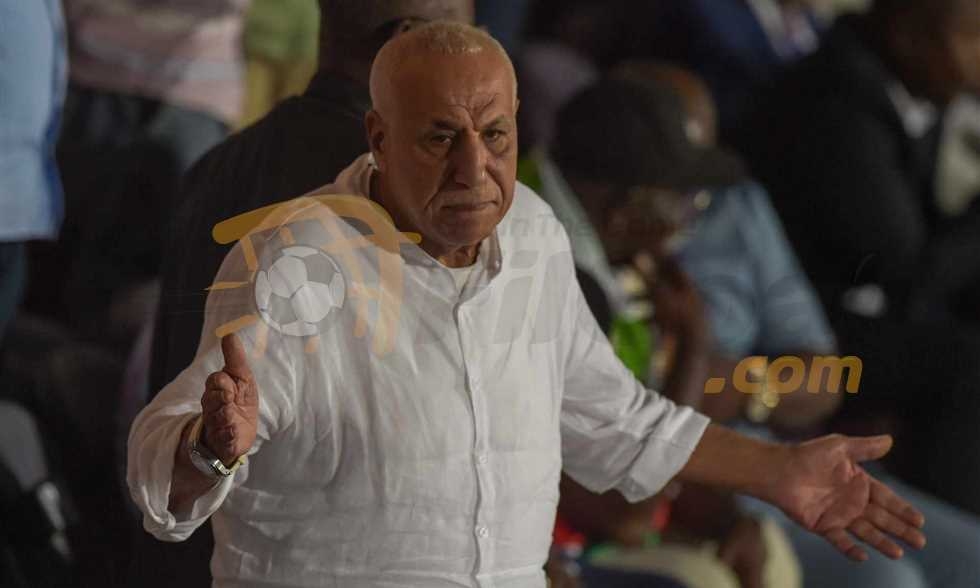
Hussein Labib says Zamalek will keep the controlling share in its new football company and insists the club, its name, badge and colours will not be sold or changed without approval from the club.
The Zamalek president also confirmed he will not stand in the club’s next elections, admitted the current board had contributed to debts approaching $6-7m, and gave his assessment of the board as four out of 10 in an extensive interview with ON Sport.
Football company
Labib said Zamalek had all the ingredients to be champions and described winning the league as “miraculous” given the club’s circumstances.
“Zamalek are champions and have supporters who can move mountains,” he said. “There are many problems. Watching from home is completely different from sitting in this chair, seeing all the problems and being responsible for solving them.”
He said criticism from Zamalek supporters mattered more to him than comments from the sports media, adding that the club’s interests had always come first.
Zamalek previously experimented with a sporting director under John Edward, a move Labib described as the first step towards creating a football company. The company has now been established and is being introduced in two stages.
“There is no sale of Zamalek and no sale of the football team,” Labib said.
Only one offer had been made for the football company and he said there had been no reason to accept it hurriedly. He added that the club faced a football deficit every season which could exceed £400m or £500m, depending on player sales and purchases.
Zamalek has seven football-related income streams: the first team; the youth sector and academies; sponsorship; television rights; match tickets; prize money from friendly matches and competitions; and player sales.
Some football assets will be transferred to the company for marketing. However, Zamalek will retain the controlling share and no investor will hold a majority.
Nine compulsory conditions have been included to prevent any change or sale of the club’s name, badge, colours, trademark or kit without Zamalek’s consent. They also prohibit a merger with another club, moving the headquarters, selling club assets, reducing Zamalek’s share or changing the statutes in a way that affects the club’s rights.
New shareholders cannot enter, shares cannot be transferred, and the company cannot be sold or dissolved or take out a loan without the club’s approval. Any legal dispute will be referred to arbitration in Egypt.
Labib said approval from the general assembly and the administrative authority was still required before the company could be launched fully. He believes it can help rescue Zamalek from its financial crisis.
He said Zamalek had seven sources of revenue but had to use them to fund 17 sports, the social club and staff wages.
Elections and board debts
Labib said there would be “no going back” on his decision not to contest the next election.
“I have completed my task and hope everyone will seek accuracy in all the information being circulated,” he said. “I admit there have been mistakes, but the surrounding circumstances cause some mistakes. We have families, and I hope everyone takes that into account.”
He added: “I cannot comment on how satisfied I am with the current board’s period. I will leave history to judge it. There are facts we cannot discuss.”
Labib said the board had created debts worth approximately $6-7m. When it took office, Zamalek’s total debts exceeded two billion Egyptian pounds, but almost one billion pounds had since been paid.
One factor behind the debts was an agreement with Juan Bizerra’s former club based on income expected from land in October City. After that land was withdrawn, the club’s financial position became more difficult. Zamalek has also not yet received approval for a plot in the Fifth Settlement.
Former president Mamdouh Abbas, Labib said, had not interfered in board decisions. He discussed matters with him “like any Zamalek supporter”, but did not impose decisions. Abbas had donated large sums, which were not debts owed by the club.
Labib said the board had won five football trophies in three and a half years despite taking charge during a difficult period. Osorio was dismissed after failing to agree with the players, his dues were paid and 10 players were signed, regardless of their quality.
The board is open to selling any player. Labib said the timing had not been right to sell Ahmed Fattouh last summer after Hossam Abdel Meguid and Bizerra had also left, because it could have suggested the team was being dismantled. He said there was an intention to renew Fattouh’s contract, although talks had not begun.
Coaches and players
Labib said his support for Moataz Gamal was based on his quality, loyalty and achievements. Injuries and other challenges had affected the team, but he believed no coach could have achieved more and described the results as very good.
Moataz Gamal had neither accepted nor rejected the appointment of a foreign assistant. Labib said he did not want to impose someone on the manager because that could affect accountability, but that the matter was being discussed.
“Zamalek were not good against Misr Lel Makkasa,” Labib said. “Moataz admitted that, and we will discuss the situation.”
He declined to explain why pre-season training had started late, saying he preferred to keep his response to himself. He denied that players had refused to train until they received unpaid wages and said nobody responsible for the squad had used the players to pressure the board.
He described Mahmoud Hamdy “El Wensh” as one of Egypt’s best players in character and sporting ability, calling him the team’s spiritual father and a fighter who had overcome two cruciate ligament injuries.
Chico Banza was described as a very good and pleasant player, although Labib said nobody knew what he would do next, “including himself”. Mohamed Shehata was called a “son of Zamalek” and one of Egypt’s best midfielders. Labib said he would not join Al Ahly and that Zamalek wanted to keep him.
Labib said Zamalek needed reinforcements in midfield and on the wings and wanted to change their style of play. He said he had not tried to sign an Al Ahly player in response to Zizo’s move, adding that he did not want to repeat the experience because Zamalek players had not succeeded at Al Ahly.
Players under 18 can sign three-year contracts, because the law prevents longer agreements. Once they turn 18, Zamalek can renew their deals for five or seven years.
Adi Dabagh and Chico Banza had sent formal warnings over unpaid money, but financial problems had delayed payments. Labib said the football company would resolve the players’ outstanding dues.
Transfers, sanctions and investigations
Zamalek received $3m immediately for Bizerra from Shabab Al Ahli, with a further $2m to follow. The club also saved $900,000 owed to his former club.
“He received an offer with many benefits in the UAE,” Labib said. “We reached a good agreement with Shabab Al Ahli and received good money, but we lost an important player.”
The proceeds would be used to pay some player and club debts.
Labib said there was no clause preventing Hossam Abdel Meguid from joining Al Ahly because Fifa does not allow such conditions. The player wanted to pursue a move abroad, he added.
On Abdulhamid Maali’s case, Labib said the failure to translate a Fifa letter was not the problem. Zamalek appealed the punishment, reached a settlement with the player and sent it to the Court of Arbitration for Sport, asking for the disciplinary sanction to be suspended. That request was rejected even after Maali’s dues were paid.
Zamalek hopes to have its registration ban cancelled in time to sign players in January. The tribunal is expected to set a hearing date, but none had been fixed.
Supporters have called for an internal investigation into player fines and legal cases. Labib said the legal adviser was responsible, had freedom to summon anyone and was investigating who was responsible for the fines involving foreign players including Omar Faraj, Abdulhamid Maali and Salah Mosadek.
“The board is responsible, directly or indirectly,” he said. “I cannot promise to leave the club without cases or to pay all the debts because I do not yet know the result of the investigation, but I promise that we will reach the truth.”
Rwanda trip and academy problems
Labib said Ahmed Fattouh and Mostafa El-Zenari had gone to a place other than the one authorised by team director Abdel Nasser Mohamed during the trip to Rwanda. According to agent Samir Salah, that led to confrontations with supporters.
Asked why there had been no head of delegation, Labib said: “The trip to Rwanda was without a head of delegation because saving expenses was one of the reasons.”
He said Zamalek had arrived to find no established futsal teams, coaches or youth players. Some coaches and players had been recruited incorrectly, but the club had begun rebuilding those sections.
League hopes and quick answers
Labib said Zamalek wanted to win the Egyptian Premier League and CAF Champions League, whether or not it was capable of doing so, because the team had to play for both trophies.
He called the withdrawal of the October City land his worst day at Zamalek, named Omar Gaber as the player most devoted to the club and said the most important decision had been suspending Fattouh, Mohamed Sobhi and El-Zenari.
He would change the composition of the board if given the chance and said one or three board members were not in agreement with the others.
Labib identified Imam Ashour as the biggest loss among Zizo, Imam Ashour and Achraf Bencharki, but said he would not approve Zizo’s return. He also said relations with Al Ahly’s board had not been severed.
No board member had asked him for advice about the coming election. Labib said it was too early to announce which presidential candidate he supported, but he would reveal his position later.
Hussein Labib became Zamalek president in October 2023 after receiving 15,229 votes, the second-highest total among the candidates.
-
 Africa Cup of Nations 2027 qualifying: Cote d’Ivoire, DR Congo and Senegal impress Nov 13, 2026
-
Cote d’Ivoire move three points clear after 2-1 win over Gambia Nov 13, 2026
-
Benin move top of Group F after 4-1 win over Central African Republic Nov 13, 2026
-
Senegal move top after emphatic 4-1 win over Sudan in Africa Cup of Nations qualifying Nov 13, 2026


-
AFCON 2025: Fixtures, Results, Scores and Standings Jan 18, 2026
-
Match hero Taiwo Awoniyi reflects on team effort after Chelsea triumph May 5, 2026
-
Leadership and long-term vision key to rescuing Zamalek and inspiring Egyptian football – Hany Abou Rida Nov 5, 2025
-
South African giants Orlando Pirates set to lose influential forward Monnapule Saleng Mar 19, 2025




-
Manchester United host Aston Villa as both sides seek a Premier League lift Nov 6, 2026
-
Ali Maher names first Egypt squad for 2027 Africa Cup of Nations qualifiers Nov 9, 2026
-
Atletico Madrid host Barcelona in Liga summit clash with history at stake Nov 6, 2026
-
Nottingham Forest v Manchester City: City Ground hosts clash at opposite ends of the table Nov 6, 2026