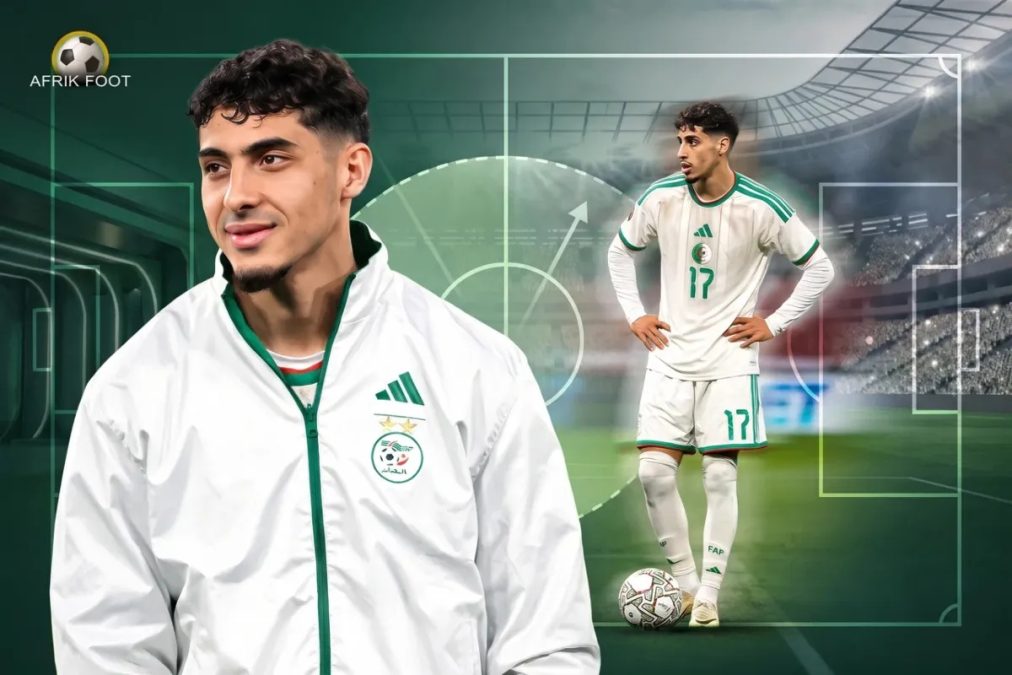
Fares Chaibi will return to the Algeria squad against Togo determined to put a difficult performance in Burundi behind him after rebuilding his confidence at Eintracht Frankfurt.
The midfielder’s afternoon in Bujumbura turned sour after only five minutes when an attempted intervention ended with him beating his own goalkeeper and handing Burundi an unexpected lead. Algeria eventually drew 2-2, but their problems in midfield remained clear.
Chaibi’s own goal was only part of the issue. Used alongside Himad Abdelli in a midfield without a natural holding player, the Eintracht Frankfurt man appeared uncomfortable in a role that did not suit his strengths. He was substituted after 65 minutes following a below-par display.
The 23-year-old has since responded positively at club level. He has regained a regular place in Eintracht Frankfurt’s starting line-up and has made several consecutive starts. After playing a decisive role in the German Cup against Hamburg, he provided an assist in the 2-2 draw with Paderborn.
Chaibi now has one goal and two assists in nine appearances in all competitions this season. Those figures are not yet outstanding, but his improved run of games means he joins the national team with greater rhythm and confidence than he had during Brahim Hemdani’s first camp.
His return to form, however, does not settle the central question surrounding his role with Algeria: where should he play?
Finding Chaibi’s best position
The match in Bujumbura reinforced the view that Chaibi is not a defensive midfielder. He can help build attacks, press opponents and move forward to support the attack, but he lacks the positional instincts and physical influence expected of a number six protecting the defence.
His deployment on the left has not always produced convincing results either. Chaibi can lack the acceleration needed to beat a defender in a congested wide area and often moves inside to become more involved in possession. His most natural position appears to be somewhere between roles: an attacking central midfielder or a free-ranging player able to arrive in advanced areas.
Competition for those positions is strong. Ibrahim Maza, Himad Abdelli, Adem Zorgane and, when available, Houssem Aouar are all contenders. Hemdani will need to give Chaibi a clearly defined role rather than use him to fill a vacancy in a position unsuited to him.
Chaibi still benefits from the credit he earned during the 2026 World Cup. Across the tournament, he was one of Algeria’s more consistent performers and regularly offered solutions when the side struggled to build from midfield.
But with 30 international appearances already behind him, Chaibi can no longer be treated as a young player who should be given unlimited time to develop. Approaching his 24th birthday and starting regularly for an important Bundesliga club, he has the experience to become more than a squad option.
Algeria need him to lead through his performances rather than through his voice. That means demanding the ball, controlling the tempo and taking responsibility when matches become difficult.
The two-match meeting with Togo gives Chaibi an immediate opportunity to respond: erase the memory of his own goal and show that Bujumbura was an isolated misstep, rather than an accurate reflection of his current standing with Algeria.
-
 Chaibi returns to Algeria duty seeking redemption after Burundi setback Nov 11, 2026
-
Sundowns Ladies thrash Kawempe Muslim to set up CAF Women’s Champions League final against AS FAR Nov 11, 2026
-
Nael El Aynaoui withdraws from Morocco squad for Niger clash over fitness issues Nov 11, 2026
-
Gabon U23 target strong start against Tunisia in Africa Cup of Nations qualifier Nov 11, 2026



-
AFCON 2025: Fixtures, Results, Scores and Standings Jan 18, 2026
-
Match hero Taiwo Awoniyi reflects on team effort after Chelsea triumph May 5, 2026
-
Leadership and long-term vision key to rescuing Zamalek and inspiring Egyptian football – Hany Abou Rida Nov 5, 2025
-
South African giants Orlando Pirates set to lose influential forward Monnapule Saleng Mar 19, 2025




-
Manchester United host Aston Villa as both sides seek a Premier League lift Nov 6, 2026
-
Ali Maher names first Egypt squad for 2027 Africa Cup of Nations qualifiers Nov 9, 2026
-
Atletico Madrid host Barcelona in Liga summit clash with history at stake Nov 6, 2026
-
Nottingham Forest v Manchester City: City Ground hosts clash at opposite ends of the table Nov 6, 2026