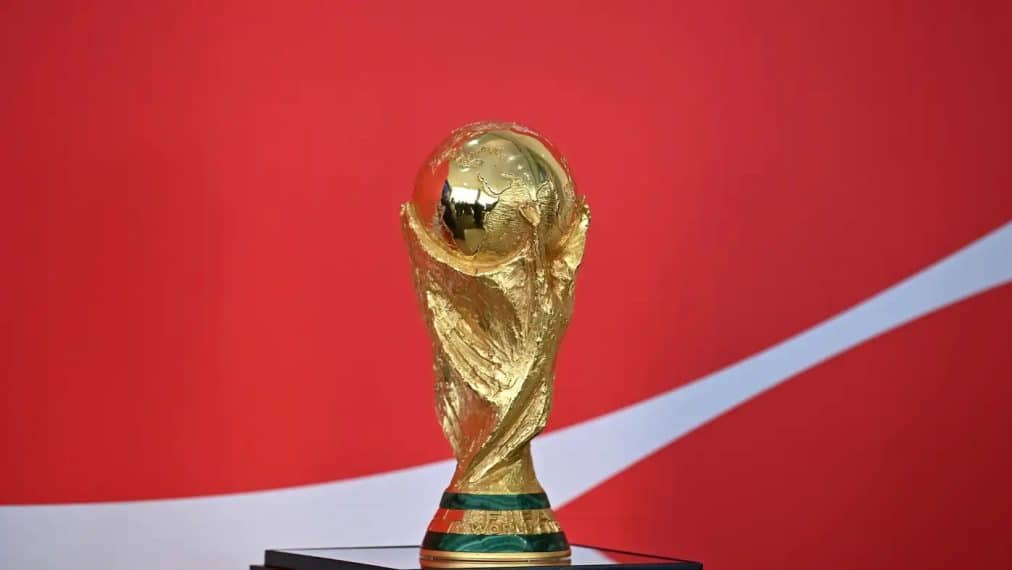
Morocco has responded to warnings from Spain’s opposition leader that his country could withdraw from hosting the 2030 World Cup if Morocco is awarded the final.
Morocco, Spain and Portugal are joint hosts of the tournament, but the three countries remain involved in a major dispute over where the final should be played.
The issue has become politically contentious in Spain ahead of general elections scheduled for 29 November, with parties and prominent political figures divided over whether Spain should have the right to stage the showpiece match.
Alberto Nunez Feijoo, leader of Spain’s People’s Party, said he was prepared to push for Spain to withdraw from hosting the World Cup if FIFA decided to give Morocco the final.
Feijoo also said it was self-evident that Spain should host the match.
Ilham Belfahili, secretary general of the Moroccan Union for Democracy Party, said the decision should be based on sporting criteria set by FIFA and its specialist committees, rather than party political interests.
In comments to Moroccan newspaper Hespress, Belfahili said: “The Spanish right’s positions on issues concerning Morocco are not new. They date back to the events in Ceuta and Melilla in the summer of 2026, as this political current seeks to politicise issues and find any means of harming the Kingdom.”
She added that if FIFA selected the Grand Stadium of Benslimane to host the final and Spain chose to withdraw, “that is a matter for Spain alone and changes nothing about the reality”.
“Morocco has the capabilities and readiness to organise the World Cup successfully, even if Portugal and Spain withdraw together,” Belfahili said.
Her comments came as the final’s hosting rights became increasingly linked to Spain’s forthcoming election campaign. Feijoo has argued that Spain’s role in the tournament should be guaranteed, while Morocco has maintained that the choice belongs to FIFA and its relevant bodies.
Belfahili strongly rejected what she described as the mixing of sport and politics, saying football was “a universal human message that brings peoples closer together”.
She added that the Spanish right’s use of World Cup promises to win votes was “an isolated electoral manoeuvre” that did not concern Morocco.
Belfahili also stressed that “Morocco is a state governed by institutions that respects the decisions of international bodies, whatever they may be”.
The 2030 World Cup is therefore at the centre of a dispute involving sporting, political and diplomatic interests, with the final venue yet to be settled.
-
 Why has Algeria called up Abderrahmane Rebbach despite his lack of goals and assists? Nov 9, 2026
-
Oumar Solet offers Herve Renard a new defensive option for Cote d’Ivoire Nov 9, 2026
-
Salah, Jackson and African Ballon d’Or nominee Gueye named in weekend XI Nov 9, 2026
-
Luca Zidane overlooked again as Algeria turn to Rayane Yesli Nov 9, 2026



-
AFCON 2025: Fixtures, Results, Scores and Standings Jan 18, 2026
-
Match hero Taiwo Awoniyi reflects on team effort after Chelsea triumph May 5, 2026
-
Leadership and long-term vision key to rescuing Zamalek and inspiring Egyptian football – Hany Abou Rida Nov 5, 2025
-
South African giants Orlando Pirates set to lose influential forward Monnapule Saleng Mar 19, 2025




-
AEK Athens v Real Madrid: Champions League date, kick-off time and viewing details Nov 2, 2026
-
Manchester United host Aston Villa as both sides seek a Premier League lift Nov 6, 2026
-
Real Sociedad and Lyon name probable line-ups for Europa League meeting Nov 3, 2026
-
Atletico Madrid host Barcelona in Liga summit clash with history at stake Nov 6, 2026