Africa Cup of Nations: Two CAF officials reportedly oppose return to biennial tournament
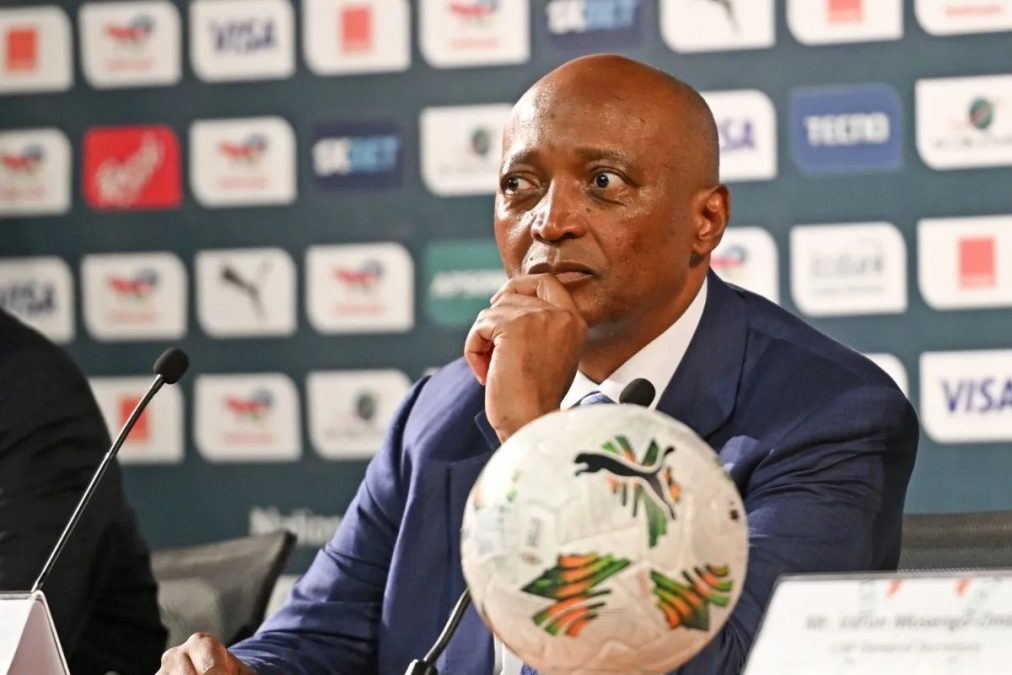
Two members of the Confederation of African Football (CAF) executive committee are reported to have voted against restoring the Africa Cup of Nations to a two-year cycle.
The proposed return to a biennial tournament is officially under review, after CAF president Patrice Motsepe confirmed the possibility last week during a strategic conference in Cape Verde.
According to investigative journalist Romain Molina, the two officials who opposed the proposal were Ahmed Yahya, president of the Federation Mauritanienne de Football (FFRIM), and Souleiman Waberi, president of the Federation Djiboutienne de Football (FDF).
The reasons for their votes have not been disclosed. However, they are believed to represent a minority within the executive committee, where most members are said to favour holding the Africa Cup of Nations every two years because of the revenue generated by the competition.
Motsepe’s comments came less than a year after CAF announced a major change to the tournament calendar. On the eve of the start of the 2025 Africa Cup of Nations, the organisation said the competition would move from a two-year cycle to a four-year cycle from 2028.
But Motsepe said last week that the previous arrangement could be restored, describing the possibility as something that “is under review” and suggesting it was more consistent with the identity of the Africa Cup of Nations.
Financial and political factors
The main argument in favour of a biennial tournament is its financial importance to African football. Supporters of the change believe a four-year cycle could seriously damage CAF’s economic stability, given the competition’s role as the organisation’s primary source of income.
Molina has also suggested that the dispute between UEFA and FIFA may have contributed to the change in direction. CAF has given unconditional backing to FIFA president Gianni Infantino, while the relationship between UEFA and FIFA has become increasingly strained.
The four-year schedule had been viewed as a concession to powerful European clubs, which faced fewer demands to release their African international players during the season when the Africa Cup of Nations was staged less frequently.
According to Molina, the conflict surrounding Infantino intensified after details emerged of an abandoned project to privatise shares in the World Cup. That confrontation may have altered the balance of alliances and contributed to CAF reconsidering the tournament’s frequency.
The debate over the calendar therefore appears to involve not only sporting and financial considerations, but also the political interests and relationships shaping African and international football.
-
 Africa Cup of Nations: Two CAF officials reportedly oppose return to biennial tournament Oct 13, 2026
 -
Alphadjo Cisse: AC Milan’s Guinean-eligible teenager making a rapid rise Oct 13, 2026
-
Marseille and Olympiakos set for tactical battle in Europa League clash Oct 13, 2026
-
Maxima Goffi starts first Champions League game for Lille Oct 13, 2026


-
AFCON 2025: Fixtures, Results, Scores and Standings Jan 18, 2026
-
Match hero Taiwo Awoniyi reflects on team effort after Chelsea triumph May 5, 2026
-
Leadership and long-term vision key to rescuing Zamalek and inspiring Egyptian football – Hany Abou Rida Nov 5, 2025
-
South African giants Orlando Pirates set to lose influential forward Monnapule Saleng Mar 19, 2025




-
Atletico Madrid v Manchester United: probable line-ups for Champions League clash Oct 12, 2026
-
Manchester United host winless Tottenham in Premier League clash Oct 7, 2026
-
Roma v Real Madrid: home side tipped to score first in Champions League clash Oct 12, 2026
-
Real Madrid fitness update: Valverde a doubt for Villarreal as Kylian Mbappe returns Oct 8, 2026