Morocco v Senegal: What to know as CAS hears disputed AFCON 2025 final case
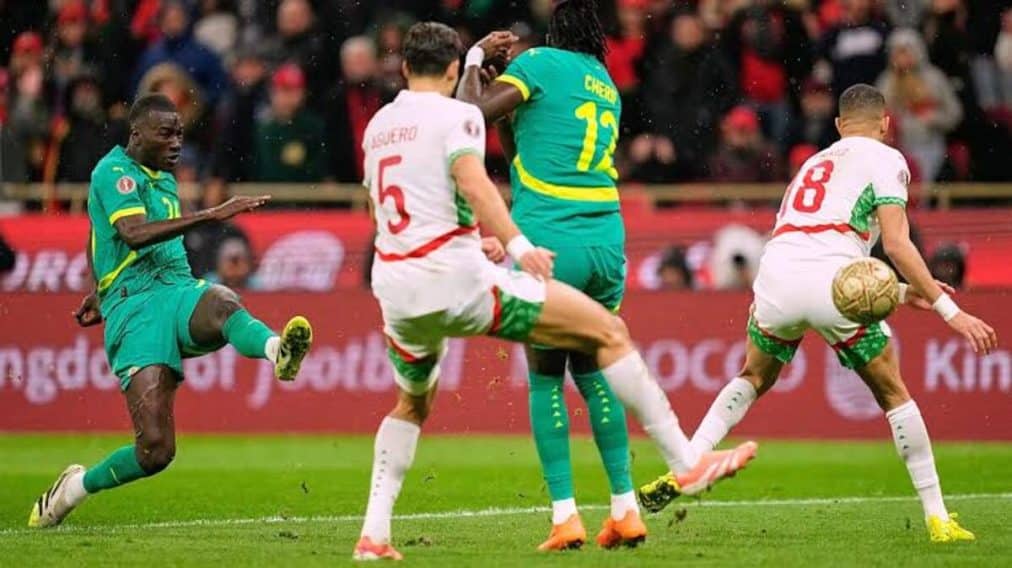
The dispute over the 2025 Africa Cup of Nations final between Morocco and Senegal reaches the Court of Arbitration for Sport (CAS) in Lausanne on Thursday, 8 October, with the identity of the competition’s legal champions still at stake.
The Senegalese Football Federation has appealed against a decision by the Confederation of African Football (CAF) Appeals Board that overturned the result on the field and awarded Morocco a 3-0 victory by withdrawal.
The hearing will focus largely on whether Senegal’s actions during the final breached the relevant AFCON regulations.
How the final sparked the dispute
The controversy began during the final at Rabat’s Prince Moulay Abdellah Sports Complex on 18 January.
With the match goalless in stoppage time, Congolese referee Jean-Jacques Ndala awarded Morocco a penalty after consulting VAR.
The decision prompted strong protests from the Senegalese players, who subsequently left the pitch on the instructions of coach Pape Thiaw.
The match was stopped for about 16 minutes before Senegal returned to the field. Brahim Diaz then missed the penalty and the game went into extra time.
Senegal eventually won 1-0 through Pape Gueye and were crowned African champions.
But the events surrounding the walk-off led to a disciplinary and legal dispute that continued long after the final whistle.
CAF decision changes the outcome
CAF’s disciplinary bodies initially imposed sanctions relating to incidents during the final without changing the result.
The Royal Moroccan Football Federation continued to challenge the handling of the case, focusing on whether Senegal’s temporary departure from the pitch constituted an offence under the competition regulations.
That argument ultimately changed the status of the final.
On 17 March 2026, the CAF Appeals Board overturned the earlier decision and ruled that Senegal’s actions fell under Articles 82 and 84 of the AFCON regulations.
The board concluded that Senegal had breached Article 82 and, under Article 84, should be considered to have lost the match by withdrawal.
The final was therefore recorded as a 3-0 victory for Morocco, effectively transferring the 2025 AFCON title from Senegal to the Atlas Lions.
Senegal appealed to CAS on 25 March, seeking to overturn the CAF decision and restore the result achieved on the pitch.
Articles 82 and 84 at the centre
The interpretation of Articles 82 and 84 is expected to be central to Thursday’s hearing.
Morocco’s position is that Senegal’s players left the field during the final on the instructions of their coaching staff, causing a lengthy interruption.
The Moroccan side is expected to argue that the incident falls within the provisions governing refusal to play or continue a match and that CAF therefore had a regulatory basis for declaring Senegal defeated by withdrawal.
Senegal, meanwhile, will seek to convince the CAS panel that the CAF Appeals Board was wrong to overturn the original result.
The case is therefore primarily about the application of the regulations rather than the penalty decision itself.
VAR decision is not the main issue
CAS will not be asked simply to decide whether Ndala was correct to award the penalty.
Nor will the hearing be a review of whether Brahim Diaz should have scored or whether Senegal deserved to win the match on sporting grounds.
The central legal question is whether Senegal’s conduct after the penalty decision amounted to a violation that justified a 3-0 defeat by withdrawal under the regulations in force at the time.
Later rule changes are not expected to decide the case
The case has also been discussed in the context of amendments to football’s disciplinary rules approved in April 2026.
Those changes strengthened sanctions for players who leave the field in protest and extended responsibility to officials who encourage such behaviour.
However, the amendments came after the January final and cannot simply be applied retrospectively to an incident that had already taken place.
The CAS panel will therefore have to consider the regulations that were in force when Morocco and Senegal played the final, particularly Articles 82 and 84 of the AFCON regulations.
CAS can review facts and law
The Lausanne hearing carries significant importance because CAS appeal proceedings allow the arbitration panel to review both the facts and the applicable law.
Under Article R57 of the CAS Code, the panel has broad authority to reconsider the case rather than merely examining whether CAF followed the correct procedure.
The three arbitrators can therefore assess the evidence, reports, regulations and arguments submitted by the parties before reaching their own conclusion.
Senegal will seek to have the March decision overturned, while CAF will defend the ruling of its Appeals Board.
Morocco’s objective will be to demonstrate that the events of the final justify the legal classification adopted by CAF and the resulting 3-0 decision.
What could CAS decide?
Several outcomes are possible.
CAS could uphold the CAF Appeals Board’s decision, leaving Senegal officially defeated by withdrawal and Morocco as the 2025 African champions.
The panel could also overturn or modify the decision, potentially restoring or changing the outcome of the case.
Another possibility under the CAS framework is for the panel to annul the decision and refer the matter back to the relevant body for further consideration.
The hearing therefore does not necessarily mean CAS must immediately choose Morocco or Senegal as champions.
No ruling is expected on Thursday
Thursday’s hearing should not be confused with the final judgment.
The session is intended to allow the parties to present their arguments and address the case before the arbitrators enter deliberations.
CAS has not announced a specific date for the final decision.
The process will therefore involve two stages: the hearing in Lausanne followed by the publication of the ruling at a later date.
A legal battle over the African title
Almost nine months after the disputed final, the Morocco-Senegal case has moved well beyond the events on the pitch.
At CAS, the key question will be whether Senegal’s departure from the field during the final constituted a breach of the AFCON regulations that required the team to be declared defeated by withdrawal.
The answer will depend on the evidence in the case, the official reports and the interpretation of the regulations that applied on 18 January.
-
 Morocco v Senegal: What to know as CAS hears disputed AFCON 2025 final case Oct 7, 2026
 -
Equatorial Guinea target victory against Burkina Faso in Los Angeles 2028 Olympic qualifiers Oct 7, 2026
-
JCA d’Agoe-Nyive and SARA FC win promotion to Togo’s first division Oct 7, 2026
-
UFOA B U17 tournament: Burkina Faso face Benin in opening match Oct 7, 2026




-
AFCON 2025: Fixtures, Results, Scores and Standings Jan 18, 2026
-
Match hero Taiwo Awoniyi reflects on team effort after Chelsea triumph May 5, 2026
-
Leadership and long-term vision key to rescuing Zamalek and inspiring Egyptian football – Hany Abou Rida Nov 5, 2025
-
South African giants Orlando Pirates set to lose influential forward Monnapule Saleng Mar 19, 2025




-
Croatia face Spain with Nations League hopes on the line in Split Oct 5, 2026
-
France v Belgium: Probable line-ups for Nations League clash Oct 3, 2026
-
Morocco coach Mohamed Ouahbi refuses to single out player after Mali draw Oct 4, 2026
-
Noussair Mazraoui leaves Morocco squad early after injury Oct 2, 2026