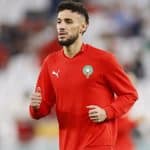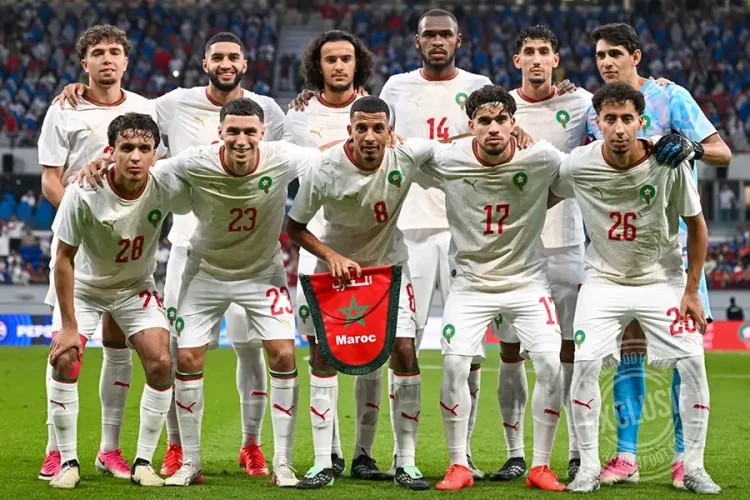
Former Morocco international El Arbi Hababi believes Mohamed Ouahbi should reconsider 10 players who were absent from the latest squad as the Lions of the Atlas prepare for future challenges, including the 2027 Africa Cup of Nations.
Morocco beat Gabon and Lesotho by identical 2-0 scorelines in their 2027 Africa Cup of Nations qualifiers before drawing 1-1 with Mali in a friendly. The results have prompted renewed discussion about whether the national team needs a broader range of options in several positions.
Hababi, who represented Morocco at the 1994 World Cup, has identified players he believes could provide greater balance, depth and tactical variety.
Chibi and Louza offer experience and midfield variety
Mohamed Chibi is one of the former international’s suggestions. Hababi has been impressed by Chibi’s consistency for Pyramids FC in both the Egyptian league and African competitions.
He regards the right-back as physically and technically reliable, while also considering him one of the continent’s best in creating chances and delivering crosses. Chibi’s experience of African football, he says, would be valuable in qualifying campaigns and major continental matches. Hababi also believes he could contribute immediately without needing a long adaptation period, particularly in high-pressure games.
Imran Louza is described as the type of midfielder Morocco currently lacks. Hababi highlights his ability to play vertical passes and break defensive lines, especially against teams defending in a compact block.
Louza’s left foot would give Morocco greater variety in passing angles and in building from the back, as well as making it easier to switch play. His set-piece ability is another potential asset in tight matches. Hababi also values his ability to operate as a number eight, a box-to-box midfielder or a number 10, providing more solutions and potentially easing the burden on Azzedine Ounahi.
Defensive alternatives for Hakimi and Mazraoui
Omar El Hilali is highlighted as a natural alternative to Achraf Hakimi. Hababi points to his regular football with Espanyol and his weekly exposure to top-level Spanish opposition, which he believes is helping the young full-back develop physically and mentally.
El Hilali’s strengths include one-on-one defending, tackling and aerial aggression. Hababi also notes his progress when playing out under pressure and delivering crosses. His age, in the former international’s view, makes him both an immediate option and a long-term investment for Morocco’s defence.
Souffian El Karouani is considered a potential complement to Noussair Mazraoui. Hababi says the left-back can contribute to build-up play, move inside and operate as an inverted full-back.
A natural left-sided defender with an excellent left foot, El Karouani could allow Mazraoui to move to the right or operate in a flexible role without weakening the left flank. His direct crossing, physical ability and tactical understanding also suit a system in which full-backs must defend carefully while supporting attacks.
Yassine Kechta is another midfield option. His low centre of gravity and close control help him resist pressure, retain possession and turn in confined spaces. Hababi believes those qualities would be particularly useful against teams using an aggressive high press.
Kechta’s left foot and vertical passing could add different angles to Morocco’s build-up. He is also praised for his work-rate, ground coverage, ball-winning and counter-pressing. Hababi believes his tactical intelligence, including his understanding of cover and positional rotations, fits Ouahbi’s emphasis on mobility, quick circulation and positional discipline.
Attacking options for different situations
Chemsdine Talbi would provide an individual attacking threat against deep defences. Hababi highlights his pace, technical quality and one-on-one ability, as well as his capacity to play on either wing, cut inside, shoot or provide the final pass.
Talbi’s experience of English football is also viewed as beneficial because of the intensity, physical preparation, quick decision-making under pressure and tactical discipline it demands. Hababi sees him as an ideal substitute who could exploit tired defenders and increase the attacking tempo in the second half.
Othmane Maamma’s existing relationship with Mohamed Ouahbi is another reason for his inclusion. The two have worked together with Morocco’s youth and Olympic teams, meaning the coach already understands the winger’s qualities and how to use him within his attacking system.
Hababi describes Maamma as a fast modern winger who can beat opponents one-on-one, attack space directly, contribute in the final third and deliver crosses towards the far post. His experience with Watford, including the demands of physical football, pressing and rapid transitions, is another advantage. His ability to play on either flank would also give Ouahbi further flexibility.
Youssef En-Nesyri is identified as the genuine number nine Hababi believes Morocco should again consider. The striker’s movement between centre-backs and his ability to attack space inside the box offer a different threat.
His aerial strength gives Morocco’s full-backs and wingers an additional target from crosses, while his one-touch finishing, running power and pressing remain important qualities. Hababi also regards En-Nesyri’s physical presence as particularly useful in African matches, where battles with central defenders can be demanding. His experience with the Lions of the Atlas at the World Cup and Africa Cup of Nations is another benefit in major tournaments.
Yanis Begraoui offers a different type of forward. Rather than remaining as a conventional striker, he can drop into midfield and help combine with team-mates. Hababi believes that movement can draw defenders out and create space for wingers or midfielders arriving from deeper positions.
His technical ability and quick combinations allow him to link the lines in the final third. He could also help Morocco vary the pace of attacks against organised defences, while retaining the ability to shoot or deliver the decisive pass in tight areas.
Sofiane Boufal completes the list. Hababi considers him a specialist in one-on-one situations, capable of escaping close marking even in limited space.
That skill could be decisive against a low block when collective solutions are difficult to find. Boufal can unsettle defences with dribbling and acceleration, win fouls and earn penalties inside or around the area. His international and African experience means he is familiar with the pressure, physical demands and distinctive atmosphere of continental football.
Hababi sees Boufal as another valuable substitute, particularly in the final 20 or 30 minutes against tiring defenders. However, he stresses that Boufal is more than a dribbler: his vision also enables him to provide the final pass to a centre-forward.
Overall, Hababi’s recommendations are based on expanding Ouahbi’s tactical choices, from players who can break lines or resist pressing to full-backs who offer greater balance, attackers who can change the rhythm of a game and the presence of a recognised number nine.
-
 Morocco: El Arbi Hababi names 10 players who could strengthen Lions of the Atlas Oct 7, 2026
 -
Abdullahi Umar marks Nigeria debut with decisive assist in Russia draw Oct 7, 2026
-
Manchester United and Tottenham set for crucial Old Trafford meeting Oct 7, 2026
-
Mkhulise: Sundowns refuse to be underdogs against Orlando Pirates Oct 7, 2026


-
AFCON 2025: Fixtures, Results, Scores and Standings Jan 18, 2026
-
Match hero Taiwo Awoniyi reflects on team effort after Chelsea triumph May 5, 2026
-
Leadership and long-term vision key to rescuing Zamalek and inspiring Egyptian football – Hany Abou Rida Nov 5, 2025
-
South African giants Orlando Pirates set to lose influential forward Monnapule Saleng Mar 19, 2025




-
Croatia face Spain with Nations League hopes on the line in Split Oct 5, 2026
-
France v Belgium: Probable line-ups for Nations League clash Oct 3, 2026
-
Morocco coach Mohamed Ouahbi refuses to single out player after Mali draw Oct 4, 2026
-
Noussair Mazraoui leaves Morocco squad early after injury Oct 2, 2026