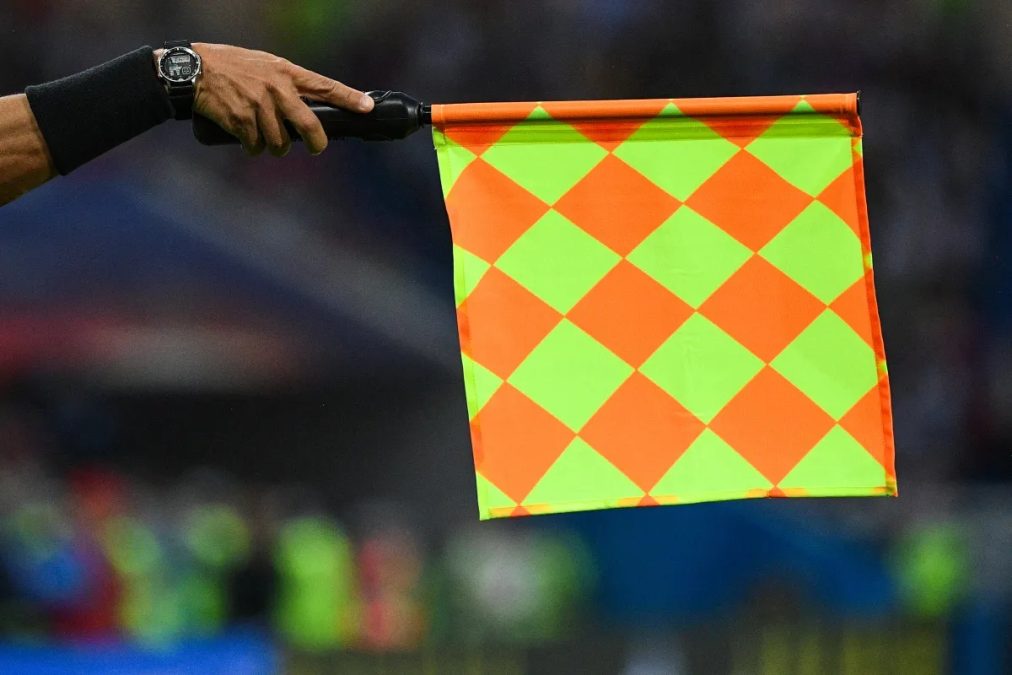
A controversial offside decision in Tunisia’s 1-1 draw with Libya at the UNAF U20 tournament was correct, despite accusations that Algerian referee Mohamed Rafik Aouina had favoured Algeria.
The incident came in the final seconds of the match, which is part of the qualifying tournament for the 2027 Africa Cup of Nations. Tunisia goalkeeper Slim Bouasker had gone forward for a corner, and Libya regained possession with an apparently clear chance to attack an unguarded goal.
A Libyan forward appeared able to run through with only one defender ahead of him. However, the assistant referee raised his flag, and Aouina immediately stopped play. Several Libyan players and members of their coaching staff surrounded the assistant, believing their side had been denied a major opportunity to win the match.
The unusual position of the goalkeeper made the decision appear difficult to understand. But Law 11 of the International Football Association Board (IFAB) does not use the goalkeeper as the reference point for offside. Instead, it refers to the “second-last opponent”.
In a normal situation, the goalkeeper is one of the two players closest to his own goal line. That is why the offside line is usually determined by the last outfield defender. On this occasion, however, Bouasker had left his goal to contest the corner.
That meant the Tunisian defender stationed near the goal became the last opponent, rather than the second-last. When the ball was passed, the Libyan attacker was closer to the goal line than both the ball and the second-last Tunisian opponent. He was therefore in an offside position.
Libya did not have a goal disallowed. The whistle was blown before the shot, bringing the counter-attack to an end.
The fact that the referee was Algerian, in a closely contested tournament, inevitably led to scrutiny after the game. But the suggestion of bias is difficult to sustain when the incident is assessed against both the laws of the game and the competition standings.
Algeria’s position had already become more difficult after a 3-1 defeat by Morocco, who have since secured qualification for the Africa Cup of Nations U20. The Young Lions of the Atlas are through, while Algeria’s young Fennecs have four points, two fewer than Egypt’s six.
The equation ahead of Tuesday’s meeting with the Pharaohs is straightforward: Algeria must win to claim the second qualifying place. Even a Libyan victory against Tunisia would not have changed that requirement.
It is therefore regrettable that the officials were confronted over a decision that was valid and offered no particular advantage to Algeria. The assistant referee is unlikely to become as famous as Tofiq Bahramov, the Soviet linesman from Azerbaijan remembered for his role in England’s controversial goal in the 1966 World Cup final.
But given the attention this incident has attracted, the assistant may have experienced a brief “Bahramov moment” of his own – with the difference that both the footage and the regulations appear to support his decision.
-
Morocco boss Mohamed Ouahbi says Africa Cup of Nations success matters more than FIFA ranking Oct 5, 2026
-
 UNAF U20: disputed offside call involving Algeria referee backed by the laws Oct 5, 2026
 -
Africa’s football diary: Boutera shines for Algeria as Ugwu weighs move abroad Oct 5, 2026
-
Croatia and Spain set to field strong line-ups in Nations League clash Oct 5, 2026


-
AFCON 2025: Fixtures, Results, Scores and Standings Jan 18, 2026
-
Match hero Taiwo Awoniyi reflects on team effort after Chelsea triumph May 5, 2026
-
Leadership and long-term vision key to rescuing Zamalek and inspiring Egyptian football – Hany Abou Rida Nov 5, 2025
-
South African giants Orlando Pirates set to lose influential forward Monnapule Saleng Mar 19, 2025




-
AFCON 2027 Qualifiers: McCarthy warns South Africa to expect tough test against Eritrea Sep 29, 2026
-
Denmark v Portugal: Nations League kick-off time, TV channel and match prediction Sep 29, 2026
-
South Sudan vs Egypt: Where to watch AFCON 2027 qualifier Sep 29, 2026
-
Spain and Croatia name experienced line-ups for Nations League clash Sep 28, 2026