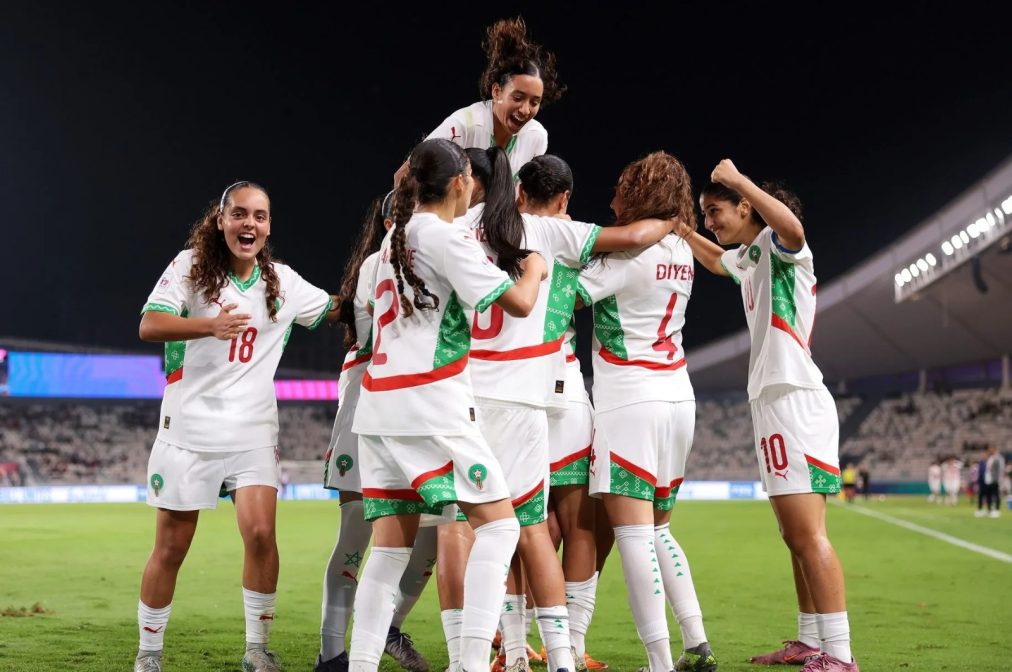
Morocco will welcome 24 nations to Rabat when it hosts the FIFA U-17 Women’s World Cup for the second consecutive year from 17 October to 7 November.
The 2026 tournament will be the second edition played under FIFA’s expanded format, with the number of participating teams increased from 16 to 24 and the competition moving to an annual schedule from 2025.
The tournament will also provide another major platform for women’s youth football in Africa, with Morocco continuing its role as host of the competition for five consecutive editions between 2025 and 2029.
Six confederations represented
The 24-team field features nations from all six continental confederations, with Africa represented by hosts Morocco, Ghana, Kenya, Nigeria and Zambia.
The other participating nations are Argentina, Australia, Brazil, Canada, Chile, China PR, France, Germany, Japan, Korea DPR, Mexico, New Zealand, Norway, Poland, Puerto Rico, Samoa, Spain, the United States and Venezuela.
Morocco will begin its campaign in Group A against New Zealand on 17 October, with Germany and Argentina completing the group.
The host nation will be hoping to use home advantage to make a strong start as it seeks to compete with some of the leading youth teams from around the world.
Defending champions Korea DPR face Puerto Rico
Defending champions Korea DPR will start their title defence against Puerto Rico in Group B.
The Asian side claimed the 2025 title after beating the Netherlands in the final, securing a record third FIFA U-17 Women’s World Cup crown.
The expanded tournament format means the competition will once again provide opportunities for young players from across the world to gain experience on the international stage.
Rabat to host entire tournament
All matches will be played in Rabat, with the Women’s Football Complex staging the group-stage matches, Round of 16, quarter-finals and semi-finals.
The Prince Moulay El Hassan Stadium will host the bronze medal match and final, bringing the tournament to a conclusion at one of Morocco’s major football venues.
For Morocco, hosting the competition for a second successive year underlines the country’s growing role in women’s football and provides another opportunity to showcase its football infrastructure.
With the tournament now less than a month away, attention will increasingly turn to Morocco’s opening match against New Zealand and whether the hosts can make a deep run on home soil.




-
 AFCON 2025: Fixtures, Results, Scores and Standings Jan 18, 2026
 -
Match hero Taiwo Awoniyi reflects on team effort after Chelsea triumph May 5, 2026
-
Leadership and long-term vision key to rescuing Zamalek and inspiring Egyptian football – Hany Abou Rida Nov 5, 2025
-
South African giants Orlando Pirates set to lose influential forward Monnapule Saleng Mar 19, 2025




-
AFCON 2027 Qualifiers: McCarthy warns South Africa to expect tough test against Eritrea Sep 29, 2026
-
AFCON 2027 qualifiers: Algeria, Morocco and Nigeria among winners on opening matchday Sep 26, 2026
-
AFCON 2027 qualifiers: Burkina Faso held by Benin in Group F Sep 25, 2026
-
South Sudan vs Egypt: Where to watch AFCON 2027 qualifier Sep 29, 2026