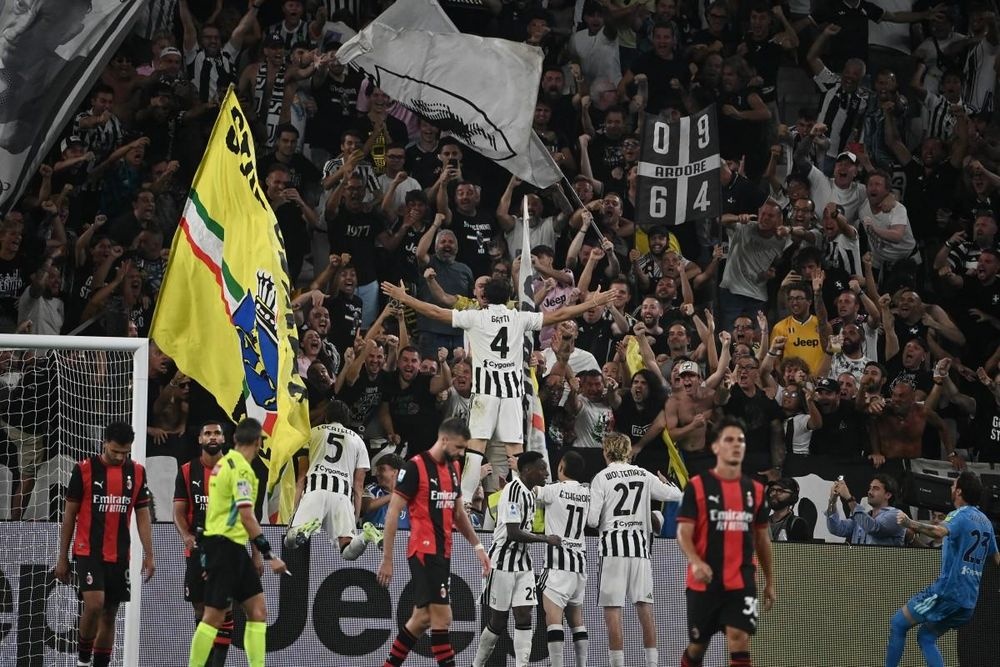
Manchester City’s case has revived questions over whether even the biggest clubs can withstand severe sporting penalties, with the experiences of Juventus, Rangers and Olympique de Marseille showing how quickly elite status can be threatened by regulatory breaches.
The Premier League’s independent commission found Manchester City guilty of 115 charges relating to systematic financial rule breaches over a nine-season period. It also ruled that “sham” contracts had inflated revenues by more than £900m (about R19.5bn).
The Premier League is considering sanctions that could include historic points deductions, relegation or expulsion. The precedents elsewhere in Europe suggest that any punishment could have consequences well beyond the immediate loss of league position.
Juventus provide the clearest example of recovery from demotion. In 2006, the club were stripped of the Serie A titles won in 2004/05 and 2005/06 and sent down to Serie B with a nine-point penalty after the Calciopoli match-fixing scandal.
They had been the dominant force in Italian football, with a squad containing World Cup winners and Ballon d’Or contenders. Several major players, including Zlatan Ibrahimovic, Patrick Vieira, Fabio Cannavaro and Lilian Thuram, left Turin, wiping tens of millions from the value of the squad.
But a core group remained. Gianluigi Buffon, Alessandro del Piero, Pavel Nedved and David Trezeguet stayed to help the club rebuild, and Juventus won Serie B at the first attempt in 2006/07.
It took another five years of reconstruction before Juventus claimed the Scudetto in 2011/12 under Antonio Conte. That success began a run of nine consecutive Serie A titles. Commercial income fell sharply after the scandal, but the club itself endured.
Olympique de Marseille and Rangers demonstrate the potentially more damaging outcomes of administrative failure. Marseille had won the inaugural UEFA Champions League in 1993, but within months a financial and bribery scandal led to the club being stripped of their 1992/93 French league title and relegated to Division 2.
They spent two seasons in the second tier, amid financial instability, and needed more than a decade to restore their domestic standing.
Rangers, meanwhile, entered liquidation in 2012 after systemic insolvency and tax breaches. They restarted in the fourth tier of Scottish football, League Two, and secured three promotions in four seasons. However, the financial damage restricted their ability to compete at the highest level for almost a decade.
The Premier League has already shown a willingness to impose significant sporting penalties under its Profit and Sustainability Rules. Everton received a 10-point deduction, reduced to six on appeal, and later suffered another two-point penalty in the same season after exceeding the permitted losses by less than £20m (about R435m).
Nottingham Forest were subsequently deducted four points for exceeding their losses threshold by £34.5m. The commission said that, despite Forest’s co-operation, breaching the limits undermined the competition’s sporting integrity.
Manchester City rejected the commission’s findings and indicated that a lengthy legal battle would follow.
“The club is innocent of the accusations made by the Premier League and a comprehensive body of irrefutable evidence exists in support of all of its positions, relating to this case. The club will therefore be relentless, and where necessary proactive, in any and all appropriate regulatory and legal forums,” the club said.
“The Premier League process remains ongoing, with significant elements uncompleted. Manchester City FC will now pursue the appeal avenues open to it, on the basis that the opinion contains clear material errors, of law, principle and fact, and is unsafe.”
-
 Algeria manager Brahim Hemdani plans at least three staff additions in November Oct 1, 2026
 -
Carlos Queiroz sacked by Ghana after two defeats in Africa Cup of Nations qualifying Oct 1, 2026
-
Morocco forward apologises after Algeria-themed social media post Oct 1, 2026
-
Zokora backs Cote d’Ivoire to beat Cameroon in Ebimpe friendly Oct 1, 2026




-
AFCON 2025: Fixtures, Results, Scores and Standings Jan 18, 2026
-
Match hero Taiwo Awoniyi reflects on team effort after Chelsea triumph May 5, 2026
-
Leadership and long-term vision key to rescuing Zamalek and inspiring Egyptian football – Hany Abou Rida Nov 5, 2025
-
South African giants Orlando Pirates set to lose influential forward Monnapule Saleng Mar 19, 2025




-
AFCON 2027 Qualifiers: McCarthy warns South Africa to expect tough test against Eritrea Sep 29, 2026
-
AFCON 2027 qualifiers: Algeria, Morocco and Nigeria among winners on opening matchday Sep 26, 2026
-
AFCON 2027 qualifiers: Burkina Faso held by Benin in Group F Sep 25, 2026
-
South Sudan vs Egypt: Where to watch AFCON 2027 qualifier Sep 29, 2026