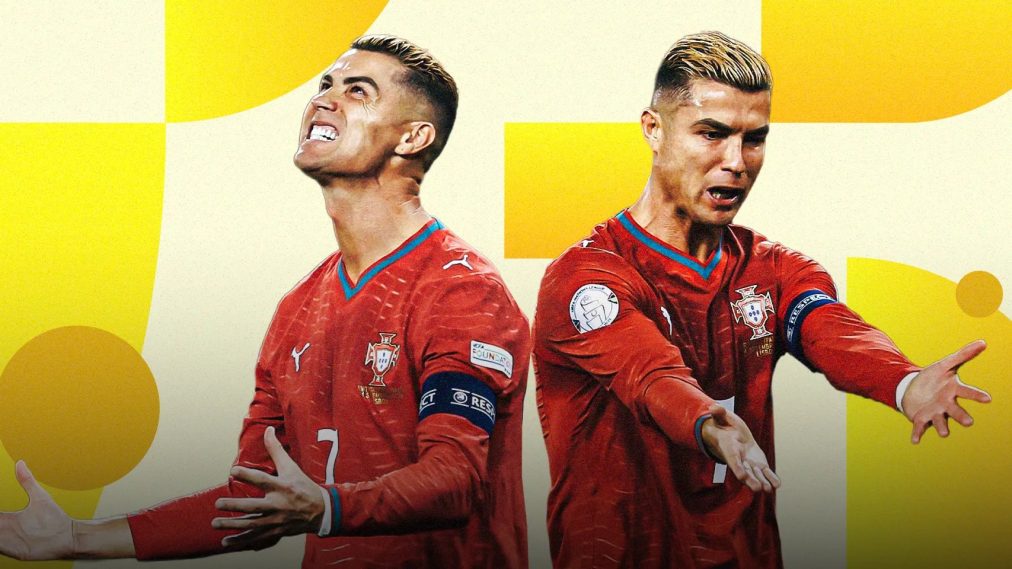
Cristiano Ronaldo’s final days with Portugal appear to be unfolding amid a crisis, threatening to bring an undignified conclusion to an extraordinary international career with the “Brazil of Europe”.
At 41, Ronaldo has faced a dispute with Portugal manager and fellow Portuguese Jorge Jesus, a surprising development given that many expected Jesus to be his strongest defender during the closing stages of his time with the national team. Since Jesus was appointed, supporters had believed Ronaldo had finally found a coach who understood him, knew how to manage him and would give him the role he wanted.
That relationship has now changed sharply. Jesus was appointed at Al Nassr after a call from Ronaldo and spent much of last season praising the forward and defending him during his most difficult periods. The reasons for the latest dispute remain unclear. Ronaldo has said he will reveal the truth at the right time.
But one reality should have been accepted sooner: at 41, even Cristiano Ronaldo cannot assume he will remain the first choice forever. Being left on the bench for one match would not have diminished his achievements. He could have been angry, challenged the decision or asked the manager for an explanation. Instead, the player who spent two decades imposing himself on the football world has struggled with the fact that time is no longer working in his favour.
The tension, his departure from the training camp and leaving Portugal in the middle of a crisis – whatever the real reasons – risk creating a final chapter that does not reflect the career he built. His pursuit of records, including the target of 1,000 goals, has been a defining feature of his later international years. The pride that drove him to overcome scepticism, return from injuries, adapt his game and defy age may now be preventing him from recognising when to stop.
The examples Ronaldo could have followed
Lionel Messi offers a different model. He briefly retired from international football in 2016 after Argentina lost the Copa America final, before reversing that decision. His true farewell came after he led Argentina to the 2022 World Cup and then another Copa America title. He continued through the 2026 World Cup before announcing his permanent international retirement at 39, following defeat by Spain in the final.
Messi did not leave because he could no longer play, because he had been asked to go or because a manager had decided another player was better for one match. He left when he felt the story had reached its final chapter. Next week, he will play a farewell match against Benin at the Monumental, in what will become a celebration of an ending he chose himself.
Zinedine Zidane’s departure from France was painful but also deliberate. He announced that the 2006 World Cup would be his final tournament, produced an outstanding campaign, guided France to the final and scored a historic Panenka penalty before being sent off against Italy. His headbutt on Marco Materazzi damaged the final image, but Zidane did not wait to become a peripheral player or turn his place in the team into a daily dispute. He left France at 34, with supporters wishing he had continued despite his ability to offer more physically.
Pele provides perhaps the clearest lesson. After leading Brazil to their third World Cup in 1970, he played his final international match in 1971 at the age of 30. He could still have made a difference, but chose to close the door at the summit rather than wait to lose his place or be told his role had diminished. Pele chose the moment.
-
 Senegal youngster Serigne Afia Ndao monitored by several foreign clubs Oct 1, 2026
 -
Mali forward Almamy Gory leaves squad after injury assessment Oct 1, 2026
-
Mohamed El Shenawy extends Al Ahly stay until 2028 Oct 1, 2026
-
Guinea hand Mohamed Richard Camara debut as Kenya visit becomes must-win Oct 1, 2026


-
AFCON 2025: Fixtures, Results, Scores and Standings Jan 18, 2026
-
Match hero Taiwo Awoniyi reflects on team effort after Chelsea triumph May 5, 2026
-
Leadership and long-term vision key to rescuing Zamalek and inspiring Egyptian football – Hany Abou Rida Nov 5, 2025
-
South African giants Orlando Pirates set to lose influential forward Monnapule Saleng Mar 19, 2025




-
AFCON 2027 Qualifiers: McCarthy warns South Africa to expect tough test against Eritrea Sep 29, 2026
-
AFCON 2027 qualifiers: Algeria, Morocco and Nigeria among winners on opening matchday Sep 26, 2026
-
AFCON 2027 qualifiers: Burkina Faso held by Benin in Group F Sep 25, 2026
-
South Sudan vs Egypt: Where to watch AFCON 2027 qualifier Sep 29, 2026