Ballon d’Or race heats up as contenders launch unprecedented media campaigns
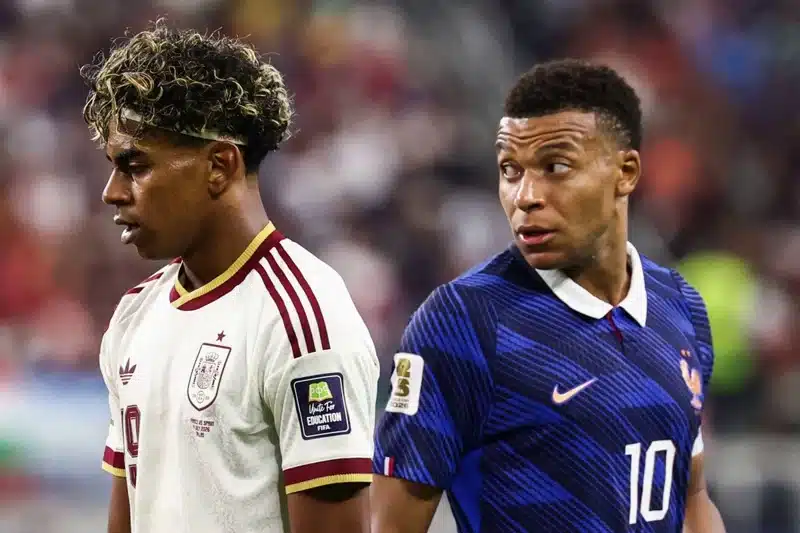
The race for the 2026 Ballon d’Or has entered a new phase, with leading contenders stepping into the spotlight to publicly make their cases for football’s most prestigious individual prize.
Voting for the award closed on Monday, but the intense debate surrounding the leading candidates is expected to continue until October 26, when the winner will be crowned at a ceremony in London.
This year’s campaign has generated an unusually high level of attention, with players, clubs and their representatives actively shaping the narrative around the contenders.
According to Pascal Ferré, the former editor-in-chief of France Football and author of The Hidden Face of the Ballon d’Or, the 2026 campaign has been “largely unprecedented in terms of media noise.”
Unlike previous years, when lobbying was largely conducted by clubs, coaches, teammates and players’ entourages, several leading contenders have openly argued their own cases.
Real Madrid forward and France captain Kylian Mbappé has been particularly direct, declaring that he believes nobody performed better than him during the previous season.
“There was no player better than me last season,” Mbappé said, while also referring to himself as someone who had always been viewed as the “chosen one.”
Paris Saint-Germain winger Ousmane Dembélé, who is seeking to retain the award he won last year, offered a different perspective.
“I was never the ‘chosen one,’ but I worked hard,” Dembélé said.
Barcelona and Spain youngster Lamine Yamal has also entered the debate, stressing that the award should not simply be determined by the number of goals scored but by the overall qualities of a player.
The public exchanges have added another dimension to a prize that has historically generated fierce debate, particularly during the decade-long dominance of Lionel Messi and Cristiano Ronaldo.
The controversy surrounding the award has also intensified in recent years. Real Madrid notably boycotted the 2024 ceremony after Vinícius Júnior missed out on the prize, with Manchester City midfielder Rodri eventually taking the award.
Ferré believes the continuing attention surrounding the men’s Ballon d’Or demonstrates the enduring appeal of the prize.
“If the men’s Ballon d’Or garners so much attention, it is because it remains a machine that ignites the imagination, generates pressure, and builds suspense,” he said, arguing that the attention shows the award has retained its credibility and legitimacy.
Bruno Bianzina, director of sports communications consultancy Sport Market, believes the major change this year is the increasingly visible involvement of the players themselves.
“The real shift is that players have entered the fray themselves. Previously, lobbying campaigns were more institutional and less visible, led by clubs and the players’ inner circles. Today, however, they have become more aggressive, driven by a desire to craft a specific narrative for each player,” Bianzina said.
The lack of an obvious consensus candidate has also contributed to the intensity of the campaign.
“There is no clear frontrunner in the race, and every contender believes they have a chance. Consequently, each is trying to impose their own narrative and shift the evaluation criteria to favor their own case,” Bianzina added.
The official Ballon d’Or criteria place individual performance first, including a player’s statistics and performances, followed by collective achievements.
That has created different arguments for the leading candidates.
Mbappé can point to his individual output for Real Madrid and France, including finishing as the top scorer at the 2026 FIFA World Cup. England captain Harry Kane also boasts remarkable numbers after scoring 61 goals in 51 matches for Bayern Munich.
However, neither Mbappé nor Kane won the World Cup or the Champions League during the period under consideration.
Yamal and Rodri, meanwhile, were part of Spain’s World Cup triumph, while Dembélé and Georgia international Khvicha Kvaratskhelia helped Paris Saint-Germain secure the Champions League for the second consecutive season.
The debate therefore extends beyond statistics, with individual performances, international success and club achievements all forming part of the arguments being presented by the different camps.
Paris Saint-Germain have 10 players on the 30-man shortlist, matching their tally from last year. The French club has indicated that its campaign is focused on the collective achievements of its players.
The club has also arranged joint interviews featuring Dembélé and Kvaratskhelia, while Spain midfielder Fabián Ruiz has been given further exposure through a series of individual interviews.
With voting already closed, however, the campaigns can no longer influence the ballots. The remaining debate will instead shape public perception as football waits for the announcement in London on October 26.
As Ferré put it: “The Ballon d’Or is not a contest to see who can generate the most noise.”
-
 Ballon d’Or race heats up as contenders launch unprecedented media campaigns Sep 30, 2026
 -
Morocco coach Mohamed Ouahbi satisfied with Atlas Lions’ perfect AFCON qualifying start Sep 30, 2026
-
‘Not a great night’ – English media tear into Bukayo Saka after Czech Republic display Sep 30, 2026
-
PSG identify €65m-rated Alberto Costa as backup for Morocco star Achraf Hakimi Sep 30, 2026


-
AFCON 2025: Fixtures, Results, Scores and Standings Jan 18, 2026
-
Leadership and long-term vision key to rescuing Zamalek and inspiring Egyptian football – Hany Abou Rida Nov 5, 2025
-
Match hero Taiwo Awoniyi reflects on team effort after Chelsea triumph May 5, 2026
-
South African giants Orlando Pirates set to lose influential forward Monnapule Saleng Mar 19, 2025




-
AFCON 2027 Qualifiers: McCarthy warns South Africa to expect tough test against Eritrea Sep 29, 2026
-
AFCON 2027 qualifiers: Algeria, Morocco and Nigeria among winners on opening matchday Sep 26, 2026
-
AFCON 2027 qualifiers: Burkina Faso held by Benin in Group F Sep 25, 2026
-
South Sudan vs Egypt: Where to watch AFCON 2027 qualifier Sep 29, 2026