AFCON 2027 Qualifiers: Five things learned from Nigeria’s 3-0 defeat to Guinea-Bissau
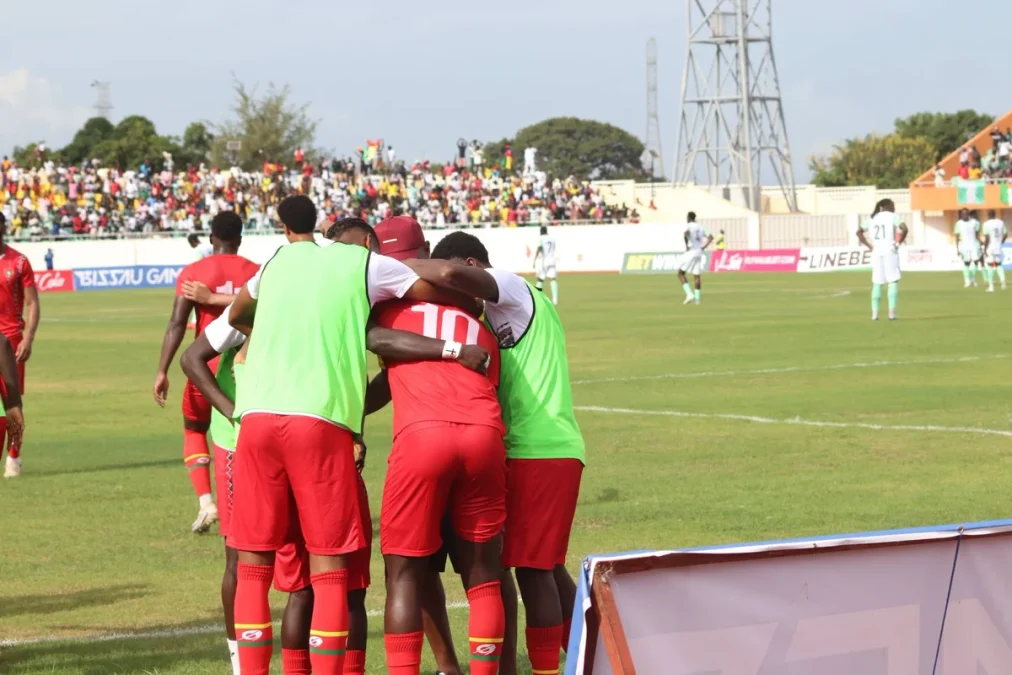
Nigeria’s 2027 Africa Cup of Nations qualifying campaign suffered a major setback on Tuesday as the Super Eagles were beaten 3-0 by Guinea-Bissau in a match that exposed several weaknesses in Eric Chelle’s side.
After narrowly beating Madagascar 2-1 in Uyo on Friday, Nigeria travelled to face the Djurtus hoping to build momentum in Group C. Instead, an early goal from Franculino Djú, followed by second-half strikes from captain Mama Baldé and Alvaro Djalo, condemned the Super Eagles to a heavy defeat.
The result leaves Nigeria with plenty to address ahead of their next qualifying assignment.
Here are five things learned from the defeat.
Chelle’s changes failed to deliver
Chelle made three changes to the side that beat Madagascar, bringing Frank Onyeka, Bright Osayi-Samuel and Taiwo Awoniyi into the starting XI.
Samuel Chukwueze, Ola Aina and George Ilenikhena dropped out, with Ilenikhena’s absence understood to have been linked to fitness concerns.
The changes did not produce the desired response. Nigeria struggled to establish control and were unable to find the attacking fluency that helped them recover from behind against Madagascar.
While the coach’s decision to rotate his squad was understandable, the replacements could not prevent Nigeria from falling into another difficult start.
Nigeria have not solved their early-goal problem
For the second consecutive match, the Super Eagles conceded early.
Against Madagascar, Nigeria fell behind before fighting back to win 2-1. However, there was no repeat of that recovery in Guinea-Bissau.
Franculino punished Nigeria’s slow start by skipping past Bruno Onyemaechi before curling an excellent effort into the bottom corner beyond Stanley Nwabali.
The goal once again forced Nigeria to chase the game, but this time the response lacked the intensity and quality required to turn the contest around.
The recurring problem raises questions about the team’s concentration during the opening stages of matches.
Franculino gives Nigeria’s defence a torrid night
Franculino was one of the biggest differences between the two sides.
The Trabzonspor forward repeatedly troubled the Nigerian defence with his pace, close control and movement. Onyemaechi, in particular, found it difficult to cope with the 22-year-old.
His contribution went beyond the opening goal, as he continued to stretch Nigeria’s defensive structure and create problems whenever he received the ball in dangerous areas.
The performance demonstrated how vulnerable the Super Eagles could look when opponents attack them directly and expose spaces around their defensive players.
The pitch hampered Nigeria’s passing game
Nigeria also struggled to impose their usual possession-based approach, with the condition of the playing surface making the task more difficult.
The uneven pitch affected the speed and accuracy of the Super Eagles’ passing, while several players appeared uncomfortable when attempting to control the ball.
That disrupted Nigeria’s attempts to build attacks from deep and maintain sustained pressure on Guinea-Bissau.
However, the playing surface alone could not explain the defeat. The Super Eagles struggled to create enough clear opportunities and were unable to adapt effectively as the game developed.
Attack suffers without Osimhen
The absence of Victor Osimhen was once again felt as Nigeria struggled to provide a consistent threat in the final third.
Osimhen missed the fixture through injury, while Ilenikhena, who replaced him against Madagascar and scored on his debut, was unavailable to start because of fitness concerns.
That left Ademola Lookman, Akor Adams and Awoniyi to lead the attack, but none could provide the spark Nigeria needed.
Awoniyi was withdrawn at the start of the second half before Lookman and Adams were also replaced later in the game.
With Guinea-Bissau comfortably containing Nigeria for long periods, the Super Eagles lacked the cutting edge required to turn possession into goals.
The 3-0 defeat therefore leaves Chelle with several areas to address, particularly Nigeria’s starts, defensive organisation and attacking options when key players are unavailable.
-
 AFCON 2027 Qualifiers: Five things learned from Nigeria’s 3-0 defeat to Guinea-Bissau Sep 30, 2026
 -
AFCON 2027 qualifiers: Ouahbi sets clear target for Morocco after Lesotho win Sep 29, 2026
-
Morocco maintain perfect start as Azzedine Ounahi earns Faouzi Jamal’s top rating Sep 29, 2026
-
AFCON 2027 qualifiers: Beating Lesotho was not easy – Morocco goalkeeper Yassine Bounou Sep 29, 2026



-
AFCON 2025: Fixtures, Results, Scores and Standings Jan 18, 2026
-
Leadership and long-term vision key to rescuing Zamalek and inspiring Egyptian football – Hany Abou Rida Nov 5, 2025
-
Match hero Taiwo Awoniyi reflects on team effort after Chelsea triumph May 5, 2026
-
South African giants Orlando Pirates set to lose influential forward Monnapule Saleng Mar 19, 2025




-
AFCON 2027 Qualifiers: McCarthy warns South Africa to expect tough test against Eritrea Sep 29, 2026
-
AFCON 2027 qualifiers: Algeria, Morocco and Nigeria among winners on opening matchday Sep 26, 2026
-
AFCON 2027 qualifiers: Burkina Faso held by Benin in Group F Sep 25, 2026
-
South Sudan vs Egypt: Where to watch AFCON 2027 qualifier Sep 29, 2026