Manchester City verdict puts fresh pressure on Nasser Al-Khelaifi ahead of EFC meeting
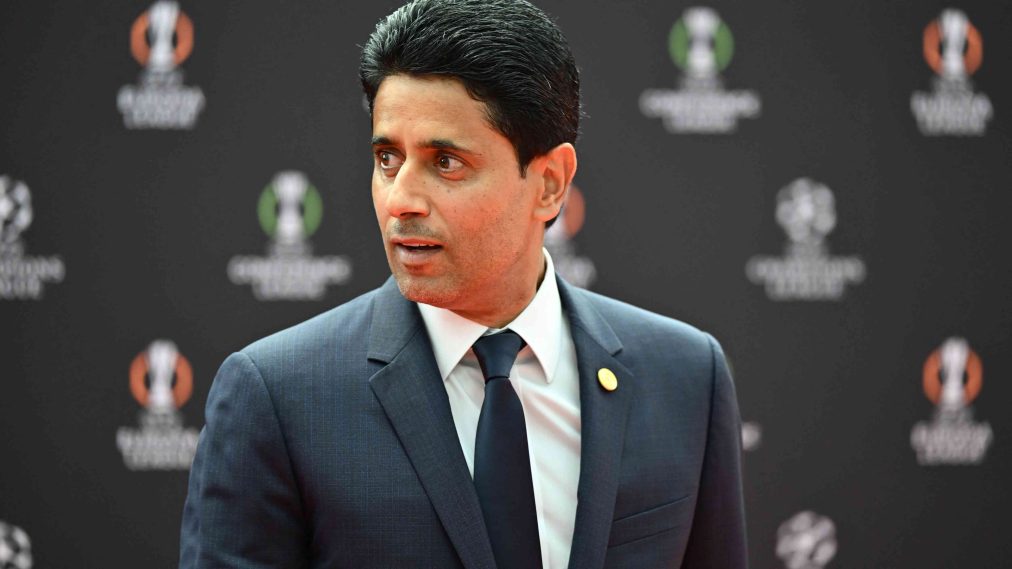
The decision to find Manchester City in breach of Premier League financial rules has reignited tensions in European football, just hours before the European Football Clubs (EFC) meeting in Copenhagen.
The ruling has reopened questions about the relationship between Europe’s leading clubs and the bodies responsible for regulating competitions. It has also revived long-running concerns over whether financial rules are applied consistently across the game.
The Copenhagen meeting is being held by the EFC, previously known as the European Club Association (ECA), which represents more than 800 clubs. Its president is Nasser Al-Khelaifi, who is also president of Paris Saint-Germain.
Al-Khelaifi took charge after almost all of the clubs involved in the proposed European Super League returned to the established European structure. Real Madrid is the main exception and continues to pursue the issue independently.
Manchester City’s case is expected to be a major topic at the meeting, with the verdict prompting renewed debate over whether some clubs have operated within the rules while others have benefited from greater room for manoeuvre.
City and Paris Saint-Germain under scrutiny
Manchester City and Paris Saint-Germain have long been among the clubs attracting questions about the source of their funding and the value of certain commercial agreements.
Of the 115 charges brought against Manchester City by the Premier League, dozens concern commercial contracts alleged to have been inflated through sponsorship agreements linked to companies in Abu Dhabi, according to the case against the club.
Paris Saint-Germain and Al-Khelaifi have also faced criticism and similar allegations from different parties over commercial and financial relationships connected to Qatar.
That leaves Al-Khelaifi in a particularly sensitive position. He is not only the head of one of the clubs associated with these debates, but also leads the organisation intended to represent European clubs collectively.
His position is likely to make the Copenhagen meeting an important setting for discussions about the consequences of the Manchester City ruling and its possible impact on relations between the continent’s biggest clubs.
Al-Khelaifi will be joined by several prominent allies in European football, including Aleksander Ceferin, Gil Marin and Joan Laporta. However, addressing the repercussions of the case will be difficult as more parties begin to discuss potential financial rights and compensation.
Premier League clubs consider legal action
The issue extends beyond Manchester City. The other 19 Premier League clubs are examining possible legal routes to seek compensation for losses they say they may have suffered over previous years.
Any claim would depend on establishing that the alleged breaches affected competition or altered the distribution of income and opportunities within the league.
The case has also drawn reactions from former and current players. David de Gea expressed his anger on social media with the sarcastic question: “How many Premier League titles did I win?”
Reports in Romania have also suggested that Barcelona could consider seeking compensation after being eliminated by Manchester City in the 2016 Champions League qualifying rounds, with the reports linking that outcome to financial consequences for the Spanish club.
The verdict has therefore developed from a Premier League financial-rules case into a wider dispute over competitive fairness, the enforcement of regulations and clubs’ financial responsibility. It may also lead to claims from parties who believe they were harmed by the alleged breaches.
As the EFC prepares to meet in Copenhagen, Al-Khelaifi faces a complex new issue within one of Europe’s largest club organisations, with the Manchester City case bringing old divisions back into focus.
-
 AFCON 2027 Qualifiers: Uganda make history as Cranes host Libya in first competitive match in Hoima Sep 29, 2026
 -
AFCON 2027 Qualifiers: Late touchline clash mars Tunisia and Botswana clash Sep 29, 2026
-
Doubts grow over 2027 AFCON as CAF faces concerns over East Africa preparations Sep 29, 2026
-
Emerse Faé to share Cote d’Ivoire’s remarkable rise at CAF strategy conference Sep 29, 2026



-
AFCON 2025: Fixtures, Results, Scores and Standings Jan 18, 2026
-
Leadership and long-term vision key to rescuing Zamalek and inspiring Egyptian football – Hany Abou Rida Nov 5, 2025
-
Match hero Taiwo Awoniyi reflects on team effort after Chelsea triumph May 5, 2026
-
South African giants Orlando Pirates set to lose influential forward Monnapule Saleng Mar 19, 2025




-
AFCON 2027 Qualifiers: Matchday 1 & 2 fixtures, kick-off times and venues confirmed Sep 22, 2026
-
AFCON 2027 qualifiers: Burkina Faso held by Benin in Group F Sep 25, 2026
-
Sierra Leone step up AFCON 2027 preparations ahead of Zimbabwe opener Sep 22, 2026
-
AFCON 2027 qualifiers: Algeria, Morocco and Nigeria among winners on opening matchday Sep 26, 2026