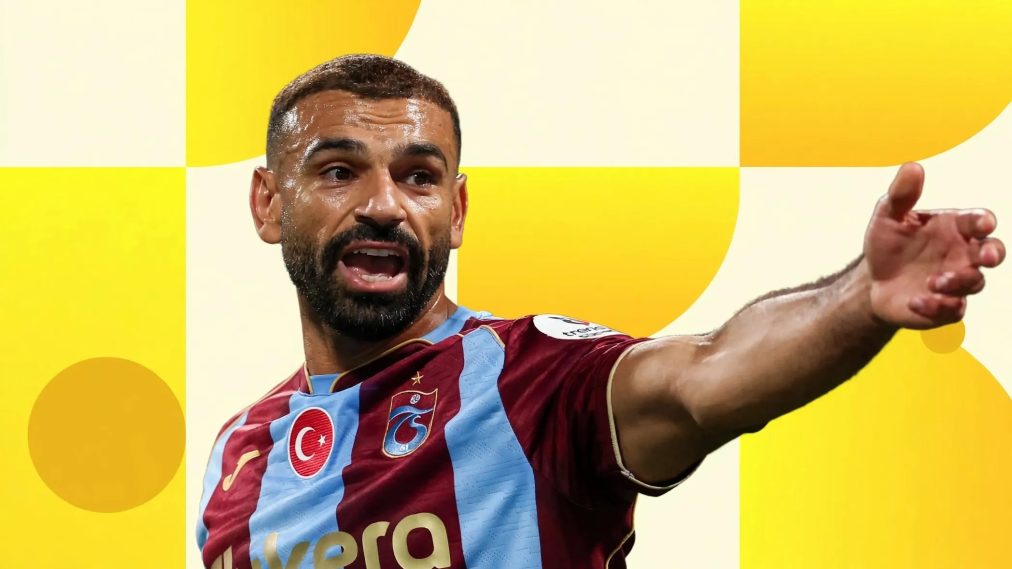
The decision to leave Mohamed Salah out of Egypt’s match against South Sudan because of concerns over artificial turf could come under scrutiny if he plays on the same surface for Trabzonspor in Europe this season.
Salah was rested for the 2027 Africa Cup of Nations qualifier in Juba after an agreement with Egypt manager Hossam Hassan’s coaching staff to “protect him”, according to the Egyptian Football Association. The decision was based on the potential risk of injury presented by the artificial pitch.
The rationale appeared understandable at first, given Salah’s importance to Egypt and the priority placed on protecting the country’s leading player. However, the justification raises questions because Trabzonspor did not make the same request when Salah was involved in previous matches on artificial surfaces.
In October 2024, Salah missed the matches against Mauritania and Cape Verde at Nouakchott’s artificial pitch. Liverpool’s medical staff were concerned about the possibility of further back and knee injuries, but Trabzonspor did not seek similar protection.
The issue may become more complicated in Europe. No team in the Turkish Super Lig plays its home matches on artificial turf; all of the league’s stadiums have natural grass. But Trabzonspor’s European campaign could provide a direct test of the argument used by Egypt.
Trabzonspor are due to face Freiburg, KuPS, Hearts, Jablonec and CSKA Sofia in the UEFA Conference League. KuPS play their home matches at Vare Areena, which is entirely covered with artificial turf.
That means Trabzonspor may have to play an official European fixture on the very surface that led Egypt to rest Salah. The club will not withdraw from the match, of course. Modern football accommodates artificial pitches, and they are approved for use by UEFA.
That context is central to the debate over Salah’s absence from the Egypt camp. During his career with Basel, Chelsea, Fiorentina, Roma and Liverpool, he has played dozens of matches on artificial turf, including some European qualifying games.
A review of the available record contains no documented injury suffered by Salah that was specifically caused by artificial turf. Egypt’s decision was therefore based not on a previous injury linked to the surface, but on the possibility of a future one.
That leaves a difficult question for the Egyptian Football Association. If Salah plays on artificial turf in Europe with Trabzonspor, how can the surface be considered dangerous enough to justify resting the national team captain in a competitive fixture while remaining an approved and safe playing surface for the same player at club level?
There is also uncertainty over the wider impact of Salah’s departure from the Egypt camp. He will miss Tuesday’s meeting with South Sudan, but it remains unclear whether he will also be absent for the final match of the camp against South Africa at Cairo International Stadium.
The issue is not whether Egypt want to protect Salah, but whether that protection is being applied consistently. A clear medical protocol would provide a stronger basis than a decision that appears selective. If Salah plays in Europe on artificial turf this season, the explanation given in Cairo will face its first serious test.
-
 AFCON 2027 Qualifiers: Uganda make history as Cranes host Libya in first competitive match in Hoima Sep 29, 2026
 -
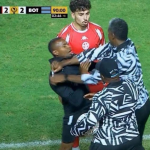
AFCON 2027 Qualifiers: Late touchline clash mars Tunisia and Botswana clash Sep 29, 2026
-
Doubts grow over 2027 AFCON as CAF faces concerns over East Africa preparations Sep 29, 2026
-
Emerse Faé to share Cote d’Ivoire’s remarkable rise at CAF strategy conference Sep 29, 2026


-
AFCON 2025: Fixtures, Results, Scores and Standings Jan 18, 2026
-
Leadership and long-term vision key to rescuing Zamalek and inspiring Egyptian football – Hany Abou Rida Nov 5, 2025
-
Match hero Taiwo Awoniyi reflects on team effort after Chelsea triumph May 5, 2026
-
South African giants Orlando Pirates set to lose influential forward Monnapule Saleng Mar 19, 2025




-
AFCON 2027 Qualifiers: Matchday 1 & 2 fixtures, kick-off times and venues confirmed Sep 22, 2026
-
AFCON 2027 qualifiers: Burkina Faso held by Benin in Group F Sep 25, 2026
-
Sierra Leone step up AFCON 2027 preparations ahead of Zimbabwe opener Sep 22, 2026
-
AFCON 2027 qualifiers: Algeria, Morocco and Nigeria among winners on opening matchday Sep 26, 2026