Abdullah Al-Hamdan endured a difficult night as Saudi Arabia began their Gulf Cup 27 campaign with a 1-0 victory over Kuwait on Wednesday.
The Al-Nassr striker started the match but failed to make the most of his opportunities, missing two clear chances and making poor decisions during several other attacks.
Al-Hamdan’s positioning was often ineffective, while hesitation in front of goal prevented him from contributing more to Saudi Arabia’s performance. His first major opportunity arrived early in the game when Hamam Al-Hamami played a precise pass through to send him one-on-one with the Kuwait goalkeeper.
Rather than finish into the net, however, Al-Hamdan produced a surprising miss with his left foot.
He also failed to use a number of passes effectively. On several occasions, he needed to make the correct run, use his body to protect the ball and keep Kuwait’s defenders away from it. Instead, he was unable to take advantage of those situations, costing the Saudi Arabia side further opportunities.
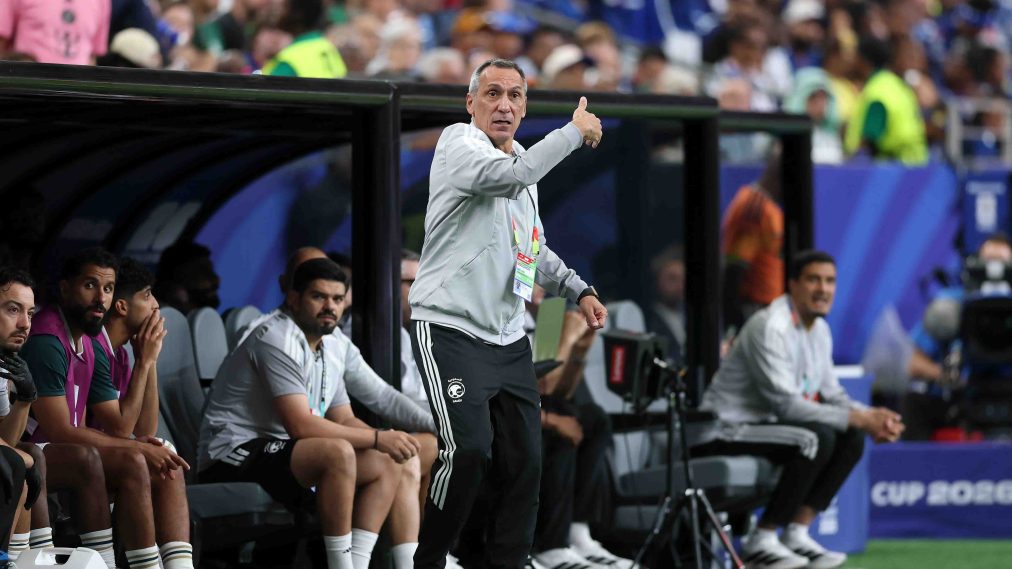
After 83 minutes, Saudi Arabia manager Georgios Donis replaced Al-Hamdan with Firas Al-Buraikan. The substitution was met by criticism and jeers from supporters in the stands.
Al-Buraikan made a positive impact after coming on, constantly moving both inside and outside the penalty area. He also drifted towards the left flank, creating space for players arriving from deeper positions to move into central areas.
Donis defends Al-Hamdan
Donis defended Al-Hamdan’s performance during his post-match news conference, pointing to the striker’s lack of regular football at club level.
“He sometimes plays and at other times he does not,” Donis said.
“I am not a magician who can change what Al-Hamdan is experiencing with his club, but he remains an important player for us and will certainly give us extra quality and strength.”
Al-Hamdan was responsible for missing the chances presented to him and for failing to deal properly with some attacking situations. However, his performance can also be assessed in the context of the role he was asked to play.
His strongest position is just behind the main striker, where he can operate as a second forward, attack the penalty area and exploit the space between the centre-backs when the leading striker moves away from the box.
That role has highlighted his qualities, particularly since his time with Al-Nassr from last season onwards. Al-Hamdan is mobile, makes effective runs into space and can trouble opponents with powerful shots. He displayed that threat in Al-Nassr’s most recent match against Al-Khaleej.
Using him as the principal centre-forward, by contrast, is less effective and does not provide Saudi Arabia with the same attacking strength as Abdullah Al-Salem, Firas Al-Buraikan or Saleh Al-Shehri, all of whom are more accustomed to playing as the main striker.
Donis could have responded by changing the team’s shape, either withdrawing Al-Hamdan or introducing a recognised centre-forward, while moving Al-Hamdan back into a supporting role.
-
 Cameroon begin 2027 Africa Cup of Nations qualifying campaign against Comoros Sep 24, 2026
 -
Africa Cup of Nations 2027 qualifiers: Cote d’Ivoire v Ghana headlines opening day Sep 24, 2026
-
Kevin Denkey confident Togo will qualify for CAN 2027 ahead of Burundi opener Sep 24, 2026
-
DR Congo U23s arrive in Casablanca ahead of Mauritania qualifiers Sep 24, 2026




-
AFCON 2025: Fixtures, Results, Scores and Standings Jan 18, 2026
-
Leadership and long-term vision key to rescuing Zamalek and inspiring Egyptian football – Hany Abou Rida Nov 5, 2025
-
Match hero Taiwo Awoniyi reflects on team effort after Chelsea triumph May 5, 2026
-
South African giants Orlando Pirates set to lose influential forward Monnapule Saleng Mar 19, 2025




-
Atletico Madrid vs Real Madrid: Derby date, kick-off time and where to watch Sep 18, 2026
-
Atletico Madrid v Real Madrid: Mbappe backed to score in key La Liga derby Sep 17, 2026
-
Marseille face PSG in Ligue 1’s latest Classique: kick-off time, TV details and form guide Sep 19, 2026
-
Barcelona face Sevilla seeking seventh straight league win Sep 17, 2026