Abdeslam Ouaddou discovers winning gives coaches the loudest voice in South African football
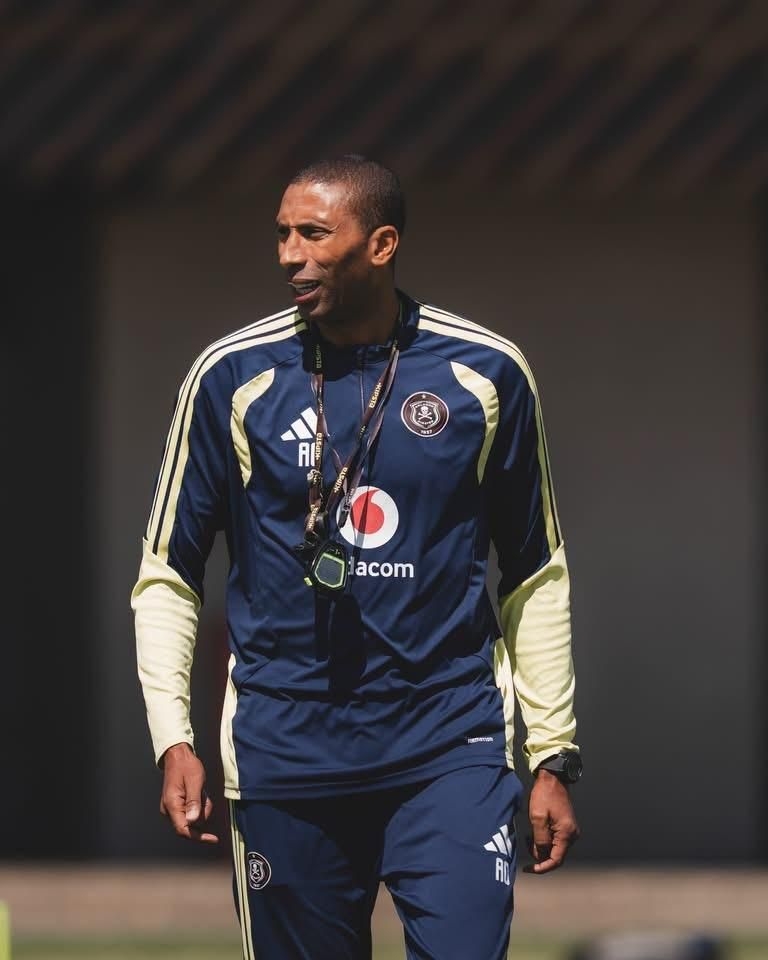
Orlando Pirates coach Abdeslam Ouaddou is discovering an unwritten rule of South African football: success gives managers greater authority to decide how the game should be played.
Ouaddou has become involved in a familiar debate after saying he would rather leave than accept his players showboating. His preference is for efficiency, goals and sound decision-making once control has been established, rather than tricks performed for entertainment.
The argument itself is not unusual. Ouaddou distinguishes between using skill to advance the ball and displaying technique simply to amuse the crowd.
His difficulty is that South African football has rarely treated flair and identity as separate issues. The strength of his position may depend less on the principle itself than on what he achieves with Orlando Pirates.
Stuart Baxter faced a similar situation at Kaizer Chiefs. After his team had secured the league title, his players began entertaining supporters with tricks. Baxter acknowledged that he accepted the showboating because the league had already been won.
That admission underlined how success can change a manager’s perspective. Once the medals are safely secured, there is more freedom to allow players to indulge the spectacle.
Pitso Mosimane adopted a stricter view after Mamelodi Sundowns defeated Orlando Pirates 6-0 in 2017. He criticised unnecessary showboating and said opponents deserved respect. Yet Mosimane was making that argument from the position of a coach whose Mamelodi Sundowns team was regularly winning trophies.
Manqoba Mngqithi later expressed a similar opinion, saying he would replace players who showboated. What excited him, he said, was seeing the ball find the net.
Rulani Mokwena’s Mamelodi Sundowns teams placed heavy importance on possession, control and tactical detail while dominating the Betway Premiership. Miguel Cardoso has followed his own approach, repeatedly calling for emotion to be channelled into the technical and tactical aspects of football rather than allowing it to replace them.
The common factor among those managers was that they had won.
That is the debate Ouaddou has now entered. Coaches who win league titles gain the standing to explain how football ought to be played. They can be uncompromising, confident or even arrogant because the trophy provides evidence for their argument.
For Ouaddou, the challenge is to establish that authority at Orlando Pirates while asking South Africa to accept his understanding of professionalism. His influence will ultimately be decided not by how forcefully he speaks against showboating, but by his results.
If Orlando Pirates win the Betway Premiership, make a serious run in Africa and continue adding to the trophy cabinet, Ouaddou will have the authority to decide when his players should juggle, dribble, entertain or simply score.
The argument will matter less because, in South African football, success brings more than trophies. It gives a coach the strongest voice in the debate over how those trophies should be won.
-
 Mali v Cape Verde: hosts tipped to avoid defeat in CAN 2027 opener Sep 23, 2026
 -
Kaitano Tembo returns to South African football as Venda FC head coach Sep 23, 2026
-
Ghana captain Jordan Ayew ruled out of 2027 Africa Cup of Nations qualifiers Sep 23, 2026
-
Henri Koudoussou embraces emotional first Togo call-up for 2027 Africa Cup of Nations qualifiers Sep 23, 2026

-
AFCON 2025: Fixtures, Results, Scores and Standings Jan 18, 2026
-
Leadership and long-term vision key to rescuing Zamalek and inspiring Egyptian football – Hany Abou Rida Nov 5, 2025
-
Match hero Taiwo Awoniyi reflects on team effort after Chelsea triumph May 5, 2026
-
South African giants Orlando Pirates set to lose influential forward Monnapule Saleng Mar 19, 2025




-
Atletico Madrid vs Real Madrid: Derby date, kick-off time and where to watch Sep 18, 2026
-
Atletico Madrid v Real Madrid: Mbappe backed to score in key La Liga derby Sep 17, 2026
-
African Stars choose Botswana’s Lucas Moripe Stadium to host Orlando Pirates in CAF Champions League Sep 16, 2026
-
Marseille face PSG in Ligue 1’s latest Classique: kick-off time, TV details and form guide Sep 19, 2026