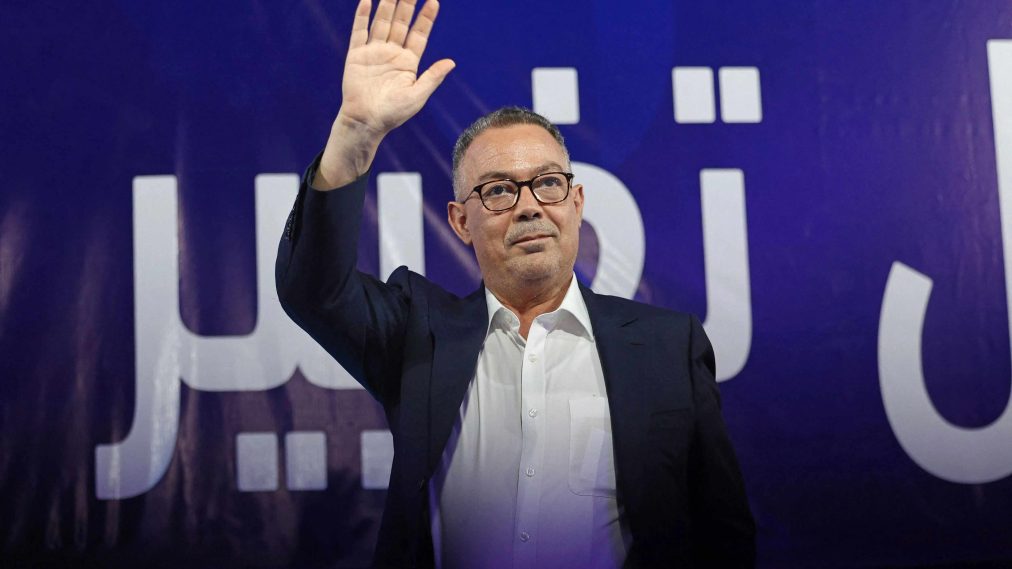
The race to host the 2030 World Cup final remains open between Spain and Morocco, with the Hassan II Grand Stadium in Benslimane emerging as a stronger contender.
The final had initially been widely expected to take place at Santiago Bernabeu, while Spotify Camp Nou was also considered a possible venue. However, Morocco’s case has gained momentum as construction continues on a stadium that is expected to become one of the largest in the world.
According to Spanish newspaper Sport, Fouzi Lekjaa, president of the Royal Moroccan Football Federation, is working to strengthen Morocco’s bid by highlighting the facilities and capacity planned for the new ground.
The Hassan II Grand Stadium is expected to hold about 115,000 spectators when completed. That would give it a larger capacity than Spotify Camp Nou, which is expected to accommodate close to 105,000 fans, and Santiago Bernabeu, whose capacity is about 78,000.
Lekjaa makes Morocco’s ambitions clear
Speaking at an electoral event for the Authenticity and Modernity Party, days before Morocco’s parliamentary elections, Lekjaa expressed his country’s determination to stage the 2030 World Cup final.
“We will work with all institutions and all Moroccans to host the 2030 World Cup final in Morocco, regardless of the name of the team that will play in the match,” said the Moroccan federation president.
“Whether people accept it or reject it.”
The comments came about 10 days after Lekjaa said that Benslimane province “will have the honour of organising the 2030 World Cup final”.
He also stressed the need to develop the area and prepare it for the global event. In his earlier remarks, Lekjaa said officials hoping to participate in the next government would be required to work on the development of Benslimane, given its connection with the new stadium project.
Completion date could help Morocco
Morocco’s argument is not based solely on the proposed capacity of the Hassan II Grand Stadium. The expected completion date could also strengthen its position in the contest to host the final.
The stadium is estimated to be fully ready by 2027, at a cost of more than 450m euros. That would allow it to be tested and to host major sporting events before the 2030 World Cup begins.
That timing could prove significant while redevelopment work continues at Spotify Camp Nou. Barcelona president Joan Laporta is hoping the stadium will be selected to stage the tournament’s decisive match.
Despite Lekjaa’s confidence, the final decision has not yet been made. FIFA is expected to wait until next year, or possibly until 2028, before announcing which stadium will host the 2030 World Cup final.
-
 Pitso Mosimane appoints Marcus Mashilo as Bafana Bafana goalkeeper coach Sep 21, 2026
 -
Richards Bay name Dimitar Nikolaev Pantev as new head coach Sep 21, 2026
-
Pyramids star Ramadan Sobhi’s sample ‘different from human urine’ in doping case Sep 21, 2026
-
Mohamed Salah handed six-month driving ban and £660 fine in Britain Sep 21, 2026




-
AFCON 2025: Fixtures, Results, Scores and Standings Jan 18, 2026
-
Leadership and long-term vision key to rescuing Zamalek and inspiring Egyptian football – Hany Abou Rida Nov 5, 2025
-
South African giants Orlando Pirates set to lose influential forward Monnapule Saleng Mar 19, 2025
-
Match hero Taiwo Awoniyi reflects on team effort after Chelsea triumph May 5, 2026




-
Atletico Madrid vs Real Madrid: Derby date, kick-off time and where to watch Sep 18, 2026
-
Atletico Madrid v Real Madrid: Mbappe backed to score in key La Liga derby Sep 17, 2026
-
African Stars choose Botswana’s Lucas Moripe Stadium to host Orlando Pirates in CAF Champions League Sep 16, 2026
-
Europa League: AC Milan, Benfica and Lyon begin new league phase Sep 16, 2026