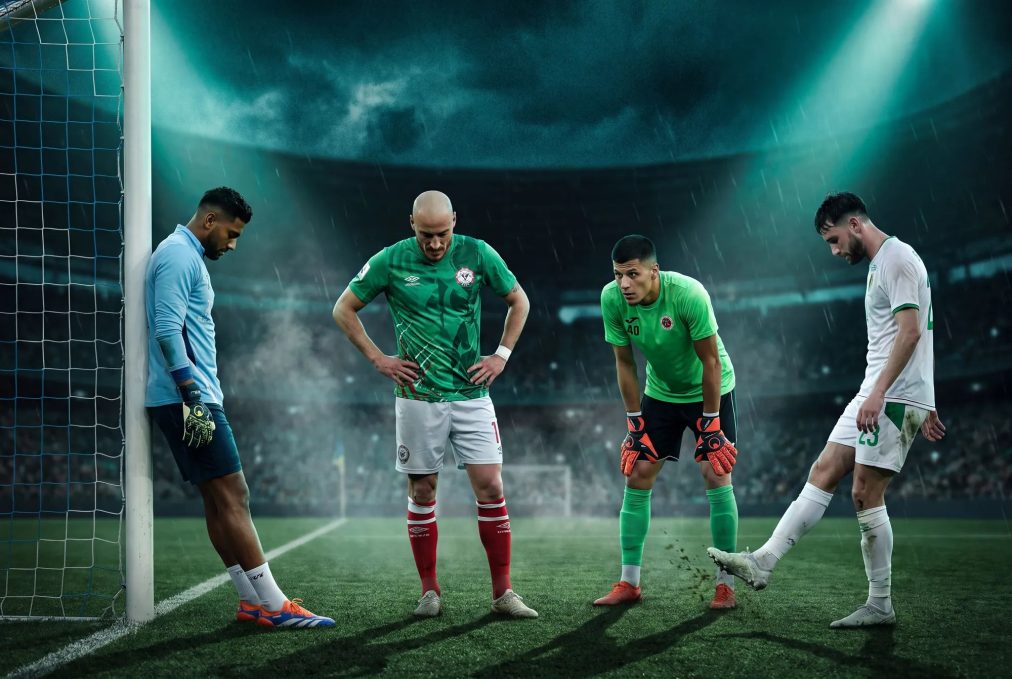
Madagascar have removed goalkeeper Zacharie Boucher from their squad after supporters questioned his eligibility, reviving a wider debate over how far the national team should go in recruiting players from its diaspora.
The 34-year-old, now Troyes’ reserve goalkeeper after three seasons with the club, had previously rejected any connection with Madagascar. In 2018, while first-choice goalkeeper at Auxerre, he said: “I am French, I have never been Malagasy. […] If the manager calls me, it is no. […] The France shirt is important to me. I will not wear any shirt other than that.”
His decision to accept a call-up eight years later prompted an angry reaction from supporters. Boucher has not yet appeared on a Troyes teamsheet this season, and the Malagasy federation subsequently withdrew his name.
The controversy has exposed the limits of Madagascar’s long-standing policy of recruiting from a broad diaspora. That approach helped the Barea reach the quarter-finals of the 2019 Africa Cup of Nations, their first appearance at the tournament.
Nicolas Dupuis’ side in Egypt featured established players including Faneva Andriatsima, Lalaina Nomenjanahary and Anicet Abel, alongside several players from Reunion. The island lies about 900 kilometres from Madagascar and has long-standing family and migration links with it, dating back to the 17th century.
Players raised in Reunion, including Thomas Fontaine, Jerome Mombris, Romain Metanire and goalkeeper Melvin Adrien, represented the Barea, with some qualifying through Malagasy grandparents. Even Jeremy Morel’s arrival at the age of 35 caused more amusement and debate than serious concern.
However, Madagascar have not returned to the Africa Cup of Nations since 2019, and the replacement of that generation has not gone to plan. Instead, the federation has increasingly pursued players whose links to the country are far less direct.
French midfielder Clement Couturier, 33, joined the Barea four years ago after discovering a Malagasy connection through a grandfather. Goalkeeper Geordan Dupire, 32, who plays in Luxembourg, has won eight caps after qualifying through his wife. “She has Malagasy origins. She gets them from her father, who is also Moroccan,” he told Virgule.
Belgian striker Roman Ferber, 33, of Bissen in Luxembourg, also became eligible through his wife. His former Charleroi team-mate, Democratic Republic of the Congo international Theo Bongonda, reacted to the announcement on Instagram: “What? Did I miss an episode? Since when are you from there?”
The questions facing Madagascar are not unique. Equatorial Guinea relied heavily on naturalisation before hosting the 2012 Africa Cup of Nations, bringing in Cameroonian, Nigerian and Cape Verdean players. Former manager Henri Michel, in charge from 2010 to 2011, opposed the policy.
In 2026, French defender Jordan Lefort, 32, joined Mauritania after gaining citizenship through his Mauritanian wife. His wife and in-laws are Mauritanian, while his children already held Mauritanian passports.
Such procedures may be legal, but the Malaysia case shows the risks of pushing eligibility rules too far. FIFA found that documents concerning several players’ grandparents had been falsified. There is no suggestion of fraud by Madagascar, but the federation must ensure every case is beyond doubt.
Madagascar still has a strong domestic pool and a genuinely connected diaspora. The Barea’s run to the final of the most recent CHAN also showed that talent exists at home. The federation should continue identifying Malagasy players and descendants in France, Reunion, Belgium and elsewhere, but the Boucher affair has underlined that eligibility alone cannot be a sporting strategy.
-
 Madagascar withdraw Zacharie Boucher after eligibility backlash Sep 21, 2026
 -
Yankuba Minteh remains on Liverpool’s radar after failed summer move Sep 21, 2026
-
‘What a beast’ – Marciano Vink hails Tolu Arokodare after latest Ajax impact Sep 21, 2026
-
Orlando Pirates boss Abdeslam Ouaddou challenges club legends over criticism Sep 21, 2026



-
AFCON 2025: Fixtures, Results, Scores and Standings Jan 18, 2026
-
Leadership and long-term vision key to rescuing Zamalek and inspiring Egyptian football – Hany Abou Rida Nov 5, 2025
-
South African giants Orlando Pirates set to lose influential forward Monnapule Saleng Mar 19, 2025
-
Match hero Taiwo Awoniyi reflects on team effort after Chelsea triumph May 5, 2026




-
Atletico Madrid vs Real Madrid: Derby date, kick-off time and where to watch Sep 18, 2026
-
Atletico Madrid v Real Madrid: Mbappe backed to score in key La Liga derby Sep 17, 2026
-
African Stars choose Botswana’s Lucas Moripe Stadium to host Orlando Pirates in CAF Champions League Sep 16, 2026
-
Europa League: AC Milan, Benfica and Lyon begin new league phase Sep 16, 2026