Mamelodi Sundowns punish Al Ahli’s lapses as Pusic’s second-half decisions prove costly
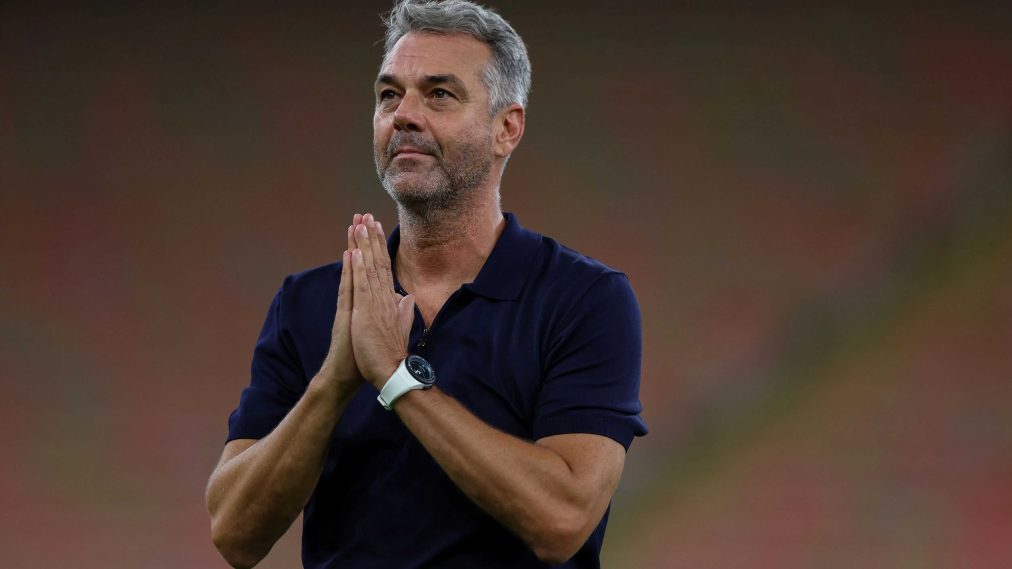
Al Ahli’s defeat by Mamelodi Sundowns was decided less by a clear tactical superiority from the African champions than by a series of small details that the Saudi side failed to manage.
Al Ahli produced strong periods of attacking play but wasted chances and struggled to defend crosses and balls delivered into the penalty area. Mamelodi Sundowns repeatedly targeted that weakness, scoring through Nuno Santos in both halves.
Marino Pusic’s initial plan was effective. Al Ahli allowed Mamelodi Sundowns to have possession and looked to attack on the counter, exploiting the space between their midfield and defence. That approach created several opportunities and gave the Saudi side promising routes towards goal.
However, Al Ahli became increasingly defensive after the interval and stopped attacking the spaces that had been available earlier. Pusic’s substitutions also made the task more difficult, particularly his decision to delay the introduction of Galeno.
Al Ahli fail to exploit space
Al Ahli regularly moved the ball in the final third before sending a player from deep into the space behind the Mamelodi Sundowns defence. The movement was particularly evident with Francisco Trincao and Ziyad Al-Jahni.
Those runs forced the South African side’s defence to adjust constantly and helped Al Ahli reach dangerous positions. The main problem was the final touch, with missed chances preventing them from turning their periods of superiority into a bigger advantage.
Mamelodi Sundowns often pushed forward with numbers, leaving visible gaps behind their defensive line. Al Ahli should have continued to attack those areas through quick transitions, but gradually dropped deeper and became less capable of exploiting them.
That allowed Mamelodi Sundowns to establish greater control of the match and impose their own rhythm.
Toney’s movement creates room for Al-Braikan
Pusic also encouraged Ivan Toney and Firas Al-Braikan to exchange positions. The intention was to use Al-Braikan’s pace and ability to run into open space, an idea that was clear in the move which produced Al Ahli’s goal.
Toney frequently moved away from the penalty area to take up a creative role, leaving room for runners arriving from midfield. That provided Al Ahli with greater flexibility in possession and helped them reach the Mamelodi Sundowns box.
The plan worked particularly well in the first half, although Al Ahli’s failure to take its chances limited its effect. Its influence diminished as fewer players moved forward to attack the available space.
Galeno could have offered another outlet behind the defence, but he was introduced only after Mamelodi Sundowns had scored their second goal and retreated. By then, the space he might have used had largely disappeared.
Sundowns repeatedly expose defensive weakness
Mamelodi Sundowns’ possession was purposeful rather than merely intended to retain the ball. They focused on the flanks and regularly delivered crosses after identifying problems in Al Ahli’s organisation against attacks from wide areas.
The opening goal followed that pattern, with the ball sent behind the defence and Nuno Santos taking advantage of a lack of cover. A similar move produced his second goal in the second half, this time from a cross delivered from the right.
Mohammed Abdulrahman had only just entered the match as a replacement for Saeed Baqatiyah when the second goal arrived. He failed to track Santos inside the area, allowing the Mamelodi Sundowns player the room to turn the cross into the decisive goal.
Abdulrahman cannot be held solely responsible for the defeat, but the incident highlighted Al Ahli’s wider problems with marking and defending crosses, especially as the same pattern produced both goals.
Pusic began with a sound plan and used Toney, Al-Braikan and Trincao effectively, but Al Ahli’s retreat after half-time and the timing of his changes worked against the team. By the time Galeno came on, Mamelodi Sundowns had secured the advantage and removed the spaces he was expected to attack.
-
 Mamelodi Sundowns beat Al Ahli to win FIFA Intercontinental Cup Sep 19, 2026
 -
Farès Chaïbi absent from Frankfurt squad ahead of Algeria camp Sep 19, 2026
-
Antoine Mendy undergoes successful surgery after cruciate ligament injury Sep 19, 2026
-
Zacharie Boucher dropped from Madagascar squad after old comments resurface Sep 19, 2026




-
AFCON 2025: Fixtures, Results, Scores and Standings Jan 18, 2026
-
Leadership and long-term vision key to rescuing Zamalek and inspiring Egyptian football – Hany Abou Rida Nov 5, 2025
-
South African giants Orlando Pirates set to lose influential forward Monnapule Saleng Mar 19, 2025
-
Match hero Taiwo Awoniyi reflects on team effort after Chelsea triumph May 5, 2026




-
African Stars choose Botswana’s Lucas Moripe Stadium to host Orlando Pirates in CAF Champions League Sep 16, 2026
-
Europa League: AC Milan, Benfica and Lyon begin new league phase Sep 16, 2026
-
Atletico Madrid vs Real Madrid: Derby date, kick-off time and where to watch Sep 18, 2026
-
Besiktas and Marseille reveal probable line-ups for Europa League opener Sep 15, 2026