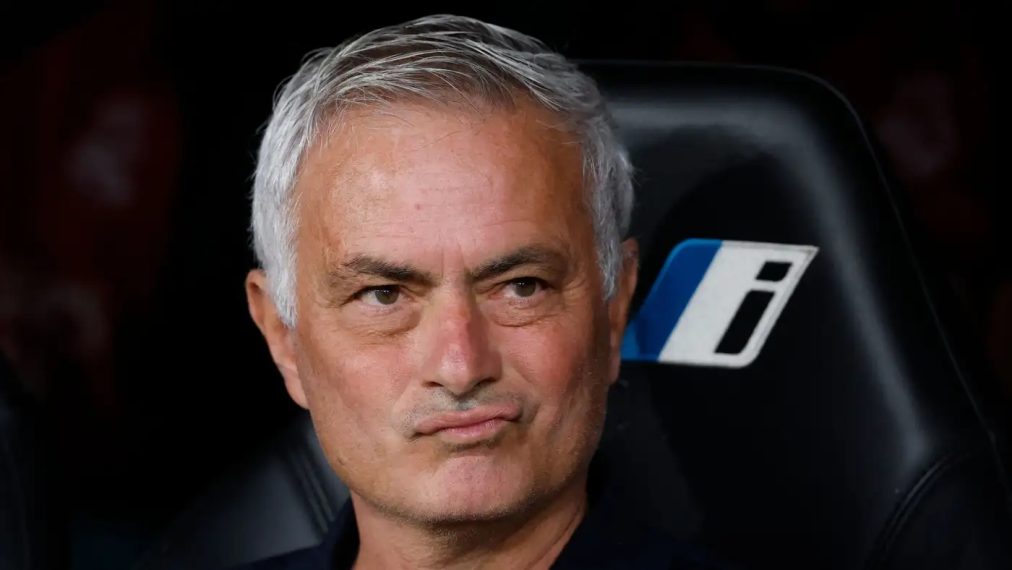
Real Madrid’s recent performances after half-time have exposed a worrying loss of control, with the team failing to win any of its past four matches when only second-half results are considered.
Across those four second halves, Real Madrid have drawn once and lost three times, conceding five goals and scoring only two. According to Spanish newspaper Marca, the pattern has become a significant concern for manager Jose Mourinho rather than merely an isolated statistical weakness.
Real Madrid lost the second half 2-1 against Elche, 1-0 against Inter Milan and 1-0 against Real Betis, while drawing 1-1 with Rayo Vallecano. That amounts to one point from a possible 12, highlighting the team’s sharp decline after returning from the dressing room.
The problem was particularly damaging in the defeat by Real Betis. Against Elche, Real Madrid also came close to another setback after failing to turn periods of superiority into a decisive advantage.
The figures suggest more than a problem with finishing matches. They point to difficulties maintaining intensity, concentration and control when games enter decisive stages. Real Madrid can start strongly, impose their rhythm and create a platform for victory, but have repeatedly struggled to sustain that level for 90 minutes.
Strong starts masking second-half weakness
In three of the four matches, a strong first half gave Real Madrid enough of an advantage to remain in contention, although the team still found it difficult against Inter Milan and Elche. Against Real Betis, however, they did not have that protection and their second-half decline was followed by a painful defeat.
The wider picture is also inconsistent. Of Real Madrid’s last seven matches, six have been in La Liga and one in the Champions League. They won the second half against Malaga, Real Sociedad and Espanyol, including a decisive goal against Real Sociedad.
That shows the issue is not an inability to perform after the interval in every match. Instead, it is a sharp fluctuation that makes Real Madrid’s level difficult to predict. In one game they can impose themselves and effectively settle the contest; in another, they lose control and allow their opponents back into it.
Any further mistake against Elche would have been a serious blow to Real Madrid’s calculations in the title race, particularly with a major fixture against Atletico de Madrid at Wanda Metropolitano to follow.
Mourinho acknowledges the concern
Mourinho recognised the problem after the match against Elche, although he did not offer a clear solution to prevent it happening again.
“The problem is clear to me. There are matches that seem to be decided, but they are not. The only explanation I can find is that they are easy matches that we do not finish. Matches we do not finish, and it seems we move from ease to losing control,” he said.
He added: “This type of stadium, packed with wonderful supporters, makes things difficult. The good thing is that despite this difficulty, the team responds and wins, and that is the most important thing. Another good thing is that nobody gets bored watching Real Madrid matches because they are extremely entertaining.”
The comments carried a degree of humour, but the statistics underline a genuine weakness. Real Madrid may have avoided greater damage through their first-half performances so far, yet they cannot rely on early superiority to protect them throughout the season. If opponents continue to receive the time and space to recover after the interval, the cost could be far greater in more demanding fixtures.
-
 ‘Very good at finishing’ – Enzo Maresca praises Floyd Samba after stunning Man City debut Sep 18, 2026
 -
All 54 African nations to make history with 100% participation at FIFA U-15 World Cup Sep 18, 2026
-
Morocco star Abde Ezzalzouli fires Real Betis to crucial win over Getafe Sep 18, 2026
-
Arsène Wenger: FIFA U-15 World Cup will give every nation a chance to test itself Sep 18, 2026




-
AFCON 2025: Fixtures, Results, Scores and Standings Jan 18, 2026
-
Leadership and long-term vision key to rescuing Zamalek and inspiring Egyptian football – Hany Abou Rida Nov 5, 2025
-
South African giants Orlando Pirates set to lose influential forward Monnapule Saleng Mar 19, 2025
-
Match hero Taiwo Awoniyi reflects on team effort after Chelsea triumph May 5, 2026




-
African Stars choose Botswana’s Lucas Moripe Stadium to host Orlando Pirates in CAF Champions League Sep 16, 2026
-
Europa League: AC Milan, Benfica and Lyon begin new league phase Sep 16, 2026
-
Besiktas and Marseille reveal probable line-ups for Europa League opener Sep 15, 2026
-
Hakimi, Amrabat among nine Morocco absentees for AFCON qualifiers Sep 11, 2026