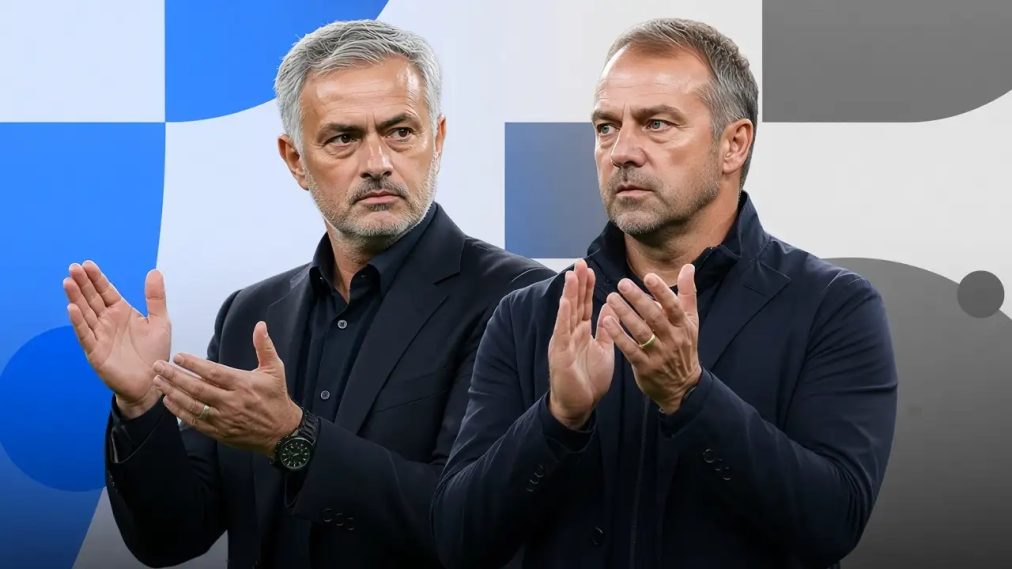
After six rounds of La Liga, Barcelona have established a three-point lead over Real Madrid, but the gap between the two title rivals extends beyond the table. Their contrasting ability to control matches, particularly after half-time, could prove crucial as the season develops.
Hansi Flick’s side have taken a perfect 18 points from six games, while Real Madrid sit second on 15 after five wins and a 3-1 defeat by Real Betis in the fourth round. Several of Real Madrid’s victories have been hard-earned, whereas Barcelona have regularly taken control against the division’s less fancied teams.
Flick’s players have continued to attack after taking an early lead, while Real Madrid have often allowed opponents back into matches despite enjoying periods of technical superiority. That concern will be tested further when Real Madrid face Atletico Madrid in the seventh round on Sunday.
Real Madrid’s recent performances have highlighted a significant second-half decline. Against Rayo Vallecano at Santiago Bernabeu, they led 3-0 inside the opening 35 minutes and appeared capable of scoring more. Their first-half dominance was reflected in 68% possession and 12 shots, compared with 32% and seven for the visitors.
However, after Mourinho replaced Federico Valverde with Eduardo Camavinga at half-time, Real Madrid lost control of midfield. Rayo Vallecano took 56% possession in the second half, leaving Real Madrid with 44%, while the number of shots was almost level at 11-12. Camavinga was involved in the move that led to Rayo’s only goal, although Real Madrid eventually secured a 4-1 win.
A similar pattern emerged at Elche. Real Madrid led 2-0 at the interval, with one goal coming from an own goal following an excellent Arda Guler effort and the other scored by Kylian Mbappe. Mourinho then made second-half changes, including resting Vinicius Junior and Guler ahead of the derby, but Elche scored twice to level and threatened Thibaut Courtois before substitute Carlos Espe scored a late winner.
Mourinho acknowledged the problem after that match, saying his only criticism was that Real Madrid had the ability to finish games but failed to do so. “We gave a team that seemed dead the chance to come back to life,” he said.
“There are matches that look finished, but they are not finished. The only explanation I can find is that we consider them easy matches and do not finish them. We move from feeling that a game is easy to losing control.”
Carlos Espe has rescued Mourinho twice with late goals against Espanyol and Elche, but Real Madrid cannot depend on such interventions throughout the campaign.
Barcelona, by contrast, have won six consecutive games, most by decisive margins. Their 7-2 victory over Racing Santander offered the clearest example. Having led 4-1 at half-time, they increased rather than reduced the tempo despite an upcoming difficult away match against Sevilla.
Barcelona had 70% possession and 19 shots in the first half, including six on target, while Racing managed two attempts, one of which produced their only goal. The second half brought little change: Barcelona retained 69% possession and registered 11 shots, three on target, compared with three counter-attacking attempts from Racing, two on target.
The result took Barcelona’s tally to 28 goals in six matches, close to five per game. Flick believes the current squad may be his most balanced since taking charge, with the improvement extending beyond the attack to midfield and defence.
Asked why his players continue to seek more goals regardless of the score, Flick said: “This is our mentality and this is the way we want to play. If we lose the ball, we have to go and win it back.”
That pressing approach has restored Barcelona’s identity, with the team attempting to recover possession immediately after losing it.
Fitness and squad management may also explain the difference. Real Madrid’s second-half drop raises questions about the physical condition of their players and Mourinho’s handling of minutes and substitutions. There are also doubts over Vinicius Junior’s current form, although the Brazilian remains a regular starter.
Real Madrid’s bench options appear limited, partly because of recent injuries and the declining form of some players. Even after the summer signings the club required, they still lack a convincing alternative in several positions, including left wing if Mourinho decides to leave out Vinicius.
Central midfield is another concern. Resting Federico Valverde or Bernardo Silva leaves Mourinho reliant on Eduardo Camavinga, who has made mistakes, or Aurelien Tchouameni, who has only recently returned from injury.
Flick has enjoyed greater flexibility. Barcelona’s substitutes are close to the starters in quality, allowing him to rotate carefully while keeping the squad fresh and ready. In attack, Raphinha has become the first-choice striker, with Gabriel Jesus as cover, while young Egyptian forward Hamza Abdelkarim is waiting to enter the competition.
The options are similarly strong elsewhere. Flick usually relies on Rodri and Pedri in midfield, but Fermin Lopez can excel in one match before Dani Olmo replaces him in the next without a noticeable drop in performance. Defensive selections also present the manager with a positive dilemma, and Barcelona’s level has remained consistent, although they have not yet faced a genuinely aggressive attacking opponent.
Raphinha’s ability to play on the wing or through the middle adds further flexibility, as do new arrivals Karim Adeyemi and Anthony Gordon, along with Fermin Lopez. That versatility gives Flick a hidden advantage over the relative rigidity of Real Madrid’s plans this season.
-
 Morocco announce friendly against Ghana in Tangier on October 4 Sep 17, 2026
 -
Madagascar name squad for 2027 AFCON qualifiers against Nigeria and Tanzania Sep 17, 2026
-
Eliesse Ben Seghir makes injury comeback in Bayer Leverkusen’s Europa League win Sep 17, 2026
-
Anis Hadj Moussa wins Feyenoord’s Goal of the Month award Sep 17, 2026



-
AFCON 2025: Fixtures, Results, Scores and Standings Jan 18, 2026
-
Leadership and long-term vision key to rescuing Zamalek and inspiring Egyptian football – Hany Abou Rida Nov 5, 2025
-
South African giants Orlando Pirates set to lose influential forward Monnapule Saleng Mar 19, 2025
-
Match hero Taiwo Awoniyi reflects on team effort after Chelsea triumph May 5, 2026




-
African Stars choose Botswana’s Lucas Moripe Stadium to host Orlando Pirates in CAF Champions League Sep 16, 2026
-
Europa League: AC Milan, Benfica and Lyon begin new league phase Sep 16, 2026
-
Mohamed Fathi emerges as potential PSL option amid South Africa coaching shake-up Sep 11, 2026
-
Morocco to host 2030 World Cup final at Hassan II Stadium – FA chief Fouzi Lekjaa confirms Sep 10, 2026