Ten dual-national players choosing Africa over Europe as Morocco, Senegal and Ivory Coast benefit
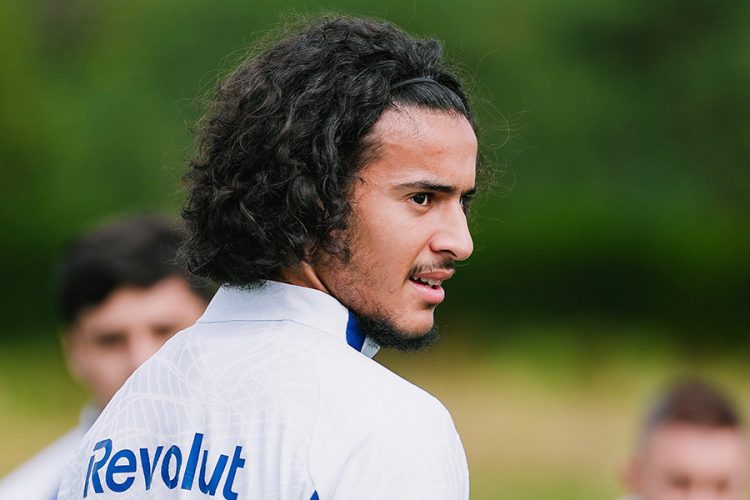
A growing number of players developed in European academies are choosing to represent the countries of their parents or ancestors, strengthening African national teams ahead of the 2026 World Cup.
Some, including Ayyoub Bouaddi and Ibrahim Mbaye, made the decision after representing France at youth level. Others waited until they had built senior experience before changing direction.
Morocco’s emerging generation
Ayyoub Bouaddi, 18, came through the French system and played for France’s youth teams before opting for Morocco. His decision came only weeks before the 2026 World Cup. The midfielder’s ability to perform under pressure and contribute to build-up play gives the Lions of the Atlas an asset for both the present and the future.
Chemsdine Talbi was born in Sambreville, Belgium, and spent several years with Belgian youth sides. His decision to represent Morocco in March 2025 caused a strong reaction in Belgium. The winger offers pace, dribbling ability and a willingness to attack opponents directly.
Issa Diop had three international options after being born in France to a Senegalese father and a mother of Moroccan origin. Morocco became the leading possibility in March 2026, and he received his first call-up from the Lions of the Atlas several days later.
Ivory Coast adds attacking depth
Alban Lafont had already been involved at senior level with France, having been called up by Didier Deschamps in September 2022 while at Nantes. Born in Ouagadougou, Burkina Faso, he was also wanted by the Etalons, but chose Cote d’Ivoire because of his family background. His great-grandmother was Ivorian and was born in Bingerville in 1916.
Ange-Yoan Bonny completed the administrative process with FIFA to make himself available for the Elephants. The forward can play as a striker, attack space or contribute to combination play, giving Cote d’Ivoire another option in an already competitive attack.
Kader Meite had represented France through the youth ranks and was promoted to the France Under-21s towards the end of 2025. He later chose Cote d’Ivoire after moving from Rennes to Al Hilal for about 30 million euros during the winter transfer window. The Elephants see the decision as a chance to secure the future of a highly rated player.
Elye Wahi, whose parents are Ivorian, also moved away from the French pathway. He received his first Cote d’Ivoire call-up in March 2026 for friendlies against South Korea and Scotland. His pace, movement and ability to run in behind add another dimension to the team’s attack.
Senegal and Algeria secure key recruits
Luca Zidane, the son of Zinedine Zidane, changed his member association in September 2025 to represent Algeria. He was subsequently named in Vladimir Petkovic’s 26-man squad for the 2026 World Cup. The goalkeeper brings experience from Spanish football as well as considerable attention because of his family name.
Mamadou Sarr had captained France Under-17s before choosing Senegal in November 2025. He was then called up by the Lions and selected for their 2026 World Cup squad.
Ibrahim Mbaye progressed through France’s Under-16 to Under-20 teams before choosing Senegal at the age of 17. Pape Thiaw quickly called him into the senior side in November 2025.
Together, the decisions show that African federations are increasingly targeting dual-national players early, rather than waiting for them to be overlooked by European teams.
-
Brandon Bokangu: Guingamp’s late transfer signing making a Ligue 2 impact Sep 13, 2026
-
 Ten dual-national players choosing Africa over Europe as Morocco, Senegal and Ivory Coast benefit Sep 13, 2026
 -
Xavier Junior Mandza Tsiendi: Nice teenager attracting attention in France Sep 13, 2026
-
Brahim Diaz moves ahead of €125m signing Yan Diomande in Real Madrid battle Sep 13, 2026



-
AFCON 2025: Fixtures, Results, Scores and Standings Jan 18, 2026
-
Leadership and long-term vision key to rescuing Zamalek and inspiring Egyptian football – Hany Abou Rida Nov 5, 2025
-
South African giants Orlando Pirates set to lose influential forward Monnapule Saleng Mar 19, 2025
-
Full schedule for 2025 Africa Cup of Nations in Morocco confirmed Feb 12, 2025




-
African trio Vozinha, Bounou and Eduard Mendy nominated for 2026 Men’s Goalkeeper of the Year award Sep 8, 2026
-
Porto v Manchester City: Probable line-ups for Champions League opener Sep 7, 2026
-
Bafana Bafana players threaten to boycott 2027 AFCON qualifiers over unpaid World Cup bonuses Sep 6, 2026
-
Bayer Leverkusen prepare bumper contract for Cameroon forward Christian Kofane Sep 7, 2026