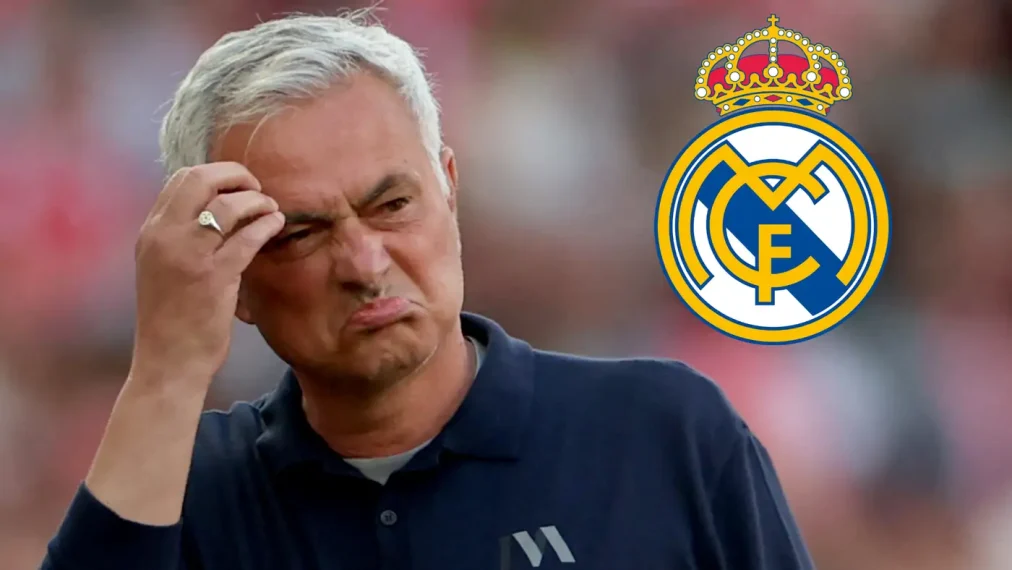
Real Madrid began their Champions League campaign with a 2-1 victory over Inter Milan at Santiago Bernabeu, but the scoreline concealed a deeply unconvincing performance and exposed serious questions about Jose Mourinho’s team selection.
Inter were the better side for long periods, imposing their style, controlling midfield and creating several opportunities. Only the outstanding performance of goalkeeper Thibaut Courtois prevented the Italian side from turning that superiority into more goals.
Real Madrid, by contrast, needed relatively few chances to score. They were helped by two individual errors from Inter players and took advantage of both, securing a lead that did not reflect the balance of the opening half.
The home side also missed several clear opportunities when they were 2-0 ahead. Had those chances been converted, Mourinho’s team could have settled the match much earlier. Instead, their wastefulness allowed Inter to remain within reach and ensured that Real Madrid faced pressure until the final whistle.
Midfield imbalance exposed
Mourinho entered the match with a major problem in midfield. Eduardo Camavinga, Bernardo Silva and Arda Guler were all unavailable through suspension after being sent off in the previous edition of the Champions League.
The Portuguese manager’s task became more difficult because Aurelien Tchouameni was not fully fit after recently returning from injury. Mourinho therefore made the bold decision to use Trent Alexander-Arnold in midfield alongside Federico Valverde.
That combination failed to provide Real Madrid with the required balance. With only Alexander-Arnold and Valverde operating in the centre, the area was repeatedly exposed by an Inter side using five midfielders.
Inter’s numerical advantage allowed them to retain possession, move the ball more effectively and build attacks with greater consistency. Real Madrid struggled to connect their defensive and attacking phases, while their opponents found space and regularly advanced towards the penalty area.
As Inter’s pressure increased, Courtois became increasingly important. The Belgium goalkeeper produced a series of saves to keep his side ahead and ensure that the weaknesses in Mourinho’s midfield structure did not immediately prove decisive.
The first goal arrived against the run of play. Inter defender Yann Bisseck lost the ball in a dangerous area, allowing Brahim Diaz to exploit the mistake and create the opening for Kylian Mbappe. Real Madrid had been under pressure, but suddenly found themselves in front.
Inter had barely had time to recover when another error gifted the Spanish side a second goal. Josep Martinez attempted to dribble past Valverde but lost possession to the Real Madrid midfielder, and the ball ended up in the net.
The two goals came from individual mistakes rather than sustained Real Madrid dominance. Inter had enjoyed more possession, created more attacking situations and looked the more organised side, but they paid heavily for their defensive lapses against opponents with the quality to punish even the smallest errors.
At half-time, the contrast was stark: Inter were the better team, yet Real Madrid led 2-0. The score highlighted the difference between the sides in decisive moments. Inter failed to take their chances, while Real Madrid converted the opportunities presented to them.
Inter fight back
The second half gave Real Madrid chances to end the contest. Inter pushed forward with almost all of their players and left significant space behind their defence. That created openings for the home side to attack on the counter, but poor finishing prevented Real Madrid from scoring a third goal.
Inter continued to press and eventually reduced the deficit with about 15 minutes remaining. Augusto found the net to make it 2-1, bringing renewed anxiety to the home side.
Mourinho reacted by introducing Tchouameni in midfield in an attempt to restore balance and give Real Madrid greater control during the closing stages. After Inter’s goal, the home team retreated almost entirely into defensive positions.
Inter pressed until the end and looked for an equaliser, but Real Madrid held on to claim all three points.
The result gives Mourinho an ideal start in the Champions League, but the performance provides little reason for comfort. The midfield lacked balance, the attack failed to take advantage of several chances and the team relied heavily on Courtois, individual quality and mistakes from their opponents.
Real Madrid will not be able to depend on those factors in every match. Mourinho must quickly reassess his tactical choices and find a more reliable structure if the side are to avoid being rescued by individual brilliance while their underlying weaknesses remain exposed.
-
 Women’s U20 World Cup: Argentina thrash Benin as Brazil qualify Sep 9, 2026
 -
Cameroon claim bronze as India dominate upgraded Yaounde badminton event Sep 9, 2026
-
Serhou Guirassy double earns Borussia Dortmund narrow Champions League win over Villarreal Sep 9, 2026
-
Manchester City beat Porto as Erling Haaland makes the difference in Champions League opener Sep 9, 2026


-
AFCON 2025: Fixtures, Results, Scores and Standings Jan 18, 2026
-
Leadership and long-term vision key to rescuing Zamalek and inspiring Egyptian football – Hany Abou Rida Nov 5, 2025
-
South African giants Orlando Pirates set to lose influential forward Monnapule Saleng Mar 19, 2025
-
Full schedule for 2025 Africa Cup of Nations in Morocco confirmed Feb 12, 2025




-
Chelsea left furious after Monaco pull out of Lamine Camara deal Sep 2, 2026
-
Uganda withdraw from U23 AFCON qualifiers over funding crisis Sep 2, 2026
-
African transfer tracker: Fofana seals Annecy move as Sow and Akinmboni find new clubs Sep 2, 2026
-
FC Lorient sign Senegal forward Ibrahima Baldé on loan from Rodez Sep 2, 2026