22 years, three heartbreaks, one crown: How Cameroon finally conquered Africa

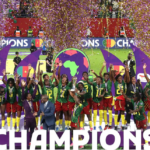
Cameroon have finally broken the curse that haunted them for more than two decades, defeating Malawi 3-0 in Rabat to claim their first-ever Women’s Africa Cup of Nations title.
The Indomitable Lionesses had endured three painful defeats in the competition’s final, each time falling to Nigeria without scoring. But on August 16, 2026, at the Moulay El Hassan Stadium, they produced a commanding performance to rewrite their history and crown a remarkable journey with continental glory.
Fourth final finally delivers
Cameroon had previously reached the WAFCON final in 2004, 2014 and 2016, only to finish runners-up on each occasion. Their inability to convert those opportunities into silverware had become one of the defining stories of the team’s history.
That narrative changed emphatically against Malawi, who were appearing in their first final.
Marie Ngah Manga opened the scoring in the 20th minute before Naomi Najoah Eto extended Cameroon’s advantage nine minutes later with an acrobatic finish. Ngah Manga then struck again shortly before the interval to complete her brace and send Cameroon into halftime with an imposing 3-0 lead.
There was no dramatic comeback from Malawi after the break as Cameroon comfortably protected their advantage and secured a landmark victory.
The triumph made Cameroon only the fourth nation to win the WAFCON, joining record champions Nigeria, Equatorial Guinea and South Africa, who claimed the title in 2022.
From qualification doubts to champions
The route to the trophy made Cameroon’s achievement even more remarkable.
The Lionesses only entered the expanded 16-team tournament after the competition increased from 12 teams. Once given their opportunity, however, they made it count.
Cameroon defeated Ghana in the group stage before producing one of the tournament’s biggest shocks by eliminating defending champions Nigeria 1-0 in the quarter-finals.
They then overcame another formidable obstacle in the semi-finals, edging hosts Morocco on penalties after a tense encounter. Those victories established Cameroon as genuine contenders before they completed their extraordinary run against Malawi.
The title therefore represents more than the end of a long wait. It is also proof of Cameroon’s ability to overcome setbacks and deliver when it mattered most.
A new generation takes over
The victory also signals a changing of the guard in Cameroonian women’s football.
For years, the national team was associated with stars such as Gabrielle Aboudi Onguéné, who became one of the most recognisable figures in African women’s football. In Rabat, however, a younger generation stepped forward to create its own legacy.
Monique Ngock was at the centre of that transformation. The 21-year-old midfielder was named Woman of the Competition after an outstanding tournament, having impressed with her defensive awareness, tenacity and composure in possession.
Her personal journey makes the achievement even more significant. Ngock was only 17 when she featured in Cameroon’s quarter-final defeat in 2022. Four years later, she returned as one of the key figures in a team that went all the way.
Reflecting on her journey, Ngock expressed hope that the success would inspire more young girls, saying “girls can do anything.”
Cameroon’s dominance also extended to the individual awards. Goalkeeper Michaely Bihina was named Best Goalkeeper after playing a decisive role in the semi-final shootout against Morocco, while Ngah Manga was recognised as Player of the Final.
Malawi’s Temwa Chawinga, however, claimed the Golden Boot after finishing the tournament with five goals and two assists.
A title that must become a beginning
Cameroon’s triumph comes at a pivotal moment for African women’s football, with the gap between established powers and emerging nations continuing to narrow.
The final itself was historic, bringing together two teams that had never previously won the competition. Malawi were making their debut in the tournament, while Cameroon were chasing a title that had repeatedly escaped them.
But the significance of the victory will ultimately depend on what Cameroon do next.
The challenge now is to turn the WAFCON triumph into sustainable progress through stronger domestic leagues, better preparation, improved youth development and greater visibility for female footballers.
For a generation that inherited the disappointment of three lost finals, the 3-0 victory in Rabat was the perfect response.
Cameroon have finally become African champions. The next task is ensuring their historic triumph becomes the foundation for a new era rather than simply the end of a 22-year wait.
-
 22 years, three heartbreaks, one crown: How Cameroon finally conquered Africa Sep 4, 2026
 -
AS FAR beat Wydad to goalkeeper Mohamed Jamjami signing Sep 4, 2026
-
Super Falcons goalkeeper Comfort Erhabor targets fresh start at Crystal Palace after Portsmouth spell Sep 4, 2026
-
MAS Fes strengthen with Mozambique international Diogo Calila from Portugal Sep 4, 2026



-
AFCON 2025: Fixtures, Results, Scores and Standings Jan 18, 2026
-
Leadership and long-term vision key to rescuing Zamalek and inspiring Egyptian football – Hany Abou Rida Nov 5, 2025
-
South African giants Orlando Pirates set to lose influential forward Monnapule Saleng Mar 19, 2025
-
Full schedule for 2025 Africa Cup of Nations in Morocco confirmed Feb 12, 2025