Brahim Hemdani’s Algeria U21 triumph raises questions over coaching potential
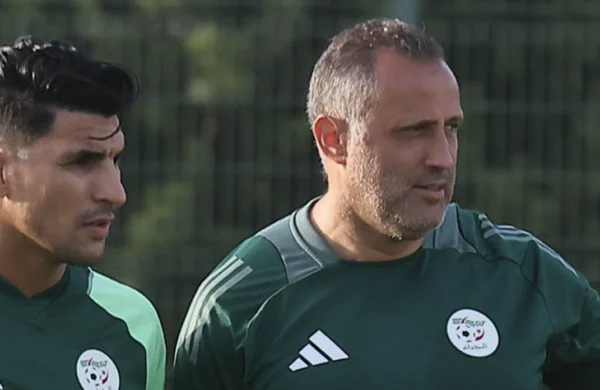
Brahim Hemdani has made an immediate impact as Algeria U21 coach after guiding the team to gold at the Mediterranean Games in Taranto, Italy, only weeks after being appointed to the role.
The 48-year-old was named head of the Algerian U20 team in July following the departure of Razik Nedder, who left to join Le Havre as an assistant in the French Ligue 1. Within a month, Hemdani had already collected his first title as a coach.
His success is particularly notable given his relatively limited experience in management. Hemdani has spent fewer than 10 years working in coaching and has been a head coach for only six of those years.
Hemdani had a distinguished playing career, representing clubs including Olympique de Marseille and Glasgow Rangers. He also featured in two UEFA Cup finals, in 2004 and 2008, although he ended both campaigns without a winner’s medal.
His coaching career began in 2017 in the south of France, where he worked as an assistant at Côte Bleue in National 2, the fourth tier of French football. He worked alongside Mohamed Sadani and coached players including Ilan Kebbal.
In 2020, Hemdani moved to the Paris region to continue his coaching education at Clairefontaine. At the same time, he managed Courbevoie, a club competing in the seventh tier of French football.
After obtaining his UEFA A licence, Hemdani took charge of Marignane following its merger with Côte Bleue. He guided the club to promotion to the third division in his first season in 2023, although the team subsequently suffered two successive relegations.
Hemdani left the club in 2025 before receiving the unexpected opportunity to take charge of Algeria’s youth side a year later.
His first major assignment arrived almost immediately. Hemdani was asked to lead the U21 team at the Mediterranean Games despite having little time to prepare and without knowing the squad that would represent him in the competition.
Despite those circumstances, Algeria produced a perfect campaign, winning all five matches and claiming the gold medal for the first time since 1975.
The achievement has inevitably led to questions about whether Hemdani’s success represents the beginning of a promising coaching career or simply a fortunate start.
Algeria’s opponents also provide an important context. The squad, largely selected by his assistant Hocine El Orfi, consisted mainly of players competing in Algeria, with players born in 2005, 2006 and 2007. Similar age groups were present in several of the participating teams, including Kosovo and Albania, both of whom Algeria defeated in the opening round.
Italy fielded an even younger side, consisting of U18 players born between 2009 and 2010, which provides context to Algeria’s 3-1 victory.
In the semi-final, Algeria defeated Morocco, whose squad was slightly younger, with players born in 2007 and 2008, although several of the Moroccan players were based in Europe.
The final against Tunisia offered no age advantage for either side, with the Tunisian players all born in 2005. Algeria nevertheless demonstrated its tactical strength and secured the gold medal.
Several players also stood out during the tournament, including Paradou goalkeeper El Koubi and striker Kohili, who moved from Paradou to MCA this summer.
However, the Mediterranean Games success alone is not enough to fully assess Hemdani’s coaching ability. Suggestions that he could soon become part of the senior Algeria coaching staff remain premature.
His immediate challenge is to continue his work with the U20 team, particularly during the AFCON qualifiers. The squad will also change, with many of the players involved in the Mediterranean Games unlikely to be part of the U20 side.
For Hemdani, the gold medal is an impressive start, but the next stage of his coaching career will provide a much clearer indication of whether he is genuinely emerging as a major prospect.
-
 Brahim Hemdani’s Algeria U21 triumph raises questions over coaching potential Aug 31, 2026
 -
Cherif Ndiaye leaves Senegal duty as Patrick Vieira starts new chapter Aug 31, 2026
-
Cardoso faces packed schedule before Sundowns’ MTN8 final Aug 31, 2026
-
Masehe: Orlando Pirates’ quality exposes Sekhukhune United in third straight defeat Aug 31, 2026



-
AFCON 2025: Fixtures, Results, Scores and Standings Jan 18, 2026
-
Leadership and long-term vision key to rescuing Zamalek and inspiring Egyptian football – Hany Abou Rida Nov 5, 2025
-
South African giants Orlando Pirates set to lose influential forward Monnapule Saleng Mar 19, 2025
-
Full schedule for 2025 Africa Cup of Nations in Morocco confirmed Feb 12, 2025




-
Ismaila Sarr transfer: Why Crystal Palace’s €60m valuation may be justified Aug 24, 2026
-
Besiktas make move for Morocco international Brahim Diaz from Real Madrid Aug 24, 2026
-
Barcelona monitoring French-Angolan defender Castello Lukeba at RB Leipzig Aug 25, 2026
-
CAF confirms regional draw procedure for U23 AFCON 2027 qualifying first round Aug 25, 2026