Airlink says Springboks-All Blacks flypast stayed within safety limits
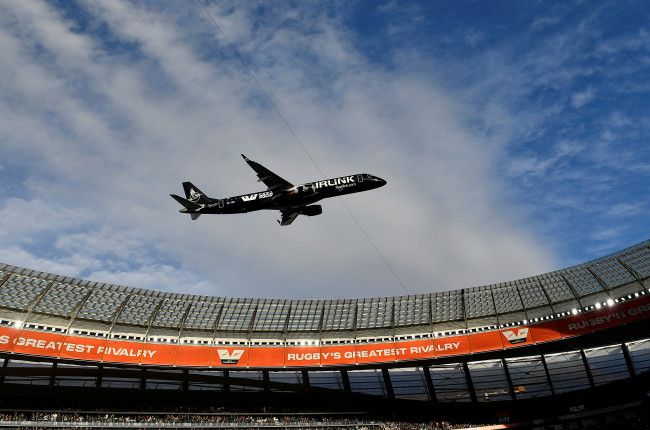
SA Airlink has rejected claims that its aircraft flew too low during the pre-match flypast before the second Test between the Springboks and the All Blacks in Cape Town on Saturday.
The stadium flypast took place at the start of the Greatest Rivalry Series fixture and quickly became the subject of widespread discussion on social media. Viewers from around the world questioned whether the aircraft had operated at an unsafe altitude, with many suggesting they appeared to pass too close to the stadium.
Airlink, however, said flight data showed that both Embraer aircraft remained within the limits approved for the occasion by the South African Civil Aviation Authority (SACAA).
“The two aircraft were flown by a highly experienced crew, with each comprised of three senior captains operating in the roles of commander, co-pilot and safety/technical officer. The flight data recorded by both aircraft confirms that the flights were performed within the SACAA’s approved and rehearsed safety altitude and speed limits for the flypast,” a statement from the company read.
The flypast has become closely associated with Springbok matches. The tradition began at the 1995 Rugby World Cup final, when an SAA Boeing 747 Jumbo flew over the stadium before kick-off.
Since then, an aircraft flyover has formed part of the build-up to major Springbok fixtures, making the sequence a familiar feature for supporters. Saturday’s display, though, prompted an immediate reaction online, with the apparent low height of the aircraft becoming the main focus of discussion instead of the pre-match spectacle itself.
Airlink’s response was based on the flight information recorded by the two aircraft involved. The company said the data confirmed that the operation was conducted within the safety altitude and speed parameters that had been approved and rehearsed by the SACAA.
It also highlighted the experience and responsibilities of the crews, explaining that each aircraft had three senior captains on board. They operated respectively as commander, co-pilot and safety/technical officer.
The statement did not suggest that the flypast had been altered because of the online reaction. Instead, Airlink’s position was that the aircraft had complied with the prescribed limits for the stadium operation.
The images and footage of the flypast nevertheless spread widely after the Springboks and All Blacks met in Cape Town. The reaction showed how recognisable the tradition has become, while also underlining the scrutiny surrounding an event that takes place directly before one of rugby’s most prominent international fixtures.
Airlink’s explanation leaves the central issue clear: although many observers believed the aircraft were too low, the company says the recorded flight data confirmed that both flights were completed within the limits set by the South African Civil Aviation Authority.
-
Golden Arrows target Orlando Pirates after MTN8 victory over Sundowns Aug 30, 2026
-
 Airlink says Springboks-All Blacks flypast stayed within safety limits Aug 30, 2026
 -
Ivory Coast star Franck Kessié completes surprise return to Atalanta Aug 30, 2026
-
Orlando Pirates boss Abdeslam Ouaddou says departures will not be an excuse Aug 30, 2026


-
AFCON 2025: Fixtures, Results, Scores and Standings Jan 18, 2026
-
Leadership and long-term vision key to rescuing Zamalek and inspiring Egyptian football – Hany Abou Rida Nov 5, 2025
-
South African giants Orlando Pirates set to lose influential forward Monnapule Saleng Mar 19, 2025
-
Full schedule for 2025 Africa Cup of Nations in Morocco confirmed Feb 12, 2025




-
African football transfer news: Mbe Soh set for Prague switch as Okoli weighs Italy return Aug 24, 2026
-
Riyad Mahrez gives clear response to Wydad Casablanca speculation Aug 23, 2026
-
Ismaila Sarr transfer: Why Crystal Palace’s €60m valuation may be justified Aug 24, 2026
-
Mohamed Salah makes Trabzonspor history with landmark Super Lig double Aug 23, 2026