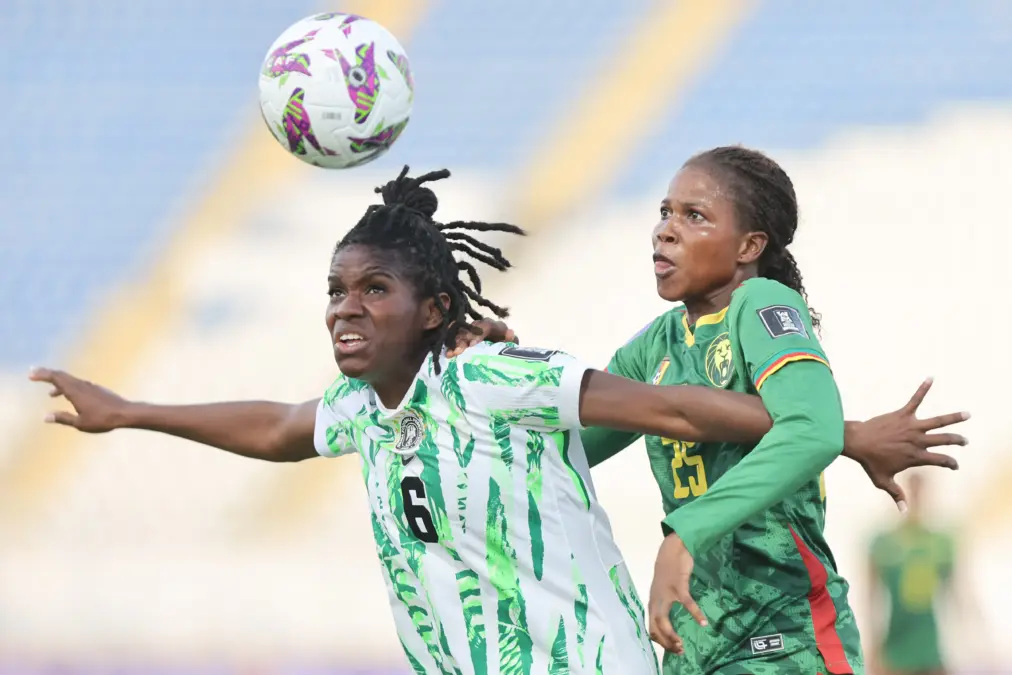
The Women’s Africa Cup of Nations 2026 will crown a first-time champion after holders Nigeria and 2022 winners South Africa were both eliminated in the quarter-finals.
South Africa’s hopes ended on Saturday when they lost 2-1 to Morocco, who gained revenge for their defeat in the 2022 final. The following day, Cameroon produced the biggest shock of the tournament by beating Nigeria 1-0, inspired by nine saves from goalkeeper Michaely Bihina.
The new champion will be confirmed in the final on 16 August, but none of the teams remaining in the competition has previously won the tournament.
Nigeria had been the dominant force in the history of the Women’s Africa Cup of Nations, winning 10 of the 13 previous editions and arriving in 2026 as defending champions. South Africa lifted the trophy in 2022, while Equatorial Guinea, winners in 2008 and 2012, did not take part in this year’s competition.
That means none of the three nations to have previously won the tournament can claim the title in Rabat.
The make-up of the semi-finals also underlines the scale of the change. Morocco, runners-up in 2022, are the only semi-finalists from the previous edition to have reached the last four again.
Nigeria and South Africa were both knocked out in the quarter-finals, while Ghana, who finished third in 2025, were beaten 2-1 by Malawi. The fact that the previous edition was held only a year ago makes the rapid shift in the competitive landscape even more significant.
Algeria have reached the semi-finals for the first time in their history. Malawi have gone even further than that landmark achievement: this is their first appearance at a Women’s Africa Cup of Nations finals tournament, yet they have advanced directly to the last four.
Cameroon are more familiar with this stage. The Indomitable Lionesses will play in their 10th semi-final in the competition’s history, although their return is still symbolically important. They missed the previous edition and qualified for this tournament only after being reinstated.
World Cup consequences
The progress of the four semi-finalists will also be felt on the global stage, with Algeria, Malawi, Cameroon and Morocco all securing qualification for the 2027 FIFA Women’s World Cup.
Algeria and Malawi will therefore appear at the World Cup for the first time, while Cameroon will return seven years after their most recent participation.
Nigeria and South Africa, traditionally among Africa’s leading sides, now face uncertain African play-offs and may have to go through intercontinental play-offs to reach the World Cup.
The expansion of the Women’s Africa Cup of Nations from 12 teams to 16 has been suggested as a possible reason for the unexpected results, but it does not fully explain the upheaval. The change did not add another round, and the leading nations theoretically benefited from a group stage in which they could face less highly rated opposition.
The expanded field included four teams who came through qualifying play-offs, as well as two newcomers: Malawi and Cape Verde.
The more likely explanation is that several established powers are reaching the end of a cycle. Their vulnerability was already evident in the group stage, when Nigeria, South Africa and Ghana each suffered a major defeat.
Those results were not isolated surprises. They were followed by further setbacks when the knockout stage began, suggesting that the gap between the continent’s leading teams and the chasing pack is narrowing.
The 2026 tournament is consequently shaping up to be the most open Women’s Africa Cup of Nations yet. Morocco may be regarded as the natural favourites, but the Atlas Lionesses will be wary of carrying that label in a competition in which the established hierarchy has been overturned.
-
 USM Alger to play both CAF Confederation Cup legs at home Oct 18, 2026
 -
Inter Milan assess Udinese goalkeeper Maduka Okoye as January target Oct 18, 2026
-
Brahim Diaz could leave Real Madrid in January as playing time dwindles Oct 18, 2026
-
Africa football news: Ibrahima Sory Bangoura extends KRC Genk contract to 2030 Oct 18, 2026



-
AFCON 2025: Fixtures, Results, Scores and Standings Jan 18, 2026
-
Match hero Taiwo Awoniyi reflects on team effort after Chelsea triumph May 5, 2026
-
Leadership and long-term vision key to rescuing Zamalek and inspiring Egyptian football – Hany Abou Rida Nov 5, 2025
-
South African giants Orlando Pirates set to lose influential forward Monnapule Saleng Mar 19, 2025




-
Real Betis v Barcelona: kick-off time, TV details and match preview Oct 16, 2026
-
Morocco to face New Zealand as FIFA U-17 Women’s World Cup kicks off in Rabat Oct 16, 2026
-
Roma v Real Madrid: home side tipped to score first in Champions League clash Oct 12, 2026
-
Atletico Madrid v Manchester United: probable line-ups for Champions League clash Oct 12, 2026