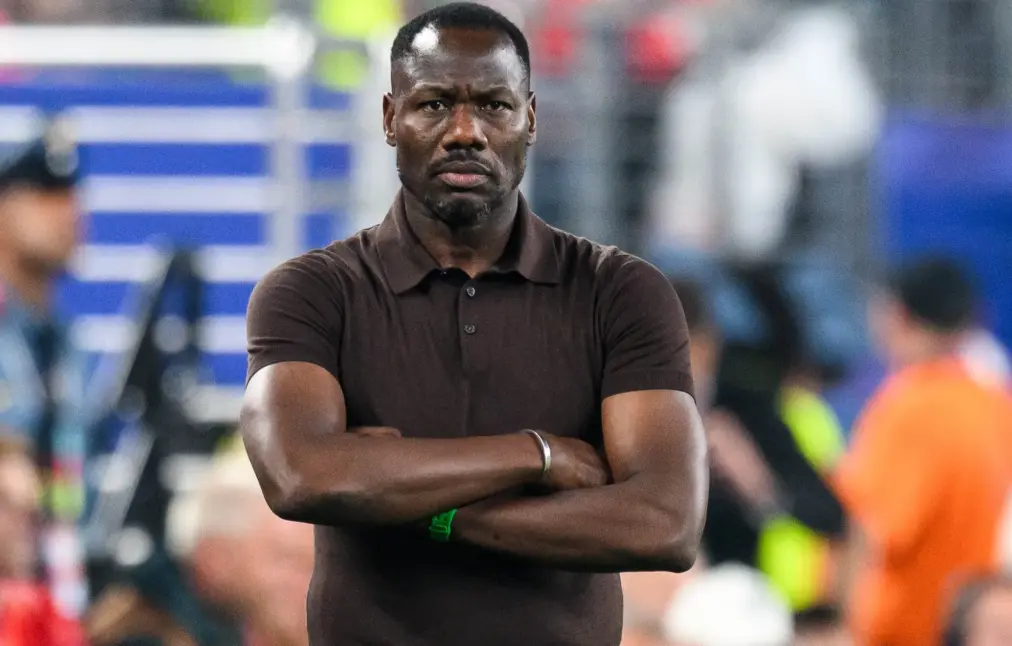
The Senegalese Football Federation (FSF) has been dealt a major blow in its dispute with former national coach Pape Thiaw after the government refused to pay his salary, deepening the crisis engulfing the country’s football authorities.
The fall-out comes in the wake of a turbulent period for the FSF following the end of the 2025 Africa Cup of Nations, with the body already under intense scrutiny over its sporting, financial and organisational management.
According to Senegalese daily Sud Quotidien, the Senegalese state has formally declined to act as third-party payer for Thiaw’s contract, despite an agreement that had been signed between the coach and the FSF.
In correspondence sent to the federation, the Minister of Sports is reported to have stated that the three-year deal between Pape Thiaw and the FSF was never officially approved by state authorities. On that basis, the government says it cannot be held responsible for the financial terms contained in the agreement.
Heavy financial commitments
The contract in question is understood to involve substantial sums. Pape Thiaw was to receive a monthly salary of 30 million CFA francs, a signing-on bonus of 120 million CFA francs, and an additional 1% of all bonuses paid out by FIFA.
With the state now refusing to honour those obligations, the FSF may have to carry the entire financial burden itself.
Should the relationship with Thiaw be formally terminated, the federation could also be liable for a compensation package estimated at the equivalent of around eight months’ salary. That prospect represents a significant setback for an organisation already weakened by a series of recent controversies.
Federation under mounting pressure
The FSF has in recent months faced repeated criticism from supporters and observers over its handling of several key issues.
Among the problems cited are disputes surrounding preparations for the World Cup, allegations of poor governance, unpaid members of backroom staff and a recent hotel-related dispute in the build-up to the Women’s Africa Cup of Nations.
Many fans now regard the federation as primarily responsible for what they see as the failure of the Lions at the 2026 World Cup, further eroding public confidence in the current leadership.
In this context, the Pape Thiaw affair has become more than a simple contractual disagreement. The refusal of the state to endorse and finance the deal is widely seen as a public rebuke to the FSF’s decision-making and internal processes.
Between the government’s clear distancing from the contract, the prospect of significant financial penalties and growing dissatisfaction among supporters, the federation’s leaders find themselves under unprecedented pressure.
Succession planning complicated
On the sporting front, the FSF has already begun to plan for a future without Pape Thiaw, who is now officially considered the former head coach of the Lions.
Patrick Vieira is reported to remain the leading candidate to become the next Senegal coach. However, before any appointment can be finalised, the federation will almost certainly have to resolve the contractual dispute with Thiaw, which has become both a legal and political headache.
Only once that situation is clarified will the FSF be in a position to move forward with a new technical project, as it attempts to rebuild credibility on and off the pitch after a damaging sequence of setbacks.
For now, the combination of state disavowal, financial risk and public mistrust leaves the future direction of Senegalese football deeply uncertain.
-
 PSG star Achraf Hakimi resumes individual training ahead of Morocco AFCON qualifiers Sep 18, 2026
 -
DR Congo coach Desabre sets AFCON qualification as next target Sep 18, 2026
-
Motsepe inspects Kenya’s AFCON 2027 preparations as deadline approaches Sep 18, 2026
-
Jamie Carragher picks Mohamed Salah over Luis Suarez for Liverpool return Sep 18, 2026



-
AFCON 2025: Fixtures, Results, Scores and Standings Jan 18, 2026
-
Leadership and long-term vision key to rescuing Zamalek and inspiring Egyptian football – Hany Abou Rida Nov 5, 2025
-
South African giants Orlando Pirates set to lose influential forward Monnapule Saleng Mar 19, 2025
-
Match hero Taiwo Awoniyi reflects on team effort after Chelsea triumph May 5, 2026




-
African Stars choose Botswana’s Lucas Moripe Stadium to host Orlando Pirates in CAF Champions League Sep 16, 2026
-
Europa League: AC Milan, Benfica and Lyon begin new league phase Sep 16, 2026
-
Besiktas and Marseille reveal probable line-ups for Europa League opener Sep 15, 2026
-
Hakimi, Amrabat among nine Morocco absentees for AFCON qualifiers Sep 11, 2026