Mandi lifts lid on Algeria’s 2026 World Cup exit and rejects claims he influenced Petkovic
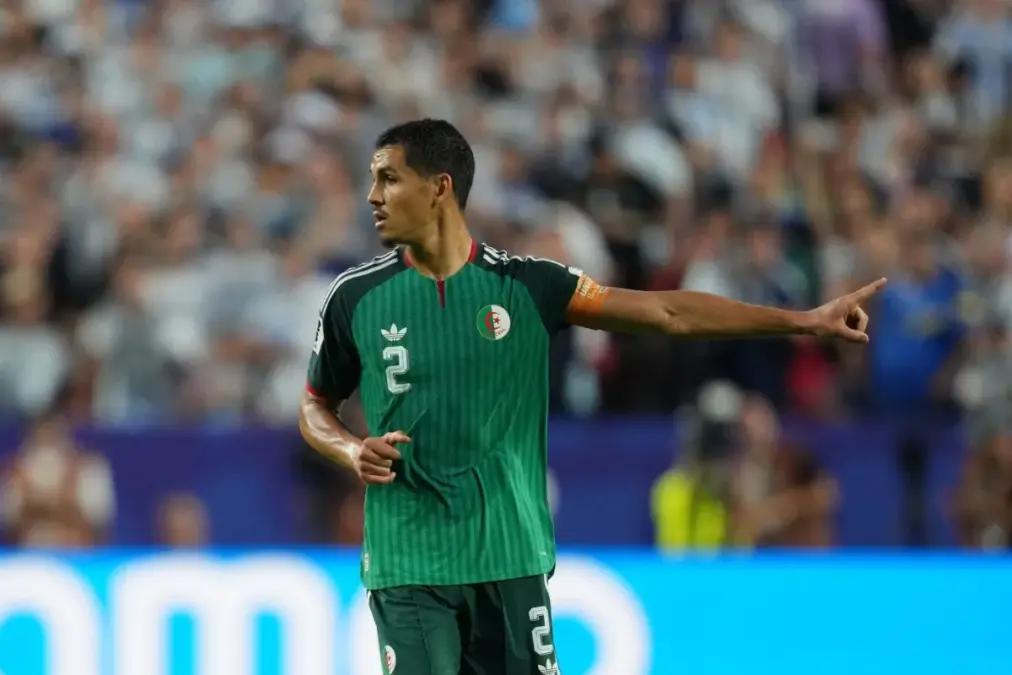
Aissa Mandi has offered an unvarnished assessment of Algeria’s failed 2026 World Cup campaign and firmly denied suggestions he interfered in coach Vladimir Petkovic’s tactical decisions.
The 32-year-old defender, who this week announced his retirement from international football, used an appearance on the “Kampo” podcast to revisit the Fennecs’ early elimination from the tournament, where they went out in the last 32.
Mandi, capped 122 times and scorer of eight goals for Algeria, rejected rumours that he had opposed a three-man defence system which, according to reports, had worked well in pre-tournament preparation.
He insisted there had been no dressing-room rebellion over Petkovic’s set-up and dismissed the notion that he personally had tried to impose his views on the coach’s plans.
“Everyone saw it”
While pushing back against claims of interference, Mandi did not hide from the shortcomings that led to Algeria’s disappointing World Cup, acknowledging the flaws that were evident on the pitch.
He accepted that the team had not shown enough personality in key moments, an accusation voiced loudly by supporters and echoed by several prominent former internationals.
Figures such as Islam Slimani, Djamel Benlamri, Anthar Yahia and Algeria icon Rabah Madjer had publicly questioned the character displayed by the side during the tournament, reflecting a widespread sense of underachievement around the campaign.
Mandi conceded that these criticisms were rooted in what unfolded during matches, saying that “tout le monde l’a vu” – everyone saw what happened – and that the performance levels and mental strength on show had not met expectations.
The former captain’s comments underlined a willingness to take collective responsibility for a World Cup run that ended far earlier than many in Algeria had anticipated, with hopes of a deep knockout push falling away in the first knockout round.
Backing the next generation
Despite the disappointment of 2026, Mandi, who has just joined Levante, used the opportunity to express strong faith in the younger players emerging within the national set-up.
He praised the “jeune garde” now coming through the ranks and stressed his belief that they have the quality to restore Algeria’s stature on the international stage in the coming years.
The defender signalled that, although his own long tenure with the national team is over, he expects the new generation to learn from the setbacks of this World Cup cycle rather than be defined by them.
Mandi’s remarks come at a moment of reflection for Algerian football, with scrutiny on Petkovic’s reign and the direction of the national side following a tournament that laid bare both tactical and psychological weaknesses.
But by rejecting claims of dressing-room interference while aligning himself with some of the harsher post-tournament critiques, the former Real Betis and Villarreal player positioned himself as both a defender of the squad’s integrity and a realist about its failings.
His retirement brings down the curtain on a distinguished international career in which he became one of the emblematic figures of the Verts, and his parting analysis of the 2026 World Cup offers a candid snapshot of a team at a crossroads, seeking to rebuild around a new core.
-
 Hafia FC v AS Douanes: how to follow the CAF Confederation Cup return leg Sep 19, 2026
 -
South Korea v Italy: How to watch the Under-20 Women’s World Cup quarter-final Sep 19, 2026
-
Motsepe urges Kenya, Tanzania and Uganda to step up Afcon 2027 preparations Sep 19, 2026
-
Patrick Vieira tells Krepin Diatta to find a club quickly after Senegal omission Sep 19, 2026

-
AFCON 2025: Fixtures, Results, Scores and Standings Jan 18, 2026
-
Leadership and long-term vision key to rescuing Zamalek and inspiring Egyptian football – Hany Abou Rida Nov 5, 2025
-
South African giants Orlando Pirates set to lose influential forward Monnapule Saleng Mar 19, 2025
-
Match hero Taiwo Awoniyi reflects on team effort after Chelsea triumph May 5, 2026




-
African Stars choose Botswana’s Lucas Moripe Stadium to host Orlando Pirates in CAF Champions League Sep 16, 2026
-
Europa League: AC Milan, Benfica and Lyon begin new league phase Sep 16, 2026
-
Besiktas and Marseille reveal probable line-ups for Europa League opener Sep 15, 2026
-
Re-elected Danny Jordaan declares continuous support for Gianni Infantino Sep 13, 2026