African Coaches
AFCON
African Legends
Africans Abroad
Africans Born Abroad
Latest News
Morocco
Senegal
France coach Didier Deschamps baffled by decision to award Morocco AFCON after Senegal won
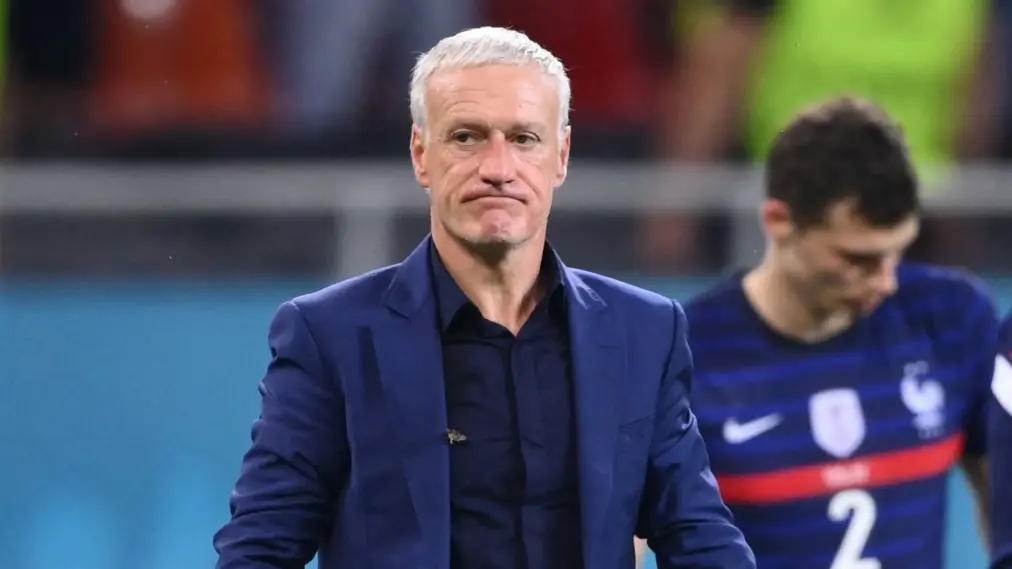
France head coach Didier Deschamps has described CAF’s decision to award Morocco the 2025 Africa Cup of Nations title as “surprising”, as debate continues to intensify over one of the most controversial rulings in African football history.
Speaking during a press conference to announce France’s squad for upcoming friendlies against Colombia and Brazil, Deschamps was asked about the fallout from the AFCON final — a match that has since been overturned months after it was played.
“At the very least, it is surprising. But these are legal matters that are not within my competence,” he said.
The French manager stopped short of offering a detailed opinion, making it clear that the decision lies outside his professional remit. However, his brief reaction reflects the growing sense of unease within global football over the unprecedented nature of CAF’s ruling.
A final rewritten by decision, not result
The controversy stems from the dramatic 2025 AFCON final between Senegal and Morocco, initially won 1-0 by Senegal after extra time.
The match itself had been overshadowed by chaotic scenes late in regulation time, when Senegal players briefly walked off the pitch in protest following a controversial penalty awarded to Morocco after a VAR review.
Although the players returned to resume the game — and Morocco’s Brahim Díaz subsequently missed the penalty — CAF later ruled that Senegal’s temporary walk-off constituted a violation of tournament regulations.
The Appeals Committee invoked Articles 82 and 84, which state that a team leaving the field without permission may be deemed to have forfeited the match.
As a result, Senegal’s victory was annulled and Morocco were awarded a 3-0 win by default, officially handing the title to the North African side.
Mixed reactions across football
The decision has triggered strong reactions from across the football world, with players, coaches and officials divided over whether administrative rules should override what happened on the pitch.
While Morocco’s football authorities accepted the verdict, they stressed that their appeal was based solely on ensuring that regulations were properly applied.
In a statement, the Fédération Royale Marocaine de Football (FRMF) said the ruling “aligns with respect for the regulations and the stability necessary for the proper development of international competitions.”
At the same time, voices within the game have continued to question the fairness of overturning a result after the match had been completed.
Deschamps’ carefully chosen words add to a growing list of reactions that, while measured, underline the unusual nature of the situation.
Legal battle may continue
Senegal have already indicated their intention to challenge the decision, with the case expected to move to the Court of Arbitration for Sport (CAS).
The outcome could have significant implications not only for the teams involved, but also for how disciplinary regulations are interpreted in major tournaments.
For now, Morocco are officially recognised as African champions — but as Deschamps’ reaction suggests, the debate surrounding the decision is far from settled.
What remains clear is that the 2025 AFCON final will be remembered not just for what happened on the pitch, but for the ruling that followed.
-
 Al Ahly star Emam Ashour risks losing starting spot amid coaching staff frustration Oct 27, 2026
 -
Mekelakeya beat Ethiopian Medhin 3-1 in Ethiopia Premier League Round 4 Oct 27, 2026
-
Benjamin Acheampong breaks silence over ex-Zamalek star’s reported detention in $100,000 settlement case Oct 27, 2026
-
Ansu Fati faces six-week absence after hamstring injury at Monaco Oct 27, 2026




-
AFCON 2025: Fixtures, Results, Scores and Standings Jan 18, 2026
-
Match hero Taiwo Awoniyi reflects on team effort after Chelsea triumph May 5, 2026
-
Leadership and long-term vision key to rescuing Zamalek and inspiring Egyptian football – Hany Abou Rida Nov 5, 2025
-
South African giants Orlando Pirates set to lose influential forward Monnapule Saleng Mar 19, 2025




-
Barcelona v Real Madrid: Catalans backed at 1.65 to win October Clasico Oct 23, 2026
-
Barcelona and Real Madrid meet in pivotal 265th Clasico Oct 23, 2026
-
Sevilla FC v Osasuna: probable line-ups for Monday’s La Liga meeting Oct 25, 2026
-
Champions League: PSG beat Barcelona as Liverpool complete comeback against Villarreal Oct 20, 2026