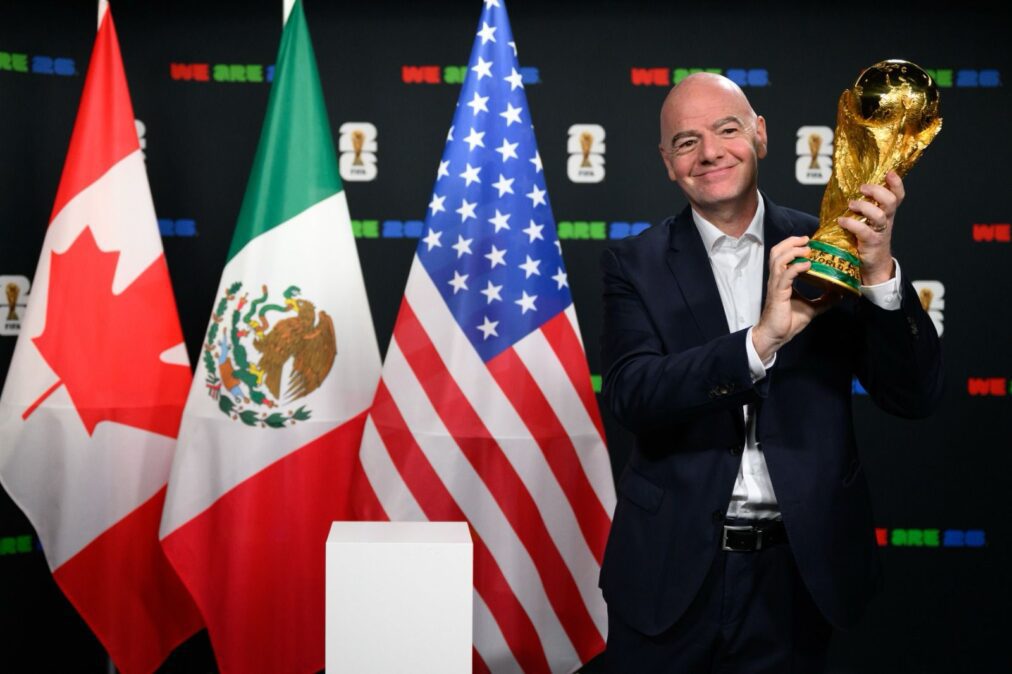
Football development has been the defining theme of FIFA President Gianni Infantino’s leadership since his election on 26 February 2016 in Zurich.
Over the past decade, his administration has overseen sweeping reforms and unprecedented financial commitment to global football – with Africa emerging as one of the biggest beneficiaries.
At the heart of this transformation is the FIFA Forward Programme, which has invested more than USD 5 billion into development projects across all 211 Member Associations – a sevenfold increase compared to the pre-2016 period.
Notably, a significantly larger share of FIFA’s revenues is now reinvested directly into football development, reflecting a governance structure that is more transparent, efficient and purpose-driven.
Africa’s share of the growth
Africa’s 54 Member Associations have collectively received over USD 1.2 billion in the past 10 years, funding 203 infrastructure projects across the continent.
These include:
▪︎ 74 newly built or renovated technical centres and MA headquarters
▪︎ 99 artificial and synthetic turf pitches
▪︎ Upgrades to more than 50 stadiums to meet FIFA and CAF standards
A flagship example is the 7,000-capacity Juba National Stadium in South Sudan, redeveloped with an investment of approximately USD 6.9 million through FIFA Forward.
Beyond infrastructure, FIFA funding has supported competitions and league development in countries such as Burkina Faso, Chad, Equatorial Guinea, Malawi, Uganda, South Africa, Ghana and Nigeria.
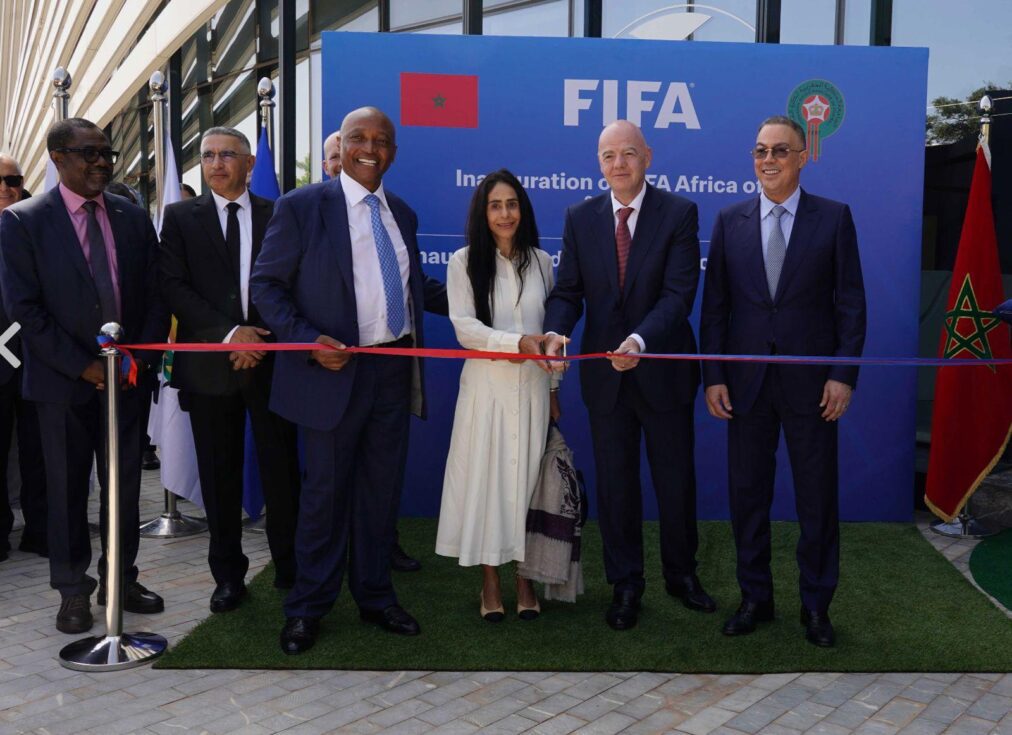
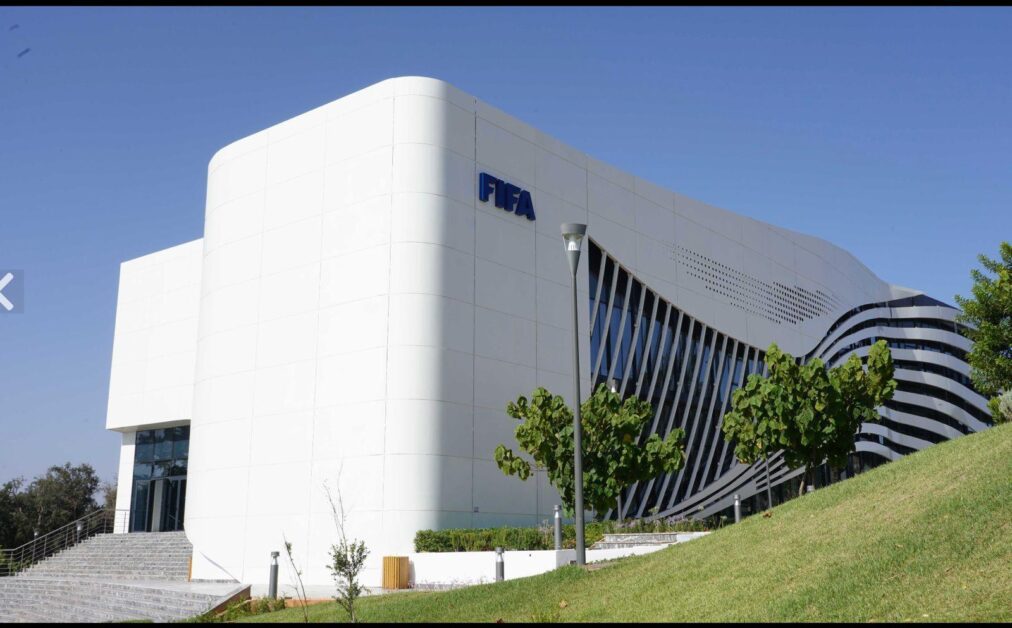
In July 2025, FIFA further strengthened its African commitment by opening the Africa Hub in Rabat, bringing administrative and technical support closer to Member Associations.
Talent development and global pathways
A major pillar of the Infantino era has been talent identification and nurturing. The FIFA Talent Development Scheme, led by Arsène Wenger in his role as FIFA Chief of Global Football Development, aims to ensure every talented player has access to structured development.
By 2027, 75 FIFA Talent Academies are expected to be operational worldwide. The results are already visible. Nations such as Cabo Verde, Curaçao, Jordan and Uzbekistan are set to make historic FIFA World Cup debuts, underlining how structured investment can elevate emerging football ecosystems.
Expanding club and youth competitions
Club football has also experienced significant growth. In 2025, FIFA launched an expanded 32-team FIFA Club World Cup, drawing an estimated 2.7 billion viewers across media platforms – a landmark moment in global club competition.
Youth football has similarly expanded. Both the FIFA U-17 World Cup and FIFA U-17 Women’s World Cup are now staged annually. The first 48-team FIFA U-17 World Cup, hosted in Qatar, marked a new era of inclusivity and competitive exposure for emerging nations.
Women’s football: From expansion to equity
Women’s football has been elevated to a central strategic priority. The 32-team FIFA Women’s World Cup in Australia and New Zealand in 2023 validated the expansion model and set new commercial and sporting benchmarks.
The tournament will expand further to 48 teams from 2031. Prize money has also surged, with USD 152 million distributed in 2023 – triple the 2019 figure and ten times that of 2015 – while player service conditions now align more closely with those of the men’s World Cup.
New competitions such as the FIFA Women’s Club World Cup, FIFA Futsal Women’s World Cup and FIFA Women’s Champions Cup further underscore FIFA’s long-term commitment to the women’s game.
Governance, Reform and Technology
Following the 2015 governance crisis, FIFA has undergone structural reform aimed at restoring credibility and financial transparency. These reforms enabled the organisation to release USD 1.5 billion through its COVID-19 Relief Plan, safeguarding Member Associations during the pandemic.
Transfer system reforms have also delivered measurable impact. Through the FIFA Clearing House, more than USD 500 million in training rewards has been allocated, with over USD 300 million distributed to approximately 7,000 clubs worldwide.
Technological innovation has reshaped match officiating, particularly through the global implementation of VAR and semi-automated offside technology, enhancing accuracy and fairness in decision-making.
Football as a Social Force
Beyond the pitch, FIFA has expanded football’s social footprint. The Football for Schools programme now involves more than 150 Member Associations, integrating sport into educational development.
Meanwhile, FIFA Arenas aims to build at least 1,000 mini-pitches globally to improve grassroots access.
The fight against discrimination has intensified, with strengthened anti-racism protocols at matches and the introduction of the FIFA Social Media Protection Service to combat online abuse.
A decade on, Gianni Infantino’s presidency can be characterised by financial redistribution, structural reform and competitive expansion.
For Africa in particular, the transformation has been both visible and measurable – from infrastructure and talent pathways to increased representation on the global stage.
-
 Morocco face Argentina with Women’s Under-17 World Cup place at stake Oct 23, 2026
 -
MC Alger need a historic comeback to keep African Champions League hopes alive Oct 23, 2026
-
Barcelona and Real Madrid tracking Aston Villa midfielder Johan Manzambi Oct 23, 2026
-
Nagida shines as Rennes hold Juventus to 2-2 draw Oct 23, 2026



-
AFCON 2025: Fixtures, Results, Scores and Standings Jan 18, 2026
-
Match hero Taiwo Awoniyi reflects on team effort after Chelsea triumph May 5, 2026
-
Leadership and long-term vision key to rescuing Zamalek and inspiring Egyptian football – Hany Abou Rida Nov 5, 2025
-
South African giants Orlando Pirates set to lose influential forward Monnapule Saleng Mar 19, 2025




-
PSG v Barcelona: fiery attacks set up Champions League classic at Parc des Princes Oct 18, 2026
-
Champions League: PSG beat Barcelona as Liverpool complete comeback against Villarreal Oct 20, 2026
-
Real Betis v Barcelona: kick-off time, TV details and match preview Oct 16, 2026
-
PSG beat Barcelona 4-2 in Champions League thriller Oct 21, 2026