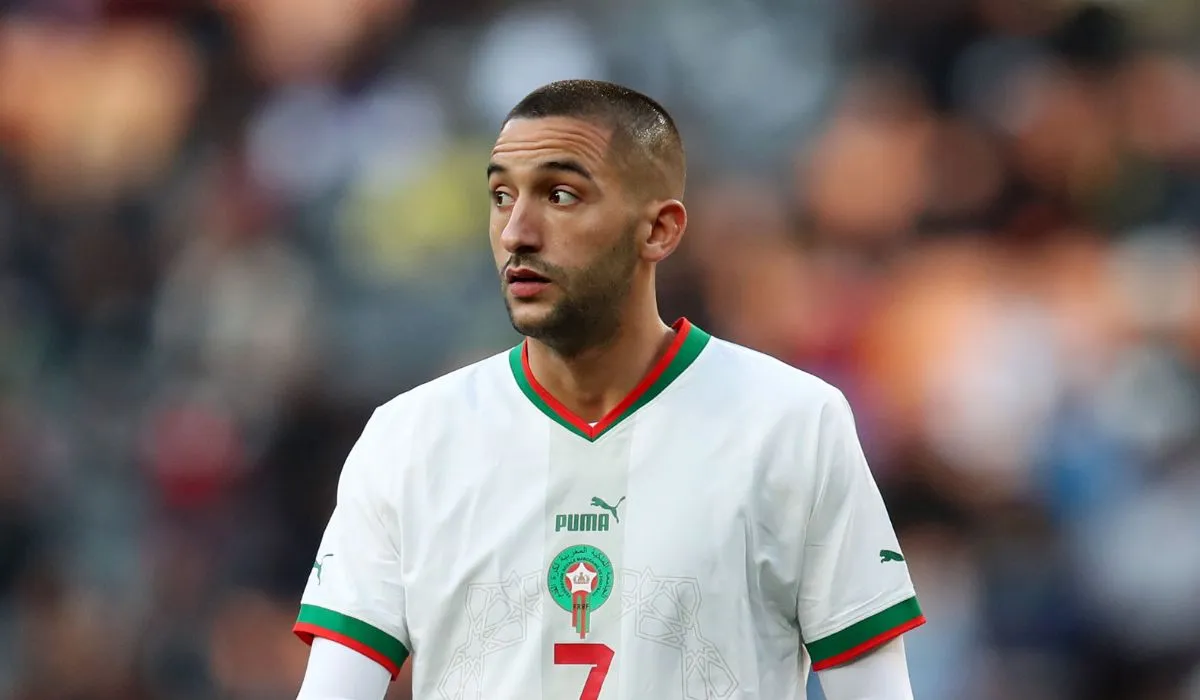
Hakim Ziyech’s decision to represent Morocco in 2015 marked a defining moment for both the player and the national team, transforming a dual-eligibility dilemma into a choice that would shape his international identity and Morocco’s football narrative.
Born in Dronten, Ziyech was eligible to play for the Netherlands or Morocco and had already featured for Dutch youth teams.
At 22, he opted to switch allegiance, committing his future to the Atlas Lions. The move immediately resonated with Moroccan supporters, who viewed it as a powerful statement of belonging.
In the Netherlands, however, the decision drew criticism, underlining the emotional and symbolic weight often attached to international football choices.
Ziyech’s integration into Morocco’s senior side was swift and influential. His technical quality, creativity and assertive personality helped define his presence within the squad.
Over time, he developed into one of the most recognisable figures in the national team, carrying expectations that extended beyond his club career.
Whether performing domestically or abroad, his international role remained a constant reference point in discussions about Morocco’s football identity.
His rise with the Atlas Lions coincided with a period in which individual expression and tactical responsibility blended to give the team a clearer on-field character.
Ziyech’s playing style — marked by vision and attacking intent — contributed to that evolution. Supporters came to associate him with decisive moments and a willingness to shoulder responsibility, reinforcing his status as a central figure in the squad.
The significance of his 2015 decision lies not only in personal allegiance but in how such moments can influence a team’s trajectory.
International football careers often hinge on choices made early, yet their effects can echo for years. In Ziyech’s case, the commitment to Morocco represented more than a change of colours; it symbolised a turning point that helped define an era for the Atlas Lions.
Seen in hindsight, the decision illustrates how identity, opportunity and ambition intersect in modern football. For Morocco, it added a player capable of shaping matches and narratives alike.
For Ziyech, it established a lasting connection with a national team that would become central to his professional story.