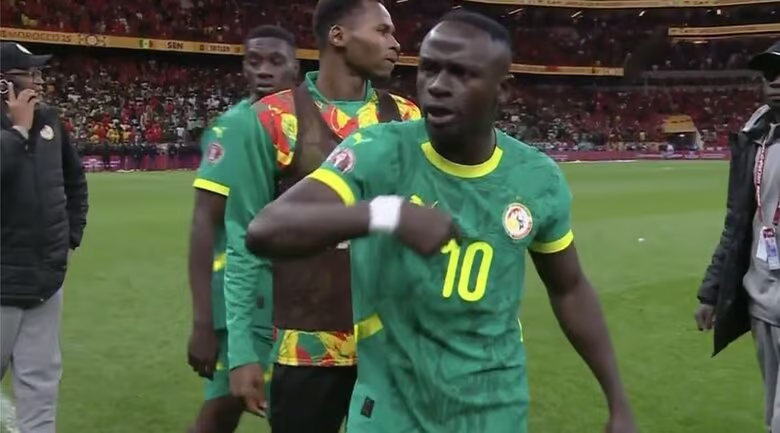
Former Senegal striker Mamadou Niang has revealed how he intervened during a tense moment in the Africa Cup of Nations final, urging Sadio Mané to return to the pitch as Senegal’s players protested a refereeing decision.
Speaking on Canal+ programme Talents d’Afrique, the former Olympique de Marseille forward revisited the dramatic scenes from the AFCON final between Senegal and Morocco, when several Senegalese players walked off the field in frustration.
Niang explained how he approached Mané at a critical moment, believing the team’s talisman needed reassurance rather than instruction.
His account follows earlier revelations from Claude Le Roy and El Hadji Ousseynou Diouf, both of whom said Mané had sought their advice as emotions ran high during the stoppage.
Niang, stationed near the touchline, said he could see doubt on Mané’s face as the situation escalated.
According to Niang, the forward appeared unsure about how to react amid the confusion surrounding the referee’s decision.
While Mané is widely regarded as a leader within the Senegal squad, Niang suggested that the pressure of the moment led him to seek guidance from familiar figures on the sidelines.
“ When people started leaving the pitch, he looked doubtful because he didn’t really understand what was happening (…) He looked at me and said, ‘Mamad, what do I do?’ I wanted to tell him that he had the answer within himself. But he just wanted some support, some encouragement.
I quickly told him that he mustn’t leave the pitch because it might be his last AFCON. He couldn’t leave like that. He had to finish the match and lose like men if he had to .”
Niang explained that his message was rooted in respect for the competition and the significance of the occasion. He believed abandoning the match would have left a lasting mark on Mané’s international career, regardless of the final outcome.
The former striker said the emphasis was not on the referee’s decision but on dignity and responsibility, especially in a final watched by millions across Africa and beyond. For Niang, the priority was ensuring Senegal’s captain and senior players upheld the values they represented.
The incident has since become one of the defining moments of the final, illustrating the emotional intensity surrounding the match.
Niang’s testimony offers further insight into how senior figures behind the scenes sought to calm tensions and guide the players through a pivotal moment.
His comments underline the weight carried by leaders during decisive matches and the role played by former internationals in shaping critical decisions, even from the sidelines, when the stakes are at their highest.