Latest News
AFCON
African Legends
African Referees
Africans Abroad
Africans Born Abroad
Morocco
Senegal
UNAF
WAFU A
Senegal FA President launches extraordinary attack on CAF and Morocco over chaotic AFCON final
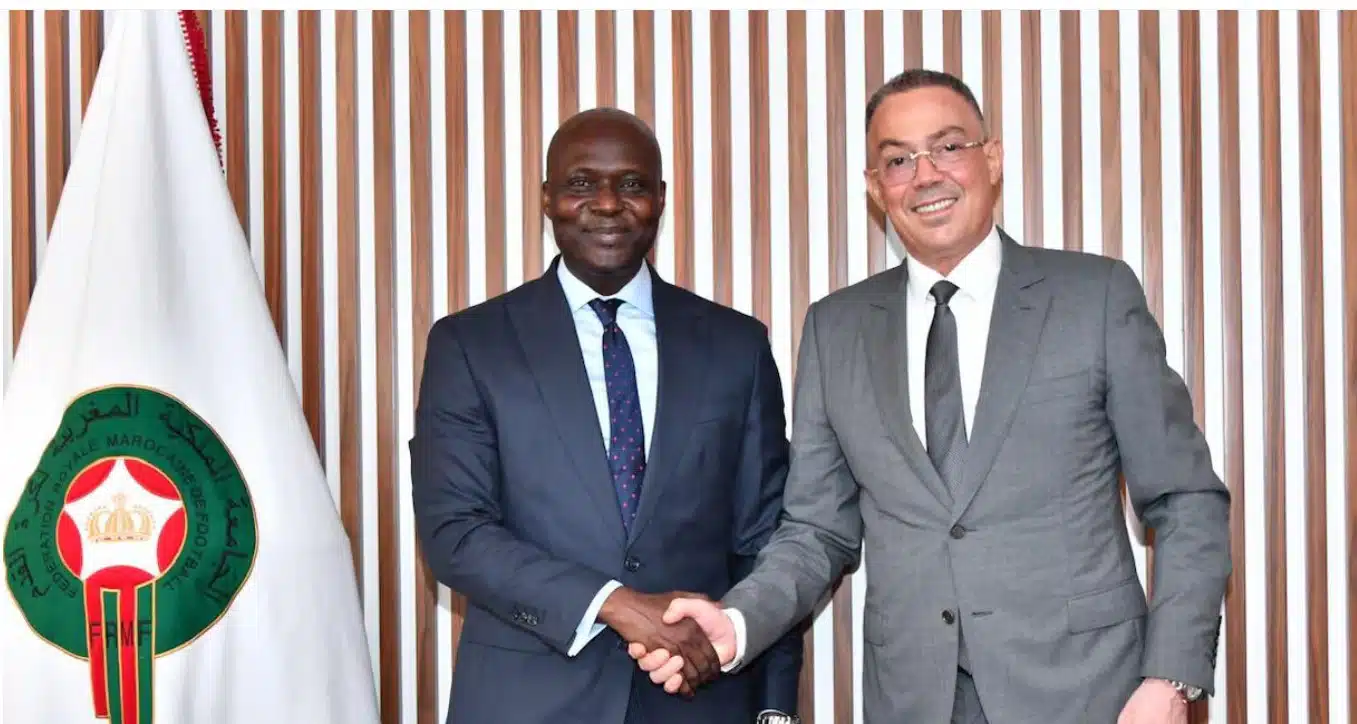
The president of the Senegalese Football Federation has launched a blistering and unprecedented attack on Morocco and CAF, accusing the continental body of being under Moroccan control following the chaotic conclusion of the 2025 Africa Cup of Nations final.
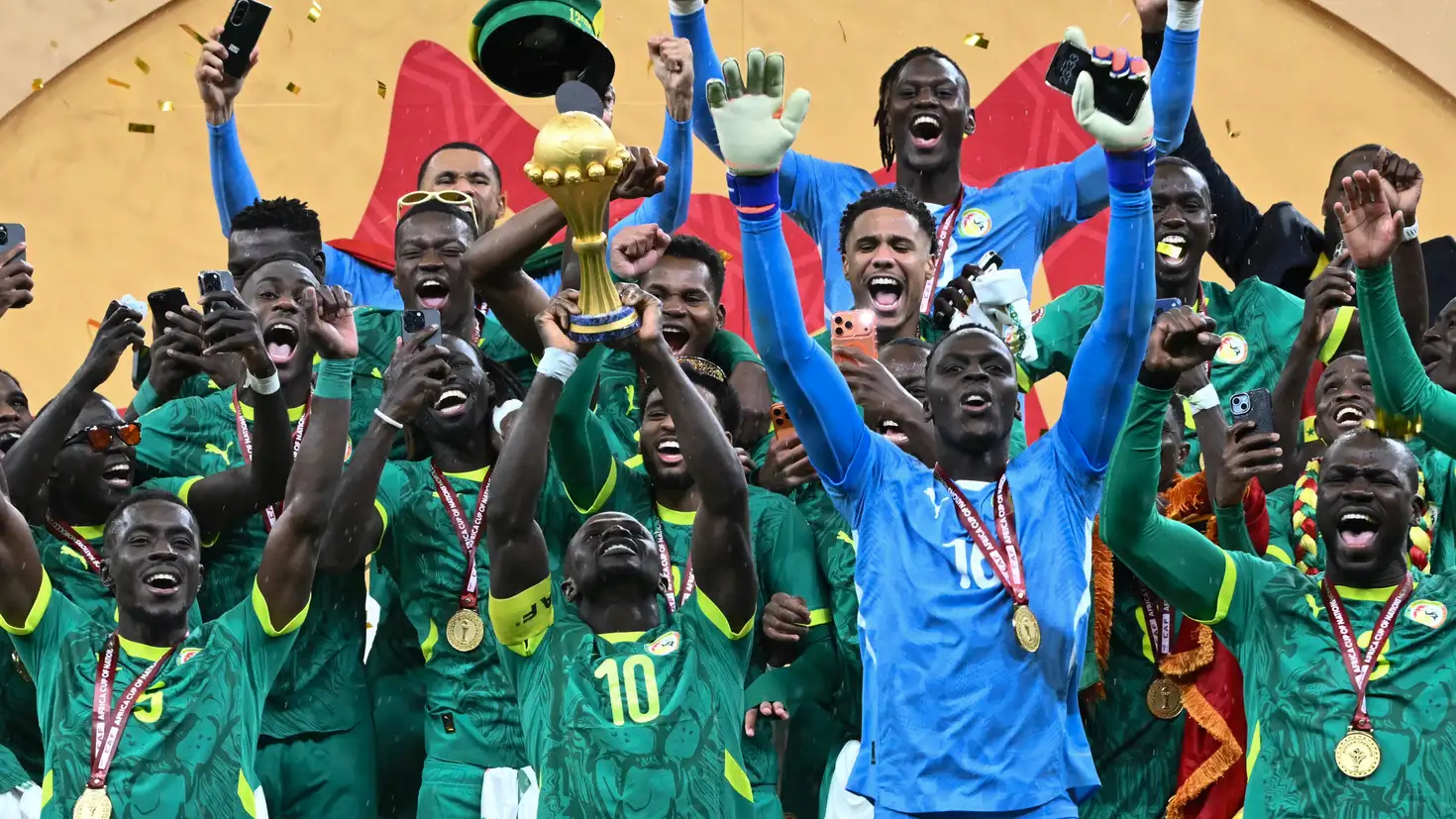
Abdoulaye Fall made the remarks just days after Senegal were crowned African champions last week for the second time in their history, following a 1–0 victory over hosts Morocco in Rabat.
The final, however, was overshadowed by controversy, protests and scenes rarely witnessed at African football’s showpiece event.
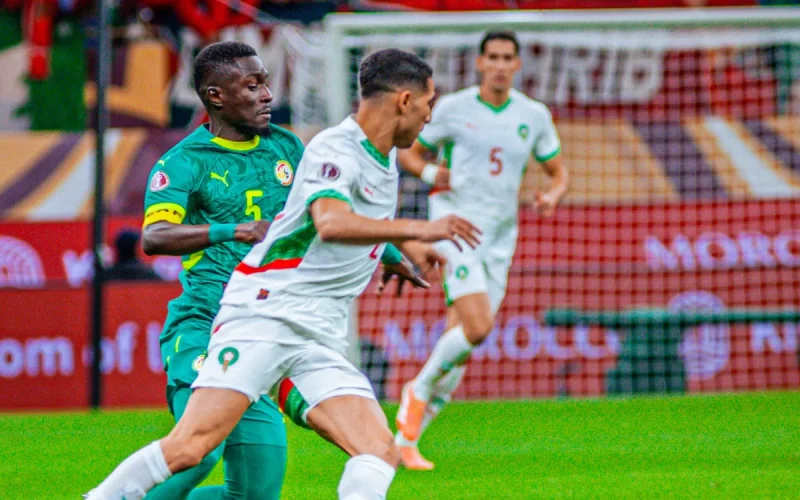
The decisive match descended into turmoil in the closing minutes of regulation time when Senegal briefly withdrew from the pitch in protest after a penalty was awarded to Morocco, moments after a Senegal goal had been disallowed.
Play was halted for several minutes before the Senegalese players returned, the penalty was taken and missed, and the match eventually resumed, with Senegal going on to secure victory and lift the trophy.
In an interview cited by Foot Mercato, Fall accused Morocco of exerting overwhelming influence over the Confederation of African Football, claiming the imbalance extended far beyond the events on the pitch.
“Morocco controls the Confederation of African Football, let’s be clear: they control everything and decide everything,” Fall said.
Tactics to distract Senegal from preparing for AFCON final
He went on to allege that tensions between Senegal and the host nation began long before the final itself, pointing to disputes over organisation, accommodation, ticketing, security arrangements and refereeing decisions.
He stated: “Morocco never believed that another team could prevent them from winning the title. No country opposed Morocco as much as Senegal did.”
Fall revealed that Senegal had raised serious concerns about their accommodation ahead of the final, including formal intervention by Senegal’s Ministry of Foreign Affairs. According to Fall, CAF failed to provide adequate assurances until very late in the process.
“Even before qualifying, and even before traveling to Rabat, I asked Abdoulaye Sow (the Secretary General of the Senegalese Football Federation) to go and inspect the site,” Fall said.
“We asked them about the hotel where we would stay, but they refused to tell us. We only found out after we had qualified, when we were preparing for the trip. That’s when he told me: Mr. President, there is no way we can stay in that hotel.”
He added: “The hotel was located in the heart of the city, amidst great noise. A team of Senegal’s caliber cannot stay in those conditions.”
The Mohammed VI Complex training site rejected
The Senegalese federation also rejected plans for the team to train at the Mohammed VI Sports Complex, Morocco’s national team base, which had been used by several of Morocco’s opponents earlier in the tournament for logistical reasons. Fall said Senegal refused to train at a facility so closely associated with their final opponents.
“They wanted to force us to train at their main camp, the Mohammed VI complex. When I found out about that, I said clearly: we will not go there,” he said.
While acknowledging the quality of the complex, Fall insisted the risks were unacceptable.
“The complex is very modern, and there is no camp more modern than it. Even in Senegal, we do not have this level of infrastructure,” he said. “But if you train there, you are completely exposed: your team is at risk. They will know every detail.”
Fall said the situation escalated further upon Senegal’s arrival in Rabat, claiming there was insufficient protection for the team and a lack of organisational support.
“Then you saw the team arrive in Rabat: no support, no protection,” he said.
Complaints raised at the highest levels
He explained that he personally intervened at the highest level to resolve the impasse.
“Then I went to meet the president of CAF and the secretary-general. It is not my habit to chase after people, but I went there, and I found Fouzi Lekjaa and the secretary-general of CAF, and then the president of CAF arrived,” Fall said.
He described his exchanges with Moroccan federation president Fouzi Lekjaa and CAF officials as deeply frustrating.
“I spoke with Fawzi, who kept repeating: ‘This is the African Football Confederation.’ And when I went to speak with the Secretary General, he kept saying that Morocco did such and such,” Fall said.
“That’s when I realized it was an attempt to mislead me. I left, and then I decided we should issue a statement.”
That statement was released late on the eve of the final, shortly before Senegal’s head coach Pape Thiaw publicly expressed dissatisfaction at a press conference. An extraordinary press conference announced earlier by the federation was later cancelled.
Fall also detailed a late-night phone call from Lekjaa.
“At 1:30 a.m., Fouzi Lekjaa called me and asked: ‘Mr. President, what’s going on?’” Fall said. “I replied: ‘Mr. President, this is a precautionary measure. We will hold a press conference tomorrow. We will never play under these circumstances.’”
According to Fall, Lekjaa sought to resolve the standoff directly.
“He told me, ‘Mr. President, leave CAF alone. Come meet me tomorrow and I will do what you want’,” Fall said.
He confirmed that following a meeting at the Moroccan Ministry of Finance, security arrangements were strengthened.
“Security measures were immediately reinforced, and checkpoints were set up, even kilometers away from the hotel,” Fall confirmed.
Another major grievance involved ticket allocation for the final.
“Then I explained to the president of the Moroccan federation that we had only received three tickets for the entire Senegalese delegation, and there was no possibility of buying more for a team that had qualified for the final. Morocco had booked all the tickets,” he said.
Fall said Lekjaa proposed a workaround.
“He told me to make a list: some would go to the VIP suite, and others to the royal suite.”
Fall also returned to the issue of refereeing, which he described as the one area where Senegal had no influence whatsoever.
“The only point where we had no authority was the refereeing,” he said. “Two days before the final match, we were supposed to know who the referee would be… When we asked, they said they didn’t know.”
He added: “We only received the information the night before the final match at 10:00 PM.”
CAF’s justification, Fall said, was unacceptable.
“They offered excuses such as: ‘We wanted to protect the referee to avoid putting pressure on him.’ But in reality, we know very well that this was to prevent any possible desire to change the ruling.”
Fall confirmed that Senegal prepared a formal protest letter in advance and submitted it during the match itself.
“During the final match, we had already prepared a letter of protest. During the match, we sent the letter to CAF while we were still in the stadium,” he said.
CAF is under Moroccan control
He concluded with his strongest accusation.
“No country has ever opposed Morocco so strongly… Thanks to their control of the position of Vice President of the African Football Confederation, they have the necessary resources, and many countries do not dare to oppose them.”
Fall ended by saying: “No one dares to stand up to them. Morocco controls CAF, let’s face the truth: they control everything and decide everything. Fouzi Lekjaa is my friend, but there are things that are non-negotiable. That’s why we are in this situation today.”
The latest accusation against Morocco comes just days after Senegal’s key player Ismail Jacobs raised the suspicion of foul play, claiming several players suffered food poisioning ahead of the chaotic final.
Neither CAF nor the Moroccan Football Federation has responded publicly to Fall’s accusations, but his remarks are expected to intensify scrutiny of governance, neutrality and power structures within African football.
-
 Rassie Erasmus admits nerves are building before crucial All Blacks Test Aug 26, 2026
 -
Dutch-Moroccan midfielder Wassim Elasri begins new chapter with Bocholt VV Aug 26, 2026
-
Java United add Senegalese-French midfielder Christian Gomis in Indonesia move Aug 26, 2026
-
Getafe seek to complete Conference League progress against Partizan in Belgrade Aug 26, 2026



-
AFCON 2025: Fixtures, Results, Scores and Standings Jan 18, 2026
-
Leadership and long-term vision key to rescuing Zamalek and inspiring Egyptian football – Hany Abou Rida Nov 5, 2025
-
South African giants Orlando Pirates set to lose influential forward Monnapule Saleng Mar 19, 2025
-
Full schedule for 2025 Africa Cup of Nations in Morocco confirmed Feb 12, 2025




-
Ajax close in on Franco-Guinean youngster Abdoulaye Camara Aug 19, 2026
-
DR Congo star Fiston Mayele joins Al Ahli Tripoli on two-year deal Aug 20, 2026
-
Babacar Bousso: Senegal striker makes UAE switch to Al-Wasl Aug 19, 2026
-
Ibrahim Maza ‘untouchable’ at Bayer Leverkusen unless two conditions are met Aug 19, 2026