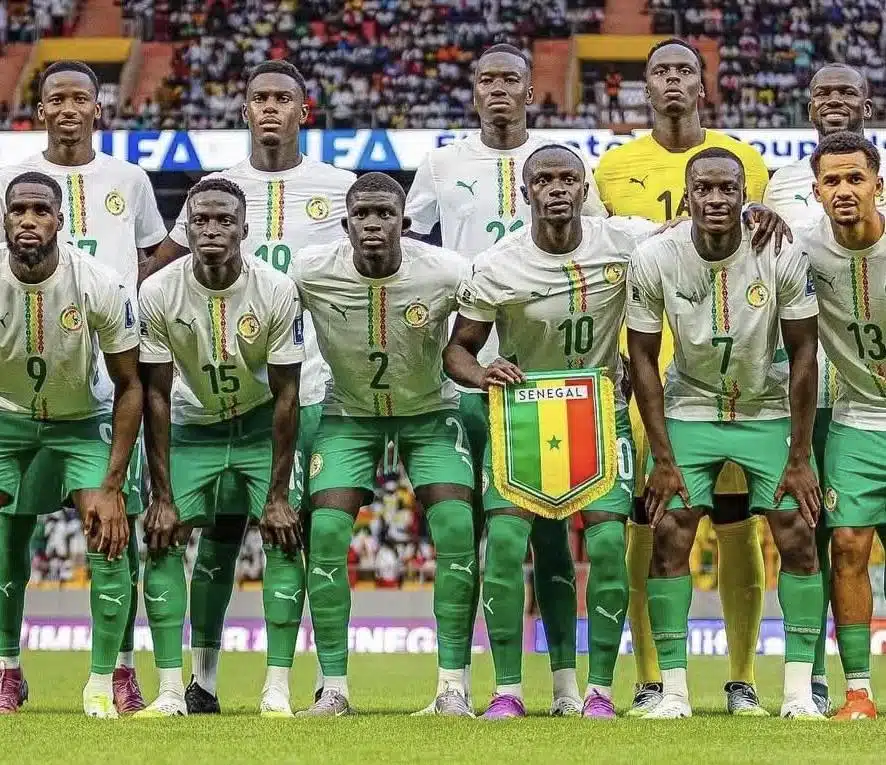
African football has always walked a fine line between raw emotion and institutional discipline. Passion gives the game its soul, but when emotion overwhelms authority, the result is often disorder.
While AFCON tournaments have seen their share of controversy over the years, few moments compare to the disturbing scenes that unfolded in Rabat on Sunday, when Senegal abandoned the pitch in protest over what they perceived as biased officiating.
In the aftermath, a chorus of former players, pundits, and fans across the continent attempted to rationalise Senegal’s actions as an unfortunate but understandable reaction in the heat of competition. That interpretation, however, dangerously misses the point.
There was nothing excusable about what happened. The walk-off represented a direct assault on refereeing authority, the integrity of the competition, and the basic principles that allow football to function as an organised global sport.
What occurred in Rabat was not an isolated emotional lapse but rather the latest chapter in a troubling pattern. Senegal’s history at AFCON shows a recurring tendency toward collective indiscipline whenever matches tilt against them.
The images – and emotions – from the most dramatic final in African football history. https://t.co/jfLiQMORIr pic.twitter.com/qKqsiv2qUS
— The Continent (@thecontinent_) January 25, 2026
Over the past two decades, protests against referees have repeatedly escalated into prolonged stoppages, crowd disturbances, and in extreme cases, abandoned matches.
The pattern was visible as far back as the 2004 AFCON quarterfinal against Tunisia. After conceding the game’s only goal, Senegal’s then-captain El Hadji Diouf led an aggressive protest, convinced a foul on him had been ignored in the build-up. The demonstration dragged on for nearly ten minutes, disrupting what should have been a showcase encounter.
Although the match eventually resumed and Tunisia advanced, Senegal’s behaviour dominated the narrative. A Guardian report from the time captured the moment succinctly, noting that Senegal “lost their cool, then lost the plot.”
Eight years later, the consequences were far more severe. During a 2013 AFCON qualifier against Côte d’Ivoire in Dakar, Senegal reacted furiously to a correctly awarded penalty while trailing. When Didier Drogba converted to make it 2-0, the on-field protests spilled into the stands.
Fires were lit, objects hurled, and chaos reigned for almost forty minutes before the match was abandoned. CAF responded with one of its harshest ever rulings, disqualifying Senegal from the 2013 Africa Cup of Nations entirely.
There were signs that lessons had been learned, but they proved superficial. At the previous AFCON in Côte d’Ivoire, Senegal again exited poorly, showing little grace in defeat against the hosts in the round of 16. This time, the disorder shifted beyond the stadium. In Dakar, Ivorian fans shared alarming accounts of harassment and violence, forcing authorities from both nations to issue urgent appeals for calm and fraternity.
Against that backdrop, the events in Rabat are even more alarming. Barely two years later, the same cycle of protest, indiscipline, and volatility resurfaced on the grandest stage of all: the AFCON final. As millions watched what many had hailed as one of the tournament’s finest editions, Senegal’s decision to walk off the pitch sent a perilous signal. If such conduct were ever to be tolerated, it would imply that teams can halt a final at will whenever they disagree with a referee. That precedent would strike at the very foundations of football governance.
Refereeing controversies are not new to football. Mistakes, whether perceived or real, are part of the sport’s fabric. What football promises is not perfect justice but procedural authority. Respect for that authority is non-negotiable. Allowing matches to descend into brinkmanship and intimidation would reduce the game to chaos, where pressure replaces rules and protest replaces process.
AFCON 2025 final: Morocco vs. Senegal erupted in chaos after a controversial VAR penalty for Morocco. Senegalese fans hurled objects, stormed barriers, and clashed with security, forcing players off. After 15 minutes of pandemonium, order was restored, and Senegal won in extra… pic.twitter.com/oFyJUnegS5
— M̆̈ŏ̈s̆̈s̆̈♔︎𝙞𝙣𝔽𝗼𓅷 (@Mosesha90713683) January 21, 2026
This places CAF and FIFA at a critical crossroads. If they respond timidly, they risk legitimising collective insubordination as a tactical tool. The ramifications would extend far beyond Africa. As the AFCON disciplinary bodies deliberate on Senegal’s actions of January 18, they must resist political pressure and the fear of online backlash. Decisive action is essential.
Calling for firm punishment is not the same as seeking revenge. As a Moroccan, this is not an appeal to strip Senegal of their AFCON title. Results, however controversial, are settled on the pitch and should stand. The real issue is how the game itself was treated and damaged in the process. Sanctions should serve one purpose: deterrence, ensuring that no team ever considers repeating such behaviour.
Accountability must begin at the top. The players’ actions were not spontaneous; they were visibly encouraged and sustained from the bench. Head coach Pape Thiaw bears significant responsibility for allowing and prolonging the protest. In professional sport, a coach who uses his authority to undermine the game commits a grave breach of duty. Severe personal sanctions would send a clear message about the weight of that responsibility.
Players who left the field without authorisation must also face substantial suspensions. Football regulations are unambiguous on this matter. Walking off the pitch is a violation, and individual accountability is essential to restore respect for the rules.
Beyond individuals, Senegal as a footballing nation must confront meaningful competition-level consequences. Temporary suspension from future AFCON tournaments and exclusion from a World Cup cycle would be consistent with past CAF precedents and underline the seriousness of the offence. While stripping the title remains an option given the gravity of the incident, the core objective should not be humiliation but preservation of the sport’s integrity.
As African football seeks greater respect, investment, and global standing, it must also demonstrate an uncompromising commitment to discipline and institutional authority.
Passion alone cannot sustain the game. For the sake of football’s credibility, its future, and the values that make it beautiful, CAF and FIFA must act with firmness and clarity.
-
 Liverpool face €60m hurdle in pursuit of Spanish-Nigerian talent David Otorbi Oct 25, 2026
 -
CAF Confederation Cup: AS FAR take half-time lead against CO de Korhogo Oct 25, 2026
-
CAF Champions League 2026-27: 16 clubs confirmed for group stage Oct 25, 2026
-
Colombe du Sud reach CAF Champions League group stage for first time Oct 25, 2026


-
AFCON 2025: Fixtures, Results, Scores and Standings Jan 18, 2026
-
Match hero Taiwo Awoniyi reflects on team effort after Chelsea triumph May 5, 2026
-
Leadership and long-term vision key to rescuing Zamalek and inspiring Egyptian football – Hany Abou Rida Nov 5, 2025
-
South African giants Orlando Pirates set to lose influential forward Monnapule Saleng Mar 19, 2025




-
Barcelona v Real Madrid: Catalans backed at 1.65 to win October Clasico Oct 23, 2026
-
Barcelona and Real Madrid meet in pivotal 265th Clasico Oct 23, 2026
-
PSG v Barcelona: fiery attacks set up Champions League classic at Parc des Princes Oct 18, 2026
-
Champions League: PSG beat Barcelona as Liverpool complete comeback against Villarreal Oct 20, 2026