‘Senegal must forfeit AFCON 2025 title’ – Cross demands tough action to protect football
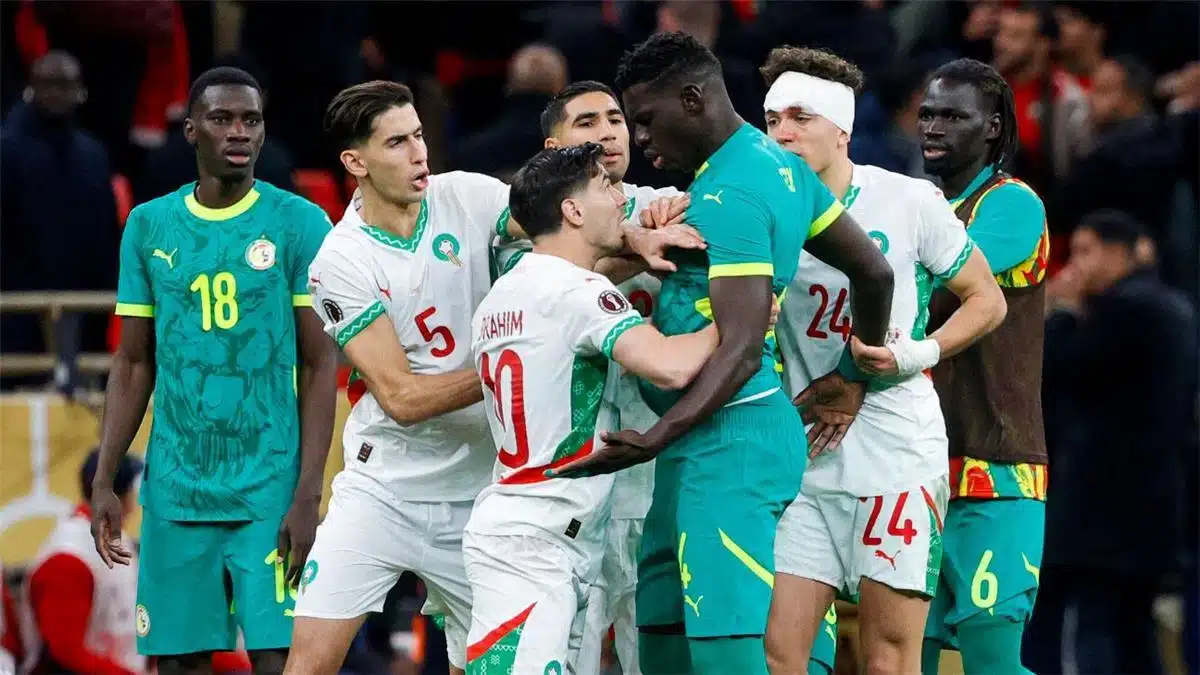
The 2025 Africa Cup of Nations final between Senegal and Morocco should have been remembered as a showcase of African football at its highest level. Instead, it has become one of the most contentious matches in the competition’s history, raising uncomfortable questions about authority, discipline and the future credibility of the game.
In a fiercely worded column for the Daily Star, journalist Jeremy Cross argues that the chaos which engulfed the final demands the harshest possible sanctions, not only to punish those involved but to protect football’s very foundations.
Senegal ultimately lifted the trophy, but Cross insists the result itself has been overshadowed by what unfolded on the pitch.
For him, the events in Rabat represent more than a single moment of disorder. They mark what he describes as “the most dangerous precedent in football history”, one that risks undermining respect for match officials and the integrity of major tournaments worldwide.
A final that descended into farce
According to Cross, the AFCON final crossed a line when Senegal temporarily refused to continue playing after Morocco were awarded a stoppage-time penalty with the score level.
The decision followed an earlier flashpoint in which Ismaila Sarr’s apparent winning goal for Senegal was ruled out for a foul, a call that enraged head coach Pape Thiaw.
“Cue bedlam,” Cross writes, as Thiaw instructed his players to walk off the pitch in protest. Nearly 15 minutes passed before Senegal eventually returned, a delay that plunged the final into chaos and left millions of viewers across Africa and beyond watching in disbelief.
Cross is unequivocal in his condemnation of Thiaw’s actions. He argues that allowing a manager to withdraw his team whenever he disagrees with refereeing decisions would make football ungovernable.
In a pointed comparison, he notes that even Sir Alex Ferguson, renowned for his confrontations with officials, never resorted to such measures. To Cross, Thiaw’s protest was not an act of passion but one of reckless defiance that “brought utter shame on himself, his nation and an entire continent”.
The controversy deepened when Morocco’s Brahim Díaz missed the penalty, his soft Panenka easily gathered by Senegal goalkeeper Edouard Mendy. Cross suggests the reaction, or lack of one, from Senegal’s players was telling.
“Either Senegal were still in shock at the sheer madness of their manager,” he writes, “or Díaz missed on purpose – and Senegal knew he would.” The speculation, fair or not, illustrates how trust in the match had already been eroded.
Authority, respect and FIFA’s intervention
For Cross, the most alarming aspect of the episode is what it signals about respect for authority in football. If players and coaches are seen to challenge referees so openly on the biggest stage, he warns, the consequences could be severe for the sport’s credibility.
FIFA president Gianni Infantino was quick to condemn the scenes, posting a rare public rebuke on social media. “Decisions taken by the match officials must always be respected,” Infantino said. “Because anything less puts the very essence of football at risk.”
Cross praises Infantino for the clarity of that message, calling it a “rare moment of clarity”, but criticises him for passing responsibility to the Confederation of African Football (CAF) rather than acting decisively himself.
In Cross’s view, CAF now faces a defining test. Failure to impose strong sanctions would suggest tolerance for behaviour that threatens the sport’s moral framework. He goes further, urging FIFA to intervene directly if CAF hesitates, arguing that the issue transcends continental boundaries and strikes at the heart of football’s global governance.
This, Cross contends, is an opportunity for the sport to draw a clear moral line. “This is now a wonderful chance for the most popular sport on the planet to make opposite examples of two people,” he writes, framing the debate as one of right and wrong rather than winners and losers.
Punishment, precedent and the role of leadership
The columnist’s proposed remedies are severe and deliberately provocative. Cross argues that Senegal should be forced to forfeit the AFCON final, with the trophy awarded to Morocco. Such a decision, he believes, would send an unmistakable message that no team is above the laws of the game, regardless of the final score.
Even more striking is his call for a lifetime ban for Pape Thiaw from football. In Cross’s words, “Thiaw should never be allowed to manage a football team again.” The rationale is simple: leadership carries responsibility, and by ordering his players off the pitch, Thiaw crossed a boundary that cannot be ignored if football wishes to preserve its authority.
In sharp contrast, Cross reserves his praise for Sadio Mané, whom he credits with restoring a measure of dignity to the occasion. It was Mané who persuaded his team-mates to return to the field, reminding them of their responsibility to the game and its audience.
Cross goes as far as to suggest Mané deserves the “freedom of Africa” and the FIFA Fair Play Award, highlighting his belief that players must act as custodians of football’s values.
Mané’s own words resonate powerfully in Cross’s argument. “Football is something special and the world was watching, so we have to give a good image for football,” the Senegal star said. “I’d rather lose than this kind of thing happen to our football.” For Cross, that statement captures the essence of what was at stake in Rabat far better than any tactical debate or refereeing analysis.
Ultimately, Cross’s column is less about Senegal, Morocco or even AFCON alone. It is a warning about the fragility of football’s moral order. Once authority is openly defied on the biggest stages, he argues, the sport risks sliding into chaos, where results are questioned and respect evaporates.
Whether or not one agrees with his call for forfeits and lifetime bans, the underlying message is clear: without discipline, accountability and leadership, football’s greatest tournaments risk losing the very respect that gives them meaning.
-
 Football icon Lionel Messi arrives in Argentina ahead of Burkina Faso friendly Oct 2, 2026
 -
Burkina Faso’s friendly against Argentina in doubt over travel crisis Oct 2, 2026
-
Tunisia cancel Mali friendly amid Achouri row and squad crisis Oct 2, 2026
-
CAN 2027 qualifiers: Egypt dominate best XI as Mofokeng earns perfect 10/10 Oct 2, 2026


-
AFCON 2025: Fixtures, Results, Scores and Standings Jan 18, 2026
-
Match hero Taiwo Awoniyi reflects on team effort after Chelsea triumph May 5, 2026
-
Leadership and long-term vision key to rescuing Zamalek and inspiring Egyptian football – Hany Abou Rida Nov 5, 2025
-
South African giants Orlando Pirates set to lose influential forward Monnapule Saleng Mar 19, 2025




-
AFCON 2027 Qualifiers: McCarthy warns South Africa to expect tough test against Eritrea Sep 29, 2026
-
AFCON 2027 qualifiers: Algeria, Morocco and Nigeria among winners on opening matchday Sep 26, 2026
-
AFCON 2027 qualifiers: Burkina Faso held by Benin in Group F Sep 25, 2026
-
Denmark v Portugal: Nations League kick-off time, TV channel and match prediction Sep 29, 2026