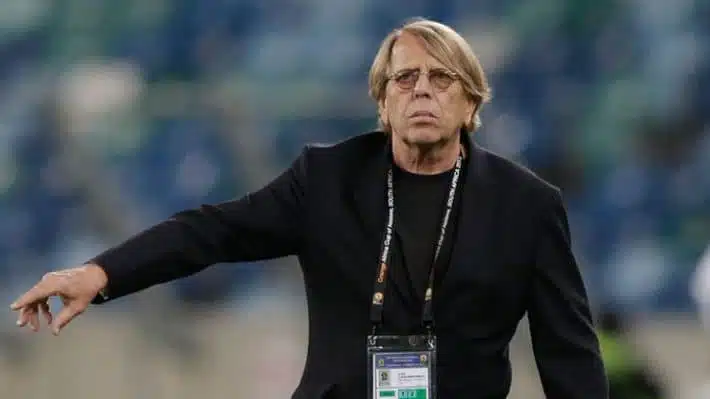
Veteran football coach Claude Leroy has publicly supported calls to boycott the 2026 World Cup, criticising US President Donald Trump for policies he says harm Africa.
Leroy, widely known in African football as the “White Wizard,” cited Trump’s actions against non-governmental organisations (NGOs) on the continent as a major concern.
Speaking to the French newspaper Le Figaro, Leroy questioned whether Africa should respond by boycotting the tournament.
“He is damaging Africa by killing NGOs. That is the tragedy of this continent. I wonder if we shouldn’t call for a boycott of the 2026 World Cup, given Donald Trump’s behavior towards the African continent.
With a FIFA president who boasts of being on his side. The leaders at the highest level of football never talk about football anymore, only about money,” he said.
Leroy, currently a consultant for Canal+, is one of the first high-profile figures in football to publicly endorse the boycott movement.
His comments follow increasing debate over the intersection of politics and sport, particularly regarding Africa’s role in global football events.
Over decades, Leroy has had a profound impact on African football, coaching multiple national teams, including Cameroon, with whom he won the Africa Cup of Nations in 1988, as well as Senegal, DR Congo, Congo, Ghana, and Togo.
His extensive experience on the continent has given him a unique perspective on both football development and wider socio-political issues affecting African nations.
Leroy’s intervention highlights the growing tensions between political decisions in host nations and the global football community.
As discussions around the 2026 World Cup continue, his statements add weight to a debate about whether Africa should use its collective influence to push back against policies perceived as damaging to the continent.
The former coach’s outspoken stance underscores a broader conversation about the responsibilities of sporting leaders and governing bodies in addressing political and humanitarian issues, even when they intersect with major international tournaments.
-
 Kylian Mbappe responds to criticism over his teamwork Sep 10, 2026
 -
Soufiane Benhaida joins Sidi Kacem from RCA Reserve on a free transfer Sep 10, 2026
-
Morocco defender Mehdi Mchakhchekh joins Zira FC from Raja Casablanca Sep 10, 2026
-
Ethan Mbappe faces potential five-match Champions League ban Sep 10, 2026




-
AFCON 2025: Fixtures, Results, Scores and Standings Jan 18, 2026
-
Leadership and long-term vision key to rescuing Zamalek and inspiring Egyptian football – Hany Abou Rida Nov 5, 2025
-
South African giants Orlando Pirates set to lose influential forward Monnapule Saleng Mar 19, 2025
-
Full schedule for 2025 Africa Cup of Nations in Morocco confirmed Feb 12, 2025




-
Orlando Pirates backed to overcome La Cure Sylvester in CAF Champions League opener Sep 4, 2026
-
Rulani Mokwena: Pyramids FC have reached maturity and must expect to win every title Sep 4, 2026
-
Former Nigeria star Odemwingie taunts Portugal football icon Cristiano Ronaldo Sep 4, 2026
-
CAF announce kick-off times for Champions League preliminary round games Sep 4, 2026