Senegal stand firm as disciplinary action looms after AFCON final
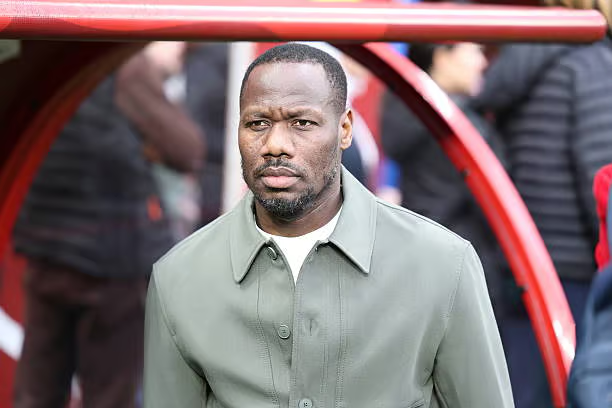
Senegal’s triumphant Africa Cup of Nations victory is facing potential off-field consequences after CAF confirmed it is examining disciplinary measures against head coach Pape Thiaw and members of the national team following incidents during the final against Morocco.
The Lions of Teranga secured the 35th edition of the Africa Cup of Nations after a tense and hard-fought final played on Moroccan soil, a result that crowned Senegal champions for the second time.
What should have been a moment of unchallenged celebration has instead been followed by uncertainty, with the Confederation of African Football considering sanctions linked to the decision by Senegal’s players to leave the pitch during the match.
Reports indicate that CAF’s disciplinary bodies are reviewing the conduct of Senegal’s bench and players, with possible penalties ranging from suspensions to financial fines.
Pape Thiaw could face a touchline ban for several matches, while the Senegalese Football Federation (FSF) risks sanctions that may include fines or the prospect of playing future home fixtures behind closed doors.
The case centres on Thiaw’s decision to withdraw his players from the field following what he and his staff viewed as unacceptable events during the final.
The move, widely discussed across the continent, was interpreted by CAF as a serious breach of competition regulations, prompting a formal review under its Disciplinary Code.
In Dakar, however, there is little appetite for compromise. The FSF has publicly backed its coach, insisting the action taken was measured and necessary.
Senegalese officials argue that failing to respond would have amounted to tacit acceptance of conduct they believe undermined the spirit and fairness of the game.
CAF’s disciplinary framework allows for a range of penalties in cases of behaviour deemed unsporting or damaging to football’s image.
More severe sanctions may be imposed if actions are judged to have encouraged disorder or disrupted the normal running of a match, following deliberation by the Disciplinary Committee.
Despite the looming threat, Senegal’s camp remains defiant. Federation leaders have signalled their readiness to contest any ruling they consider disproportionate, stressing that the team’s success was achieved on merit and cannot be erased by administrative decisions.
While potential suspensions or fines could complicate Senegal’s preparations for upcoming competitive fixtures, including those linked to World Cup qualification, officials are determined to defend their position.
For Senegal, the battle now extends beyond the pitch, as the champions brace for a legal and regulatory showdown with African football’s governing body.
-
 Algeria women take 8-0 lead into Olympic qualifying second leg against Central African Republic Oct 13, 2026
 -
Futsal Africa Cup of Nations 2026: Morocco cruise past Algeria in opening match Oct 13, 2026
-
Morocco women held to goalless draw by Uzbekistan in second game under Eric Blahic Oct 13, 2026
-
Botola Pro: AS FAR snatch late draw against Hassania Agadir Oct 13, 2026




-
AFCON 2025: Fixtures, Results, Scores and Standings Jan 18, 2026
-
Match hero Taiwo Awoniyi reflects on team effort after Chelsea triumph May 5, 2026
-
Leadership and long-term vision key to rescuing Zamalek and inspiring Egyptian football – Hany Abou Rida Nov 5, 2025
-
South African giants Orlando Pirates set to lose influential forward Monnapule Saleng Mar 19, 2025




-
Manchester United host winless Tottenham in Premier League clash Oct 7, 2026
-
Real Madrid fitness update: Valverde a doubt for Villarreal as Kylian Mbappe returns Oct 8, 2026
-
Lens v Lyon: Can the in-form visitors extend their unbeaten Ligue 1 run? Oct 6, 2026
-
Barcelona aim for eighth straight Liga win as Getafe visit Camp Nou Oct 7, 2026