Nigeria robbed by referee Daniel Laryea in AFCON 2025 semi-final, writes Stephanie Shaakaa
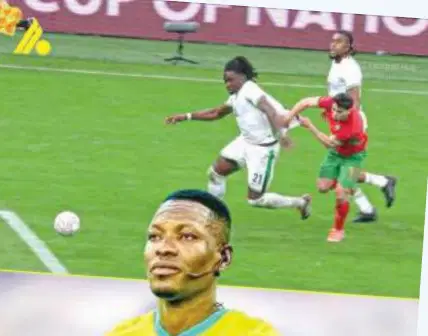
When Wednesday night’s AFCON 2025 semi-final unfolded, it felt less like football and more like a lesson in injustice. Stephanie Shaakaa, reflecting on the Super Eagles’ clash with Morocco, asks a question every Nigerian parent dreads: “How do I explain this to my son?” For her, the heartbreak was not in the 1-0 defeat itself, but in how the game was controlled by the referee, Ghanaian Daniel Nii Ayi Laryea.
A referee and a red flag before kick-off
“This was not just another fixture. It was the final before the final. It was a match defined by History, Pride and Destiny,” Shaakaa writes. From the moment Laryea was announced as centre referee, alarms sounded.
A Ghanaian official, from a nation with a long-standing football rivalry with Nigeria, was entrusted with the match determining the continent’s championship contender—and the Nigeria Football Federation raised no objection. No protest. No caution. Just silence.
Shaakaa argues that CAF’s definition of neutrality—referee experience and panel listings—falls far short of justice. “Neutrality is how justice is seen to be done on the pitch,” she stresses, recalling the pivotal moment when Calvin Bassey received a yellow card for what was a clear foul.
“How does the fouled player become the offender?” she asks, capturing the collective disbelief that spread from pitch to commentary box to living rooms across Nigeria.
Patterned bias and the impact on players
What followed, Shaakaa explains, was more than a single mistake. “This wasn’t just bad officiating. It was patterned. It was consistent. And consistency is what makes bias visible.” Nigerian players were repeatedly penalised for legitimate challenges while Moroccan infractions were met with leniency. Even the Moroccan players seemed taken aback by the generosity they were receiving.
Professional players struggled to reconcile the rulings with the rules. Ademola Lookman stood frozen at points, hands spread in confusion, as the game became a battle not only against the opposition but against the referee’s whistle.
Shaakaa notes, “When players stop arguing and start looking genuinely lost, when opponents appear surprised by decisions in their favour, and when neutral observers across the continent begin asking the same questions Nigerians are asking, the issue is no longer emotion. It is credibility.”
A broader lesson in fairness
For Shaakaa, the match went beyond football. It became a lesson in how injustice feels when cloaked in procedure. “Wednesday night, football stopped being a game to me. It became a lesson in how injustice feels when it is dressed up as procedure,” she says.
The personal sting was amplified by her role as a parent, watching her son absorb the unfairness on screen. “Each time, my heart shatters quietly. Not because I lack answers, but because I fear what those answers say about the world and about us.”
Nigeria, Ghana, and the silent accountability
Shaakaa acknowledges the broader historical and cultural context. Nigeria has always supported Ghanaian talent in schools, industries, and sports. Yet the competitive and sometimes tense relationship between the nations in football magnifies the perception of conflict of interest.
“So when a Ghanaian referee is placed in charge of Nigeria’s biggest match of the tournament, perception alone demands caution. Football administration is not naive. CAF knows this,” she writes.
She criticises the NFF’s silence, calling it unforgivable. “Why was there no protest? Why was there no official objection? When it is time to talk on television our former FA boss would talk endlessly but when it is time to make that Oratory useful he zips his mouth,” she observes. The lack of institutional pushback, she argues, compounds the sense of injustice.
The whistle louder than the truth
Shaakaa concludes with a poignant reflection on the stakes beyond sport. “When a child watches football and learns that fairness is optional, something sacred is lost.
Wednesday night, it wasn’t just a match that failed Nigeria; it was an institution. And until African football learns that justice must not only be done but be seen to be done, the whistle will remain louder than the truth.”
Her final words carry both patriotism and a plea for accountability: “Long Live the Federal Republic of Nigeria. Long Live Our Super Eagles.”
-
 Nicolas Pepe leaves Cote d’Ivoire squad before Cameroon friendly Oct 3, 2026
 -
Senegal v Comoros: Vieira given chance to assess wider squad in Marseille friendly Oct 3, 2026
-
Paris Saint-Germain secure first option on Braga prospect Mario Dorgeles Oct 3, 2026
-
Orlando Pirates return to winning ways with emphatic DStv Diski Challenge victory Oct 3, 2026


-
AFCON 2025: Fixtures, Results, Scores and Standings Jan 18, 2026
-
Match hero Taiwo Awoniyi reflects on team effort after Chelsea triumph May 5, 2026
-
Leadership and long-term vision key to rescuing Zamalek and inspiring Egyptian football – Hany Abou Rida Nov 5, 2025
-
South African giants Orlando Pirates set to lose influential forward Monnapule Saleng Mar 19, 2025




-
AFCON 2027 Qualifiers: McCarthy warns South Africa to expect tough test against Eritrea Sep 29, 2026
-
AFCON 2027 qualifiers: Algeria, Morocco and Nigeria among winners on opening matchday Sep 26, 2026
-
Denmark v Portugal: Nations League kick-off time, TV channel and match prediction Sep 29, 2026
-
South Sudan vs Egypt: Where to watch AFCON 2027 qualifier Sep 29, 2026