AFCON 2025: Arsène Wenger visits Technical Study Group, hails tournament’s intensity and coaching quality
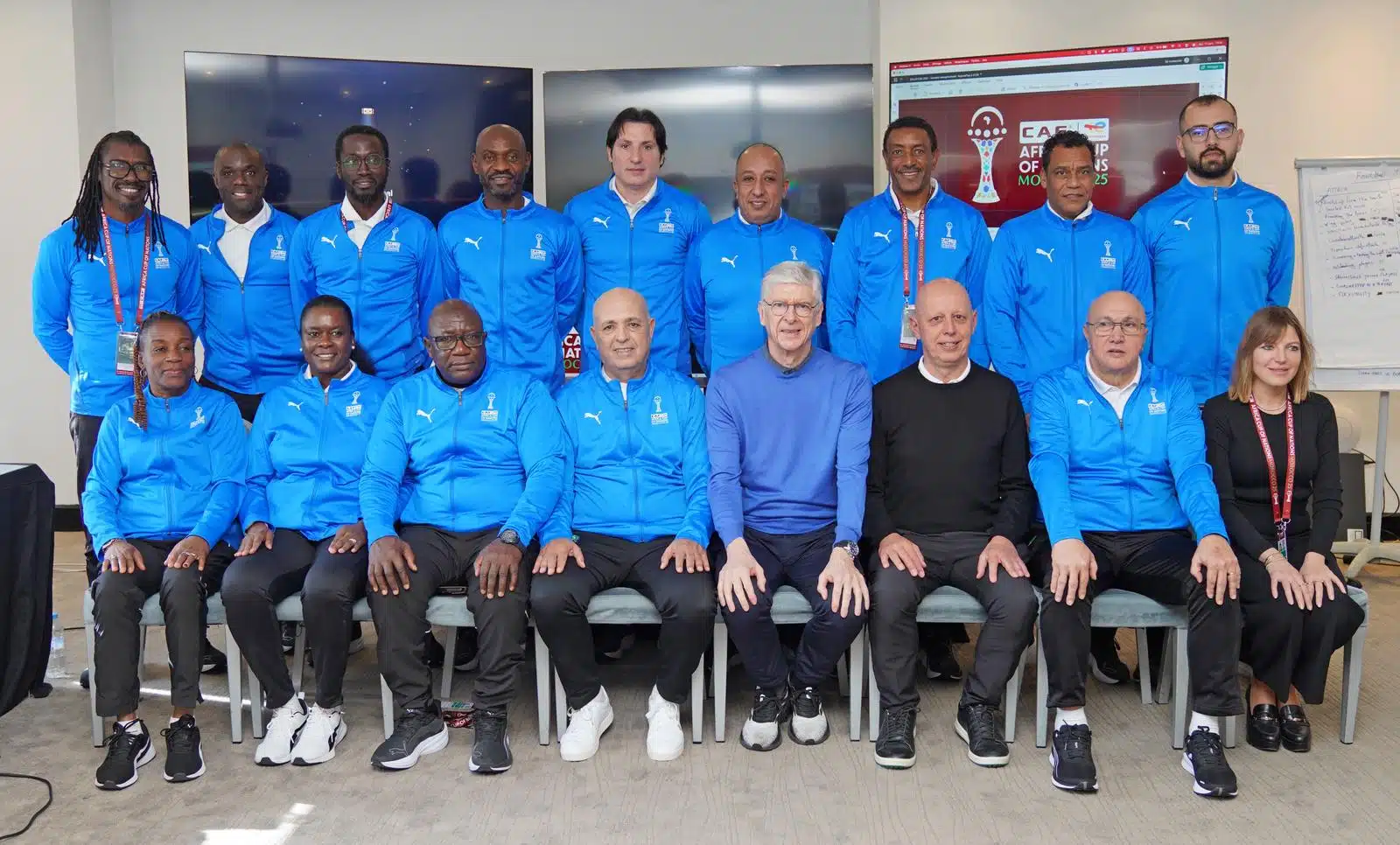
FIFA’s Chief of Global Football Development, Arsène Wenger, has paid a working visit to the CAF Africa Cup of Nations (AFCON) 2025 Technical Study Group (TSG), praising the tournament’s intensity, competitiveness and the growing influence of African coaches at the highest level.
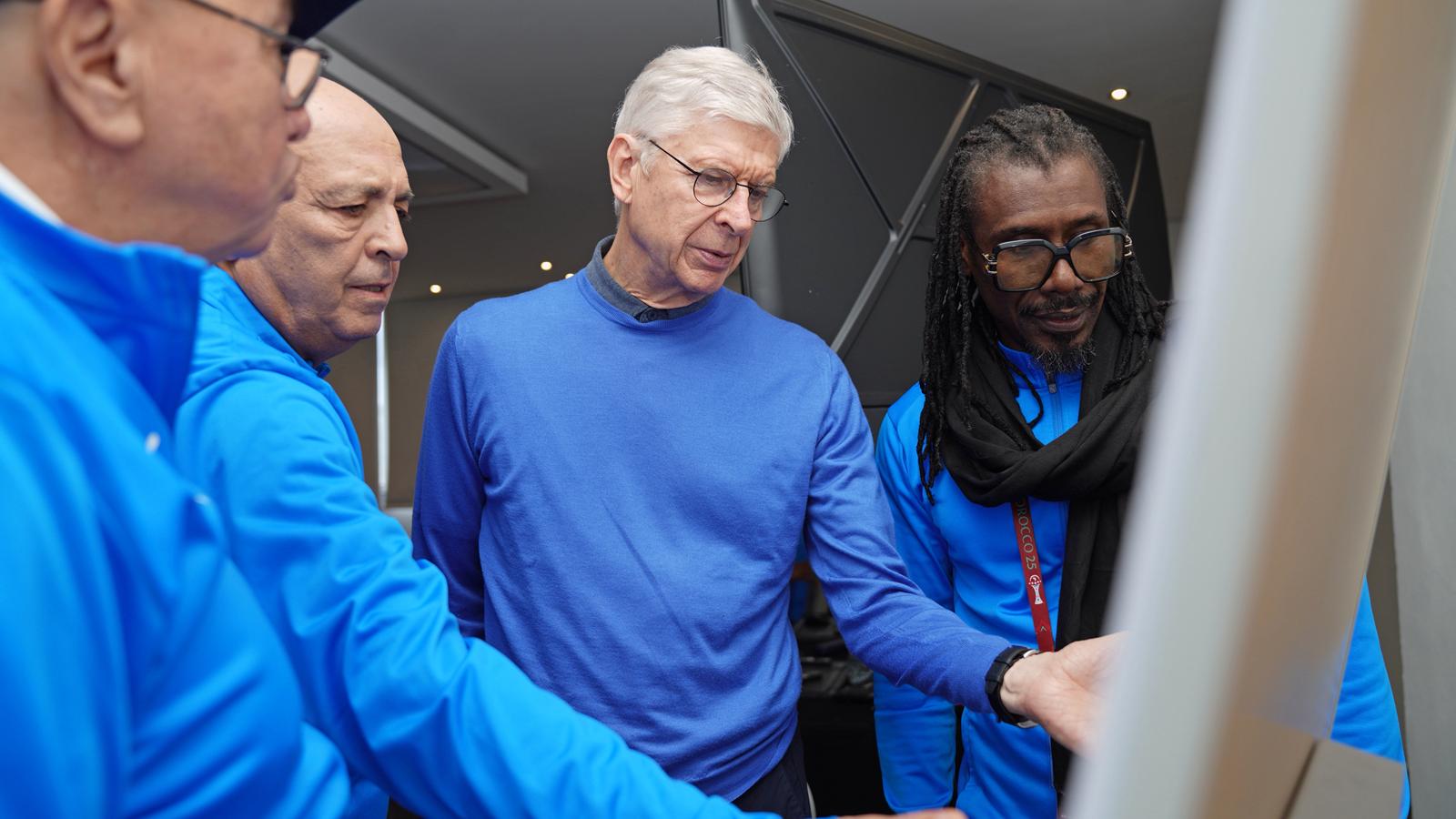
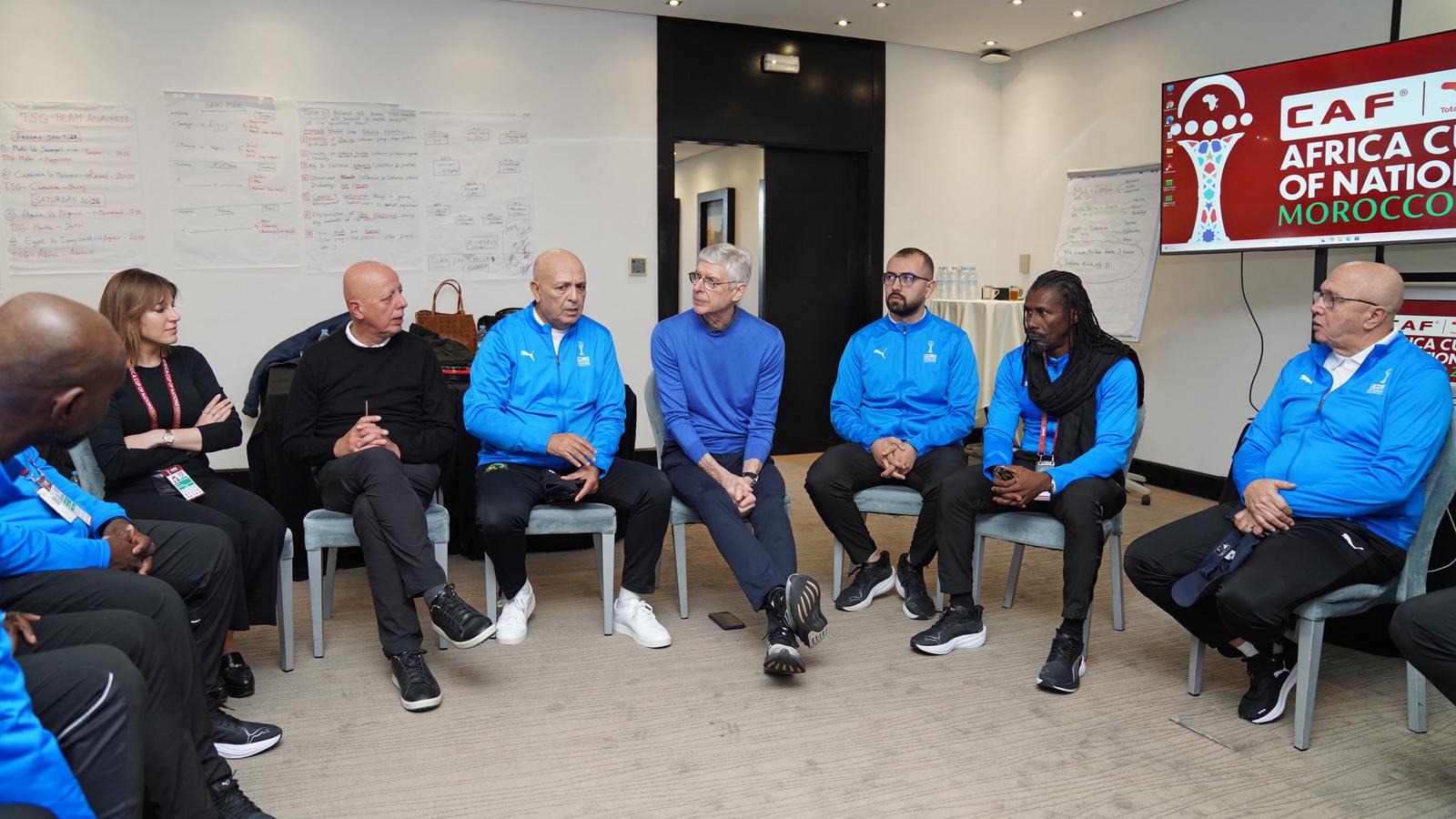
The former Arsenal manager was warmly received by members of the AFCON 2025 TSG before taking part in a technical workshop focused on performance analysis and emerging trends from the competition.
Wenger expressed strong admiration for the overall standard of the tournament, describing AFCON 2025 as a true reflection of modern football.
“Overall, the competition was very intense. The mental attitude of all the teams was very strong, and the physical level was absolutely unbelievable,” Wenger noted.
“When you watch the games, it’s very difficult to predict who will win because the levels of the teams are very close.”
According to Wenger, the narrow margins between teams highlight the tactical maturity on display, with the finalists standing out due to superior technical quality and experience.
He also singled out the quality of coaching as one of the major positives of the tournament, stressing the importance of African coaches leading national teams on the continent.
“I was impressed by the level of the coaches. It’s very positive to see African coaches leading African teams. It shows there is no gap anymore, and that information in modern football travels very quickly,” he added.
Wenger underlined the crucial role of the Technical Study Group, explaining that their work helps FIFA and CAF identify tactical trends, anticipate future developments and improve player development pathways.
“The TSG has the responsibility to analyse trends and guide where we can develop players. I was impressed by the quality of their work and the passion they put into the analysis,” Wenger said.
The visit concluded with Wenger posing for photographs with members of the AFCON 2025 Technical Study Group, marking a significant endorsement of CAF’s technical and analytical progress.

-
 Raja Casablanca face injury problems ahead of FUS Rabat clash Oct 10, 2026
 -
Somali referee Omar Artan awaits approval to officiate in Egyptian Premier League Oct 10, 2026
-
Noussair Mazraoui’s Manchester United comeback delayed after injury during international break Oct 10, 2026
-
Morocco v Senegal: TAS decision on CAN 2025 title expected in October Oct 9, 2026



-
AFCON 2025: Fixtures, Results, Scores and Standings Jan 18, 2026
-
Match hero Taiwo Awoniyi reflects on team effort after Chelsea triumph May 5, 2026
-
Leadership and long-term vision key to rescuing Zamalek and inspiring Egyptian football – Hany Abou Rida Nov 5, 2025
-
South African giants Orlando Pirates set to lose influential forward Monnapule Saleng Mar 19, 2025




-
Croatia face Spain with Nations League hopes on the line in Split Oct 5, 2026
-
France v Belgium: Probable line-ups for Nations League clash Oct 3, 2026
-
Morocco coach Mohamed Ouahbi refuses to single out player after Mali draw Oct 4, 2026
-
Manchester United host winless Tottenham in Premier League clash Oct 7, 2026