Is Mohamed Salah’s AFCON dream slipping away after another painful exit?
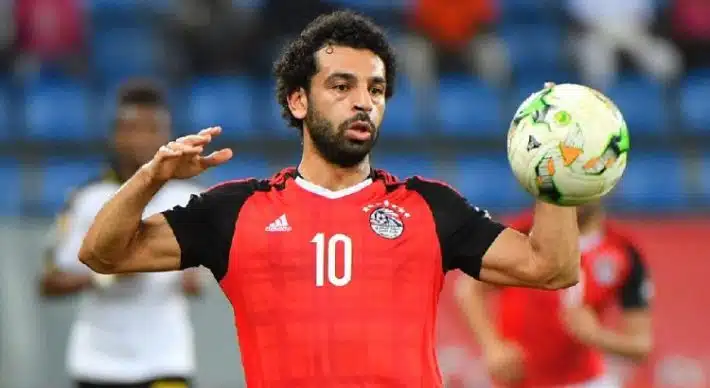
Mohamed Salah’s quest to conquer Africa’s biggest stage suffered another setback on Thursday night as Egypt bowed out of the 2025 Africa Cup of Nations at the semifinal stage, beaten 1-0 by Senegal in Tangier.
The decisive moment came from a familiar source, with Sadio Mané striking late to once again deny his former Liverpool teammate a long-coveted continental crown.
For Salah, the defeat reopened an increasingly uncomfortable debate about whether the Africa Cup of Nations title will forever remain the missing piece in an otherwise glittering career.
Despite his sustained excellence at club level and his enduring importance to the Egyptian national team, AFCON glory continues to elude the Pharaohs’ captain.
A familiar heartbreak on the continental stage
Egypt’s latest exit extended a troubling pattern. After failing to qualify for three consecutive editions in the early 2010s, the record seven-time champions have now been eliminated in the knockout rounds of five straight tournaments.
That run includes two final defeats, two round-of-16 exits, and now a semifinal loss, underscoring a prolonged inability to finish the job on the continental stage.
This tournament marked Salah’s fifth attempt to win AFCON. Once again, he fell short, leaving him without a major international trophy, a sharp contrast to African contemporaries such as Mané and Riyad Mahrez, both of whom have lifted the title.
The irony is difficult to ignore, particularly given Salah’s decisive contributions to Egypt’s deep runs in 2017, 2021, and now 2025.
Speaking earlier in the competition, Salah made clear how much the tournament still means to him, saying: “There is no one in the country who wants to win this title more than me.
“Thank God, I have won everything in football except this title.”
Time, transition and Egypt’s looming rebuild
While Salah did not benefit from playing alongside Egypt’s most celebrated golden generations, his individual impact over the years has been undeniable.
His goals and leadership have carried Egypt through tight matches and into the latter stages of tournaments. Yet, as the years have passed, his role within the team has subtly evolved.
The explosive dribbler who dazzled defenders in 2017 has given way to a more measured, tactically mature figure, often balancing attacking responsibility with defensive discipline in a pragmatic Egyptian setup.
At 33, Salah remains physically formidable, but time is no longer an abstract concept. He will be 35 by the time the next Africa Cup of Nations kicks off in Kenya, Tanzania, and Uganda.
Given his fitness levels and professionalism, a return to the squad appears likely, but the margin for error is narrowing, both for him and for an Egyptian side in transition.
Egypt’s broader structural challenge was also laid bare in Morocco. They fielded one of the oldest squads at the tournament, with an average age above 30 and a youngest player aged 26.
Renewal now appears unavoidable if the team is to remain competitive and relieve some of the burden placed on its talisman.
Mané’s dominance deepens Salah’s unfinished story
Adding to the narrative is Mané’s continued dominance in direct duels with Salah on the international stage. From the 2021 AFCON final to the 2022 World Cup playoff and now this semifinal, the Senegalese forward has repeatedly emerged on the winning side.
His latest strike not only sent Senegal into another final but further cemented his reputation as one of AFCON’s defining figures.
For Salah, the dream is not officially over. Another opportunity remains. But with each passing tournament, the question grows louder: how many more chances will there be to finally lift the one trophy that still escapes him?
-
 Elyaz Zidane opens up on pressure of living in father Zinédine’s shadow Oct 17, 2026
 -
Algeria reach historic Futsal AFCON semi-finals as Morocco maintain perfect record Oct 17, 2026
-
Morocco’s Gessime Yassine reportedly close to Chelsea move from Strasbourg Oct 17, 2026
-
Wydad turn to goalkeeper Rachid Ghanimi ahead of Amal Tiznit clash Oct 17, 2026




-
AFCON 2025: Fixtures, Results, Scores and Standings Jan 18, 2026
-
Match hero Taiwo Awoniyi reflects on team effort after Chelsea triumph May 5, 2026
-
Leadership and long-term vision key to rescuing Zamalek and inspiring Egyptian football – Hany Abou Rida Nov 5, 2025
-
South African giants Orlando Pirates set to lose influential forward Monnapule Saleng Mar 19, 2025




-
Real Betis v Barcelona: kick-off time, TV details and match preview Oct 16, 2026
-
Roma v Real Madrid: home side tipped to score first in Champions League clash Oct 12, 2026
-
Atletico Madrid v Manchester United: probable line-ups for Champions League clash Oct 12, 2026
-
Celta Vigo v Juventus: Probable line-ups for Europa League encounter Oct 14, 2026