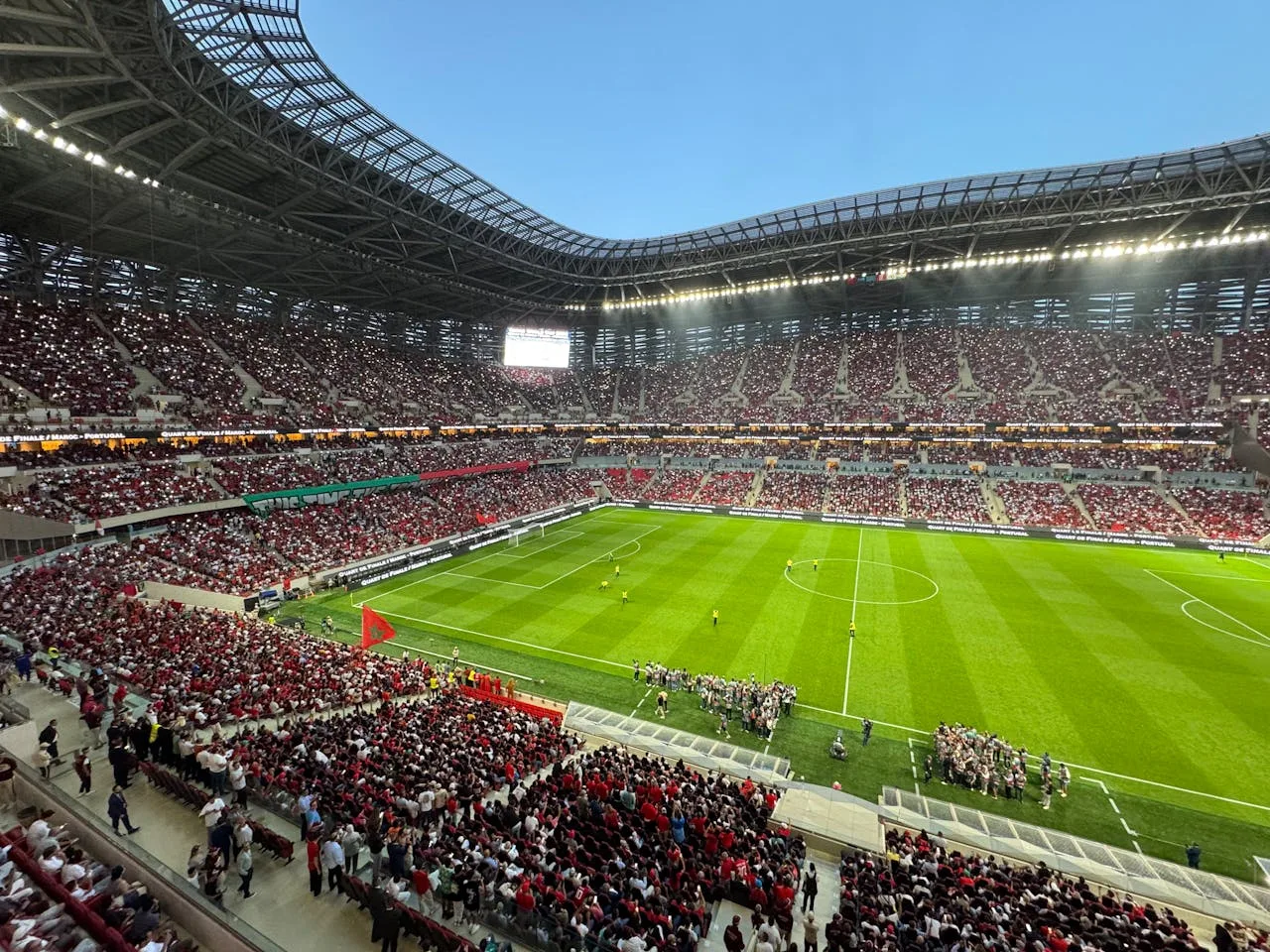
Between the opening whistle and the final roar of the crowd, while goals are celebrated and emotions run high in the stands, another team quietly goes about its work far from the spotlight.
Across Morocco’s stadiums, cleaning workers have emerged as silent contributors to the success of the 2025 Africa Cup of Nations.
The meticulous organisation of this edition has been evident in every detail, from modern infrastructure and seamless coordination among stakeholders to packed stadiums, fan zones and public squares. Yet, behind this polished image lies the continuous effort of men and women whose work ensures that every venue reflects order, discipline and respect for public spaces, reinforcing the image of Morocco as a worthy host of a major continental event.
Before, during and after matches, cleaning teams operate tirelessly, maintaining the cleanliness of stadiums, surrounding areas, streets and public squares. Their role becomes most visible when the stands empty, after moments of joy or disappointment have faded. As fans leave, these workers step in, restoring the venues so they are ready to welcome supporters again for another night of football excitement.
Moving in small, coordinated groups, each worker knows their task and position. Their shared objective is simple but demanding: collecting plastic bottles, scattered papers, leftover food and forgotten items left behind in the heat of celebration. Their responsibilities go beyond the stands, extending to platforms, restrooms, media zones and even the outer perimeter of the stadiums.
It is physically demanding work that requires endurance and professionalism. Ahmed, a cleaner at the Prince Moulay Abdellah Stadium, captured this reality when he said, “Our match starts as soon as the fans leave. We know that the stadium must be in its best condition the next day. It is a great responsibility, but participating in the success of this event is something to be proud of.”
Another worker echoed similar sentiments, noting that despite the exhaustion, especially after matches played before packed crowds, the sight of a clean stadium the following day makes the fatigue worthwhile and gives their work real meaning.
As dawn approaches, the atmosphere shifts. The stands, corridors and surrounding streets regain their calm, appearing untouched by the noise and excitement of the previous night. One by one, the workers depart quietly, without ceremony, waiting for the next matchday when their essential task will begin again.
While major football tournaments are often remembered for iconic goals, star players and passionate supporters, there is another story unfolding behind the scenes. It is the story of women and men who work in the shadows, whose dedication makes it possible for players and fans alike to fully enjoy the African celebration of football.
-
 Patrice Motsepe confirms final term as CAF president Oct 10, 2026
 -
Motsepe pledges stronger cooperation between CAF and other football confederations Oct 10, 2026
-
Motsepe urges African football to learn from past failures ahead of 2030 World Cup Oct 10, 2026
-
FIFA paid Omar Artan $40,000 after US entry denial – Sources Oct 10, 2026




-
AFCON 2025: Fixtures, Results, Scores and Standings Jan 18, 2026
-
Match hero Taiwo Awoniyi reflects on team effort after Chelsea triumph May 5, 2026
-
Leadership and long-term vision key to rescuing Zamalek and inspiring Egyptian football – Hany Abou Rida Nov 5, 2025
-
South African giants Orlando Pirates set to lose influential forward Monnapule Saleng Mar 19, 2025




-
Croatia face Spain with Nations League hopes on the line in Split Oct 5, 2026
-
France v Belgium: Probable line-ups for Nations League clash Oct 3, 2026
-
Manchester United host winless Tottenham in Premier League clash Oct 7, 2026
-
Morocco coach Mohamed Ouahbi refuses to single out player after Mali draw Oct 4, 2026