Achraf Hakimi and Morocco’s AFCON 2025 journey, where ambition meets a defining family story
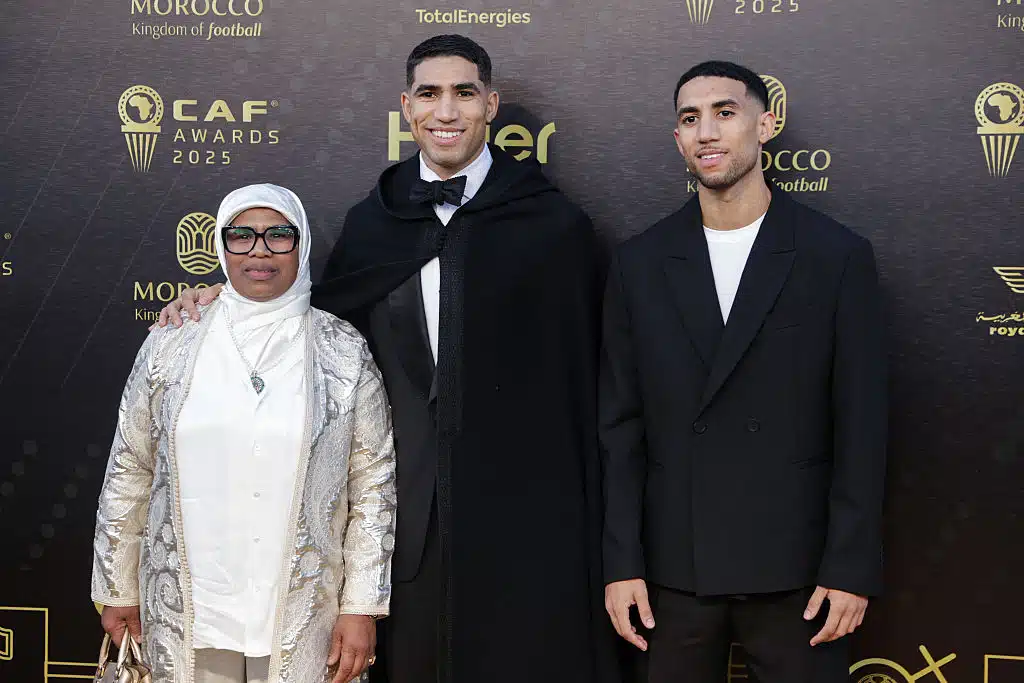
Achraf Hakimi is chasing more than another medal. As Morocco push toward the latter stages of the 2025 Africa Cup of Nations on home soil, the Paris Saint-Germain defender finds himself at the centre of a national moment shaped not only by footballing ambition but by a deeply rooted family story that continues to define his rise.
With the Atlas Lions safely into the semi-finals and a high-stakes meeting with Nigeria ahead, Hakimi has emerged as one of the tournament’s central figures.
His leadership, consistency, and experience at the highest level have reinforced Morocco’s status as serious contenders, while also highlighting the personal journey that underpins his success.
At 27, Hakimi is widely regarded as one of the world’s elite full-backs, but his current prominence is inseparable from the sacrifices and values instilled by his family long before global recognition followed.
Morocco’s semi-final charge and Hakimi’s leadership
Morocco booked their place in the last four of AFCON 2025 with authority, extending a run that has confirmed their tactical maturity and squad depth.
Central to that progress has been Hakimi, whose influence has gone far beyond his defensive responsibilities. Whether driving forward from right-back, setting the tempo, or organising teammates, he has been a constant reference point in Walid Regragui’s side.
The semi-final against Nigeria represents a defining test, not only for Morocco’s title ambitions but also for a generation shaped by the historic World Cup run of 2022.
Hakimi was a cornerstone of that achievement, which saw Morocco become the first African and Arab nation to reach a World Cup semi-final. His presence now provides continuity between that landmark success and the current continental campaign.
Fresh from a season of unprecedented success with Paris Saint-Germain, Hakimi arrived at AFCON carrying both confidence and expectation.
He won every major domestic and continental title available with the French club last season, missing out only on the Club World Cup, and was later crowned African Footballer of the Year.
Those accolades have elevated his status, but they have also sharpened his sense of responsibility toward the national team, particularly with the tournament being staged in Morocco.
Roots in Madrid and a childhood shaped by sacrifice
Hakimi’s journey began far from packed stadiums and silverware. Born on 4 November 1998 in Madrid to Moroccan parents Hassan Hakimi and Saida Mouh, he grew up in Getafe, a working-class district on the outskirts of the Spanish capital.
His parents had emigrated from Morocco in search of better opportunities, navigating economic hardship while remaining firmly attached to their cultural identity.
The Hakimi household was defined by simplicity and discipline. Arabic was the primary language at home, Moroccan traditions were carefully preserved, and values such as humility, perseverance, and respect were reinforced daily.
Achraf, the youngest of three siblings, spent his early years playing football on local streets before joining a small neighbourhood club at the age of seven.
His talent quickly became apparent, earning him a place in Real Madrid’s youth academy in 2006. That step, however, came with logistical and financial challenges.
Training sessions often required long journeys, and resources were limited. Despite this, both parents committed fully to supporting their son’s development, accompanying him to sessions and ensuring he never felt the weight of their sacrifices.
A father’s vision and a mother’s foundation
Hassan Hakimi played a decisive role in shaping his son’s career. Having moved to Spain as a young man, he worked as a street vendor to provide for the family during difficult periods.
When he recognised Achraf’s footballing potential, he reorganised his life around it, travelling more than 100 kilometres a day to ensure his son attended training sessions and trials.
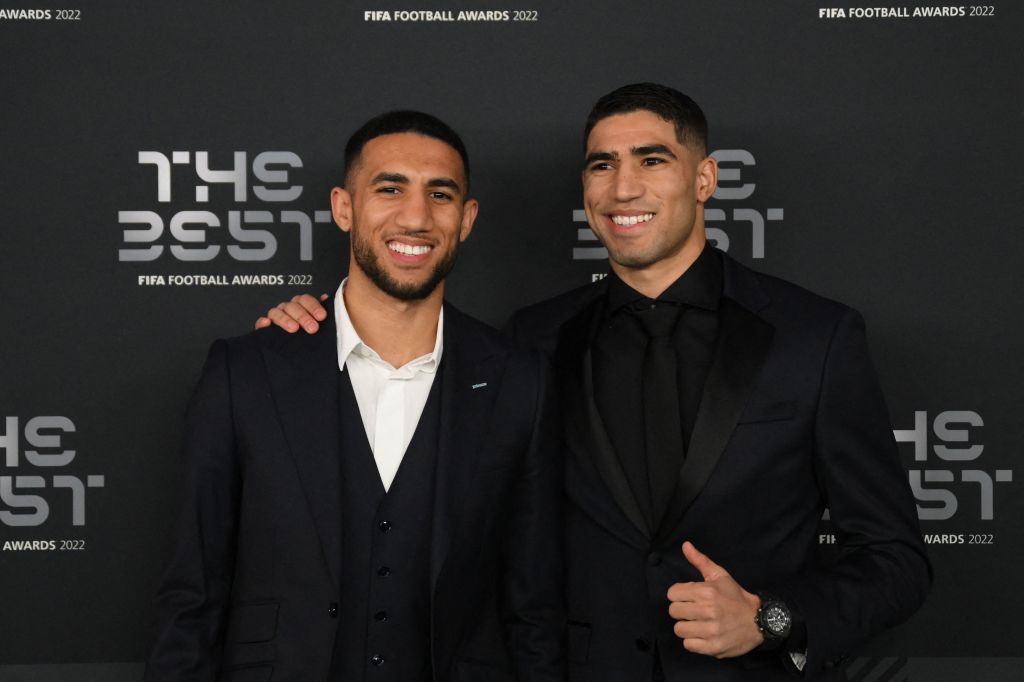
That commitment extended beyond logistics. Hassan’s influence was central to one of the most important decisions of Hakimi’s career: choosing to represent Morocco instead of Spain.
Having featured for Spain at youth level, Hakimi switched allegiance in 2016, a move driven by family ties and a strong sense of national pride. The decision proved transformative, culminating in Morocco’s dramatic victory over Spain at the 2022 World Cup, where Hakimi converted the decisive penalty in memorable fashion.
Alongside Hassan’s vision stood Saida Mouh, whose role as the family’s emotional anchor was equally vital. Working as a domestic worker, she balanced long hours with creating a stable and nurturing home.
She consistently emphasised the importance of education, modesty, and cultural identity, ensuring her children remained grounded despite growing exposure to professional sport.
Saida’s presence at key moments has been a constant source of strength for Hakimi. Her embrace of him during Morocco’s World Cup run became one of the tournament’s defining images, symbolising the bond between player, family, and nation.
Family bonds and resilience beyond football
Hakimi’s relationship with his siblings has also been a stabilising force throughout his career. His older brother Nabil, whom he considers his closest confidant, and his sister Widad have remained closely involved in his journey. The trio grew up sharing both hardship and ambition, forming a support system that has endured through multiple club moves and rising public scrutiny.
That family unity has followed Hakimi across Europe, from his breakthrough at Borussia Dortmund to title-winning spells with Inter Milan and Paris Saint-Germain. Even as his profile expanded, the core values instilled at home remained unchanged, shaping how he handled both success and adversity.
Those foundations were tested during a challenging period off the pitch, when Hakimi faced legal proceedings related to an alleged rape accusation. While the case placed him under intense public scrutiny, he continued to perform at elite level, drawing strength from his family’s unwavering support. His subsequent separation from actress Hiba Abouk also unfolded under media attention, further highlighting the pressures accompanying fame.
Through those moments, Hakimi emerged as an example of resilience, maintaining focus on his career while shielding his private life. His family’s role in that stability has been repeatedly acknowledged by those close to him.
As Morocco edge closer to a potential AFCON triumph, Hakimi’s story resonates far beyond football. It is a narrative of migration, sacrifice, identity, and ambition, converging on a home tournament where expectation meets opportunity.
Lifting the Africa Cup of Nations would not only crown a golden phase of Hakimi’s career but also honour the journey that began in the streets of Madrid and was sustained by a family that never stopped believing.
-
 CAF Confederation Cup: USM Alger and Al Ahly lead likely group-stage pots Oct 27, 2026
 -
Kopa Trophy 2026: Yamal makes history as African trio’s final rankings are confirmed Oct 27, 2026
-
Vozinha leads African trio in Yachine Trophy top 10 as Unai Simon wins Oct 27, 2026
-
Harry Kane wins 2026 Ballon d’Or for first time Oct 27, 2026



-
AFCON 2025: Fixtures, Results, Scores and Standings Jan 18, 2026
-
Match hero Taiwo Awoniyi reflects on team effort after Chelsea triumph May 5, 2026
-
Leadership and long-term vision key to rescuing Zamalek and inspiring Egyptian football – Hany Abou Rida Nov 5, 2025
-
South African giants Orlando Pirates set to lose influential forward Monnapule Saleng Mar 19, 2025




-
Barcelona v Real Madrid: Catalans backed at 1.65 to win October Clasico Oct 23, 2026
-
Barcelona and Real Madrid meet in pivotal 265th Clasico Oct 23, 2026
-
Sevilla FC v Osasuna: probable line-ups for Monday’s La Liga meeting Oct 25, 2026
-
Champions League: PSG beat Barcelona as Liverpool complete comeback against Villarreal Oct 20, 2026