VAR under fire as AFCON 2025 wrestles with credibility crisis
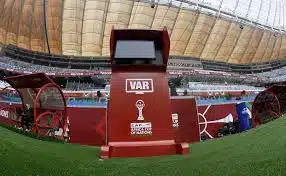
VAR has become the central talking point of the 2025 Africa Cup of Nations, not for restoring fairness but for fuelling uncertainty, as a series of contentious decisions and a lack of transparency continue to erode confidence in the competition.
What was introduced as a safeguard against refereeing error has instead emerged as a catalyst for confusion.
From one fixture to the next, similar incidents have been judged in radically different ways.
Penalties have been awarded after lengthy reviews that left players baffled, while other comparable challenges have passed without intervention.
Rather than clarifying situations, the technology has often magnified disputes, leaving coaches, supporters and players struggling to understand the logic behind key rulings.
The flow of matches has suffered as well.
Lengthy pauses while officials consult the screen have broken momentum, disrupted tactical rhythm and heightened tension inside stadiums.
The result has been an atmosphere in which every major call is greeted not with acceptance, but with suspicion, as though the system designed to reduce controversy has instead institutionalised it.
At the heart of the issue lies not the equipment but its application.
Referees appear to be operating without a shared framework, leading to wildly varying interpretations of identical scenarios.
Some officials have been quick to refer incidents to the video room, while others have relied on their original judgement in near-identical circumstances.
The absence of consistent guidance has fostered a perception that decisions are arbitrary, or worse, influenced by factors beyond the action on the pitch.
Compounding that frustration is the lack of communication after matches.
Teams that feel wronged are left without explanations, and the public hears nothing to clarify why a particular call was made or ignored.
In a tournament watched across the continent and beyond, this silence has created the impression of a refereeing system with no accountability, where errors are neither addressed nor acknowledged.
That sense of unease has been sharpened by the absence of leadership from the top of the game.
As controversy has mounted, neither FIFA president Gianni Infantino nor CAF president Patrice Motsepe has offered a substantive public response.
There have been no firm statements outlining how VAR is being managed, no assurances about steps being taken to restore confidence, and no visible attempt to engage with the concerns raised by teams and supporters.
For many observers, that silence is as damaging as the disputed decisions themselves.
It gives the impression that the governing bodies are content to let the storm pass, even as the credibility of their flagship African competition is questioned.
In a sport where trust in officiating is fundamental, the failure to communicate has left a vacuum filled by speculation and anger.
Few would argue that technology itself is the enemy.
VAR, when applied consistently and transparently, can correct mistakes and protect players from injustice.
But at this tournament, its promise has been undermined by erratic use and a lack of clear oversight.
As the 2025 Africa Cup of Nations reaches its decisive stages, the pressure is mounting for those in charge to intervene.
Without urgent reform, the legacy of this edition may be defined not by the brilliance of its footballers, but by a technology that, in the absence of strong leadership, slipped out of control.
-
 Morocco plans tax-free framework for FIFA ahead of 2030 World Cup Oct 25, 2026
 -
MAS Fez reach CAF Champions League group stage after dramatic win in Ivory Coast Oct 25, 2026
-
Sekhukhune United ease past Richards Bay to reach Carling Knockout quarter-finals Oct 25, 2026
-
CAF Champions League: Second preliminary round cleared as group stage teams emerge Oct 25, 2026



-
AFCON 2025: Fixtures, Results, Scores and Standings Jan 18, 2026
-
Match hero Taiwo Awoniyi reflects on team effort after Chelsea triumph May 5, 2026
-
Leadership and long-term vision key to rescuing Zamalek and inspiring Egyptian football – Hany Abou Rida Nov 5, 2025
-
South African giants Orlando Pirates set to lose influential forward Monnapule Saleng Mar 19, 2025




-
Barcelona v Real Madrid: Catalans backed at 1.65 to win October Clasico Oct 23, 2026
-
Barcelona and Real Madrid meet in pivotal 265th Clasico Oct 23, 2026
-
PSG v Barcelona: fiery attacks set up Champions League classic at Parc des Princes Oct 18, 2026
-
Champions League: PSG beat Barcelona as Liverpool complete comeback against Villarreal Oct 20, 2026