Togo awaits state-level verdict on next Hawks head coach
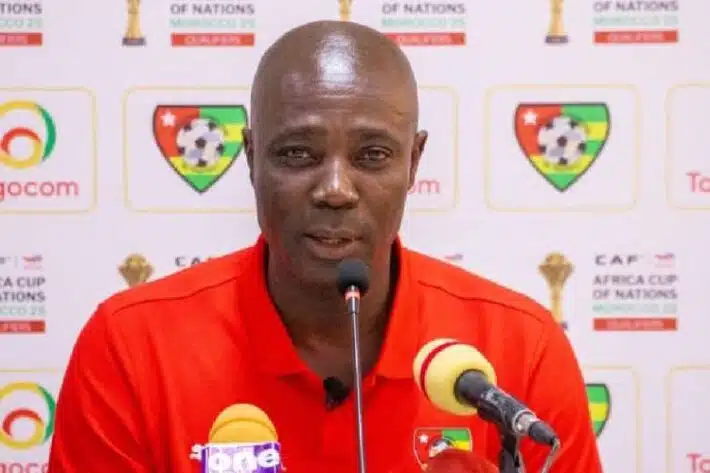
Togo is preparing for a decisive moment in the leadership of its national football team, with the appointment of the next head coach of the Hawks now moving beyond the confines of the Togolese Football Federation.
Following the official dismissal of Daré Nidombé, the process to select his successor has shifted to the highest level of the state.
The federation has formally ended its collaboration with Nidombé after a run of disappointing results that failed to meet expectations.
His departure also brought an end to the mandates of his entire technical staff, marking a clear break and the beginning of a new chapter for the national team.
The decision aimed to reset direction and restore competitiveness, but it has also highlighted the unique structure of football governance in Togo.
Journalist Romain Molina reports that, while the Togolese Football Federation continues to play a role in technical assessments and the initial screening of candidates, it does not control the final outcome.
Instead, the ultimate choice of head coach rests with senior state authorities.
This approach follows an established pattern in Togolese football, where key appointments to the national team have historically required approval at the highest political level.
The federation has therefore limited its role to compiling profiles, evaluating coaching philosophies, and identifying candidates capable of leading the Hawks through the next phase.
Officials focus on sporting criteria during this stage, but they understand that the concluding decision will come from outside their offices.
This structure reflects the strategic importance attached to the national team, which continues to serve as a symbol of unity and national pride.
Nidombé’s dismissal has opened what many observers describe as a new cycle, yet that transition remains closely tied to the broader vision of the Presidency of the Council.
The authorities now hold responsibility for setting the tone of the next era, both on and off the pitch. Their decision will shape not only tactical direction but also the broader message sent about governance and ambition in Togolese football.
As speculation continues, the Hawks remain without a permanent head coach, and supporters await clarity.
The coming announcement will carry weight beyond footballing considerations, as it will reflect the balance of power between sporting institutions and the state, and define the next step in Togo’s pursuit of renewed stability and progress.
-
 ALG: Yazid Mansouri reveals major challenges facing JS Kabylie Aug 27, 2026
 -
Historic Yaya Touré becomes first African coach in Champions League league phase Aug 27, 2026
-
From Morocco’s World Cup to Manchester City: 10 things about Ayyoub Bouaddi Aug 27, 2026
-
Morocco winger Couhaib Driouech trains with new Celta Vigo teammates Aug 27, 2026


-
AFCON 2025: Fixtures, Results, Scores and Standings Jan 18, 2026
-
Leadership and long-term vision key to rescuing Zamalek and inspiring Egyptian football – Hany Abou Rida Nov 5, 2025
-
South African giants Orlando Pirates set to lose influential forward Monnapule Saleng Mar 19, 2025
-
Full schedule for 2025 Africa Cup of Nations in Morocco confirmed Feb 12, 2025