Cameroon and Nigeria weigh invitation to rival 2026 World Cup Tournament
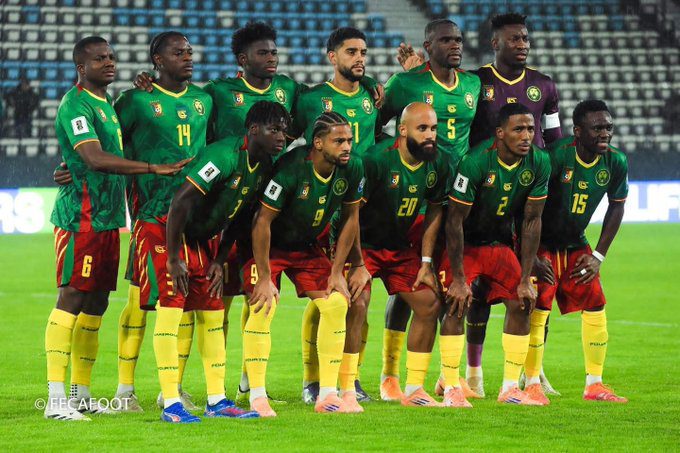
Cameroon and Nigeria are considering an unexpected invitation to take part in a proposed breakaway tournament planned to run alongside the 2026 FIFA World Cup.
Both nations missed out on qualification after falling to DR Congo in the African playoff series.
Reports from European outlets, including Poland’s Onet, reveal that the Russian Football Union is driving the creation of an “alternative World Cup” exclusively for national teams absent from the 2026 edition.
The competition is being targeted for June 2026, directly overlapping with the official World Cup in the United States, Canada, and Mexico.
Organisers have already drafted provisional groupings. The first pool features Russia, Serbia, Chile, and Nigeria, while the second includes Greece, Peru, Venezuela, and Cameroon.
Russia’s push for the event is widely seen as a strategic attempt to regain a foothold in global football.
The country remains barred from all FIFA competitions following its invasion of Ukraine, and officials in Moscow hope to return to the international stage before the 2030 World Cup, which Spain, Morocco, and Portugal will co-host.
The proposed tournament would offer Russia a platform for visibility if its appeal for reinstatement continues to stall.
Despite their failure to qualify for 2026, both Nigeria and Cameroon have kept football ties with Russia intact.
The Super Eagles held Russia to a 1-1 draw in a friendly in June, while Cameroon travelled to Moscow in October 2022, narrowly losing 1-0.
These fixtures underline ongoing sporting connections between the nations despite wider geopolitical tensions.
The inclusion of Cameroon and Nigeria on the proposed team list offers both sides the chance to remain active during a summer when global attention will be fixed on the World Cup.
However, the plan faces a critical obstacle. FIFA must determine whether it will allow a parallel international tournament to run at the same time as its flagship competition.
Such a move could create broadcasting clashes and challenge FIFA’s longstanding control over the global football calendar.
While the alternative lineup lacks the prestige of the official World Cup, the initiative introduces an unusual and potentially disruptive dynamic ahead of 2026.
-
 Chippa United complete signing of Burkina Faso midfielder Ibrahim Bance Aug 28, 2026
 -
MTN8: Junior Khanye backs Orlando Pirates and Mamelodi Sundowns to reach final Aug 28, 2026
-
Orlando Pirates face Moremi fitness race before MTN8 semi-final against Sekhukhune United Aug 28, 2026
-
Rennes negotiate Djaoui Cisse and Ismael Doukoure transfer deal Aug 28, 2026


-
AFCON 2025: Fixtures, Results, Scores and Standings Jan 18, 2026
-
Leadership and long-term vision key to rescuing Zamalek and inspiring Egyptian football – Hany Abou Rida Nov 5, 2025
-
South African giants Orlando Pirates set to lose influential forward Monnapule Saleng Mar 19, 2025
-
Full schedule for 2025 Africa Cup of Nations in Morocco confirmed Feb 12, 2025




-
Rafael Leao transfer: Galatasaray weigh move for AC Milan winger Aug 21, 2026
-
Oscar completes €2m move from Slavia Prague to Al-Taawoun Aug 21, 2026
-
Al-Ahli linked with Fenerbahce’s Portugal defender Nelson Semedo Aug 22, 2026
-
Ismael Saibari set to return to PSV Eindhoven for Bayern Munich farewell Aug 22, 2026