Burkina Faso
Cameroon
Competitions
Countries
FIFA World Cup
Gabon
Guinea
Latest News
Nigeria
World Football
African stars missing from the 2026 World Cup: A standout XI of absent talent
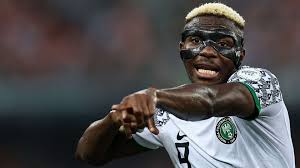
Several of Africa’s most recognisable football figures will be missing from the 2026 World Cup after a series of surprising eliminations in the qualifiers.
While Algeria, Egypt, Morocco and Ivory Coast secured their places, the absence of traditional powerhouses such as Nigeria, Cameroon and Guinea has resulted in a long list of high-profile players who will not be part of the global showpiece.
The scale of the absences is striking. A number of elite performers, many of whom play key roles at top European clubs, will watch the tournament from afar.
Their absence does not only diminish their nations’ visibility on the world stage; it removes a layer of star quality that often elevates the competition itself.
Cameroon, Nigeria, Gabon and Burkina Faso are among the countries whose failure to qualify carries significant consequences.
All four nations possess players who are influential for club and country, and whose presence at the World Cup had been widely anticipated.
Their eliminations have left fans across the continent reflecting on what might have been.
A potential best XI of African players missing from the tournament highlights both the depth of talent and the scale of disappointment.
In goal, André Onana stands out as the most notable omission.
The Cameroonian remains one of Africa’s finest goalkeepers, combining authority, reflexes and distribution at a level few can match.
The defensive line features experience and reliability.
Nouhou Tolo, a key figure for Cameroon, takes the left side, while Nigeria’s Bright Osayi-Samuel offers energy and versatility on the right.
At the heart of the defence, William Troost-Ekong partners Burkina Faso’s Edmond Tapsoba, forming a central pairing built on leadership and physical presence.
The midfield would be anchored by two of Africa’s most respected performers.
André Frank Zambo Anguissa brings stability, ball progression and composure, while Nigeria’s Wilfried Ndidi adds balance and defensive intelligence.
Together, they provide a foundation capable of controlling high-level matches.
Further forward, Gabon’s Denis Bouanga offers direct attacking threat from the flank, complementing the creativity and pace of Cameroon’s Bryan Mbeumo on the opposite side.
Both wingers have excelled for their clubs and remain central figures for their national teams.
The attack features two of the continent’s most prolific forwards.
Nigeria’s Victor Osimhen, whose absence is one of the most significant, remains a striker capable of influencing any match.
Alongside him, Guinea’s Serhou Guirassy brings power, movement and elite finishing, qualities that have seen him shine consistently at club level.
Their omission removes two of the tournament’s most dangerous attacking profiles.
The full XI of absent African stars reads as follows:
André Onana – Nouhou Tolo – William Troost-Ekong – Edmond Tapsoba – Bright Osayi-Samuel – André Frank Zambo Anguissa – Wilfried Ndidi – Denis Bouanga – Bryan Mbeumo – Victor Osimhen – Serhou Guirassy
A strong pool of substitutes could also be assembled, featuring players such as Aubameyang, Alex Iwobi, Samuel Chukwueze, Bertrand Traoré and Eric Maxim Choupo-Moting — further proof of the quality left behind.
The 2026 World Cup will proceed without some of Africa’s most compelling talents.
For many supporters across the continent, the absence of this group represents one of the most memorable storylines of the qualification campaign.
-
 Ethiopia face major stadium upgrades in bid to host AFCON 2028 Oct 19, 2026
 -
João Pedro Sousa on the verge of Petro de Luanda exit after Champions League defeat Oct 19, 2026
-
Rangers delay decision on £15.5m Badredine Bouanani option Oct 19, 2026
-
Da Cruz records modest start as Kaizer Chiefs coach after 10 matches Oct 19, 2026


-
AFCON 2025: Fixtures, Results, Scores and Standings Jan 18, 2026
-
Match hero Taiwo Awoniyi reflects on team effort after Chelsea triumph May 5, 2026
-
Leadership and long-term vision key to rescuing Zamalek and inspiring Egyptian football – Hany Abou Rida Nov 5, 2025
-
South African giants Orlando Pirates set to lose influential forward Monnapule Saleng Mar 19, 2025




-
Real Betis v Barcelona: kick-off time, TV details and match preview Oct 16, 2026
-
PSG v Barcelona: fiery attacks set up Champions League classic at Parc des Princes Oct 18, 2026
-
Morocco to face New Zealand as FIFA U-17 Women’s World Cup kicks off in Rabat Oct 16, 2026
-
Bryan Mbeumo scores again as Manchester United held by Leeds Oct 18, 2026